Contents
Audio Culture & Critical Theory Module

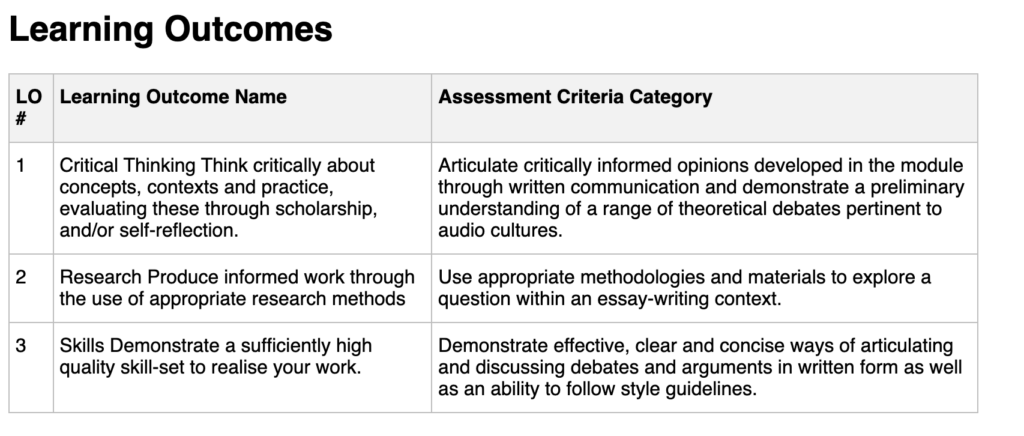
The medium mark reflected my unfamiliarity with the academic process they were looking for not my ability to write, as was verified in the feedback (see below).
Module description
“This module explores sound and music practices as they evolve within ever changing audio cultures. We will be examining the context and culture, in which you as artists and musicians are working, so as to better understand and critically question the relationship between music, sound, noise and culture. we will be engaging with various theoretical concepts that will enable you to develop interpretations of audio culture and to formulate critical theories whilst becoming self reflective of practice.”
Brief
Submission
Result
Designing Sound Module
Module description
“This module focusses on two themes. The first is an exploration of the ways in which recorded sound can be edited, manipulated and mixed. In thinking about sound as a material that can be sculpted, the module develops skills, knowledge and understanding that can be applied to other musical projects. The second theme involves introducing the professional workflows involved in putting sound to picture and exploring the ways in which sound can bring new depth and meaning to moving images.”
Assessment 1
Brief
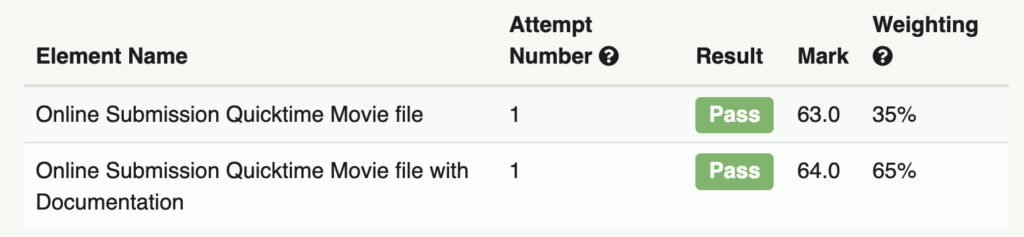
Assessment #1: Detailed Brief – Online Submission of QuickTime Movie (35%)
Completion requirements
Brief:
Assessment #1 is a practical task that will be completed in groups with each member playing an integral role in the project and demonstrating the key skills acquired for the task. Each group will select a movie clip lasting around 2 minutes (+/- 15 seconds), and create a believable sonic accompaniment to the scene. For this first task, your focus should be on making a credible, realistic sound world that corresponds to what we are seeing on screen. Think Foley, Sync and realism. The clip can be documentary, live action, animation or gameplay but needs to portray characters, spaces and objects that we recognise from the real world. For this task, please focus only on atmospheres, sync effects and Foley and avoid straying into dialogue or music.
Please remove the original sound track from your clip and refrain from downloading sounds from the internet.
Submission:
- Each student will submit a QuickTime movie file via the link on the learning space – making sure that the sound is encoded onto the QuickTime file at 16 or 24 bits, 44.1 or 48Khz and that the whole file does not exceed 1GB.
- Each member of the group should submit the same file i.e. no separate mixes or edits
- Each student submit a (300 words max) PDF which outlines the role you played in the group and how you contributed to the final product.
- The PDF should include …
- A list the members of the group and the different roles you played and or different contributions to the project,
- A link to the original clip
- Any relevant materials such as spotting lists etc.
- Any particular techniques and or processes that helped form the clip
- Both files should be submitted in a zipped folder labelled as follows: CRMT130_Assessment1_Surname_Forname
- Please allow plenty of time for uploading, bearing in mind that upload speeds are often much slower than download speeds.
- If you experience any technical problems submitting, email dlsupport@falmouth.ac.uk. Take screen grabs of any errors and issues.
Submission
Result
Assessment 2
Brief
Submission
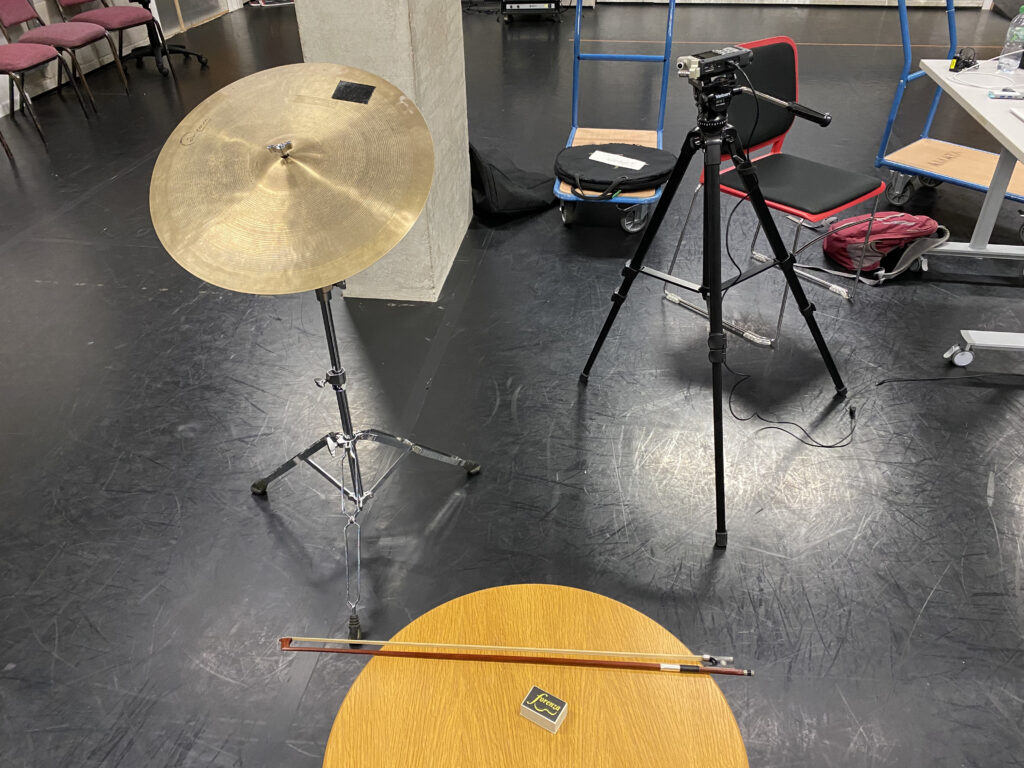
Recording of bowed symbol effect used in video
Result
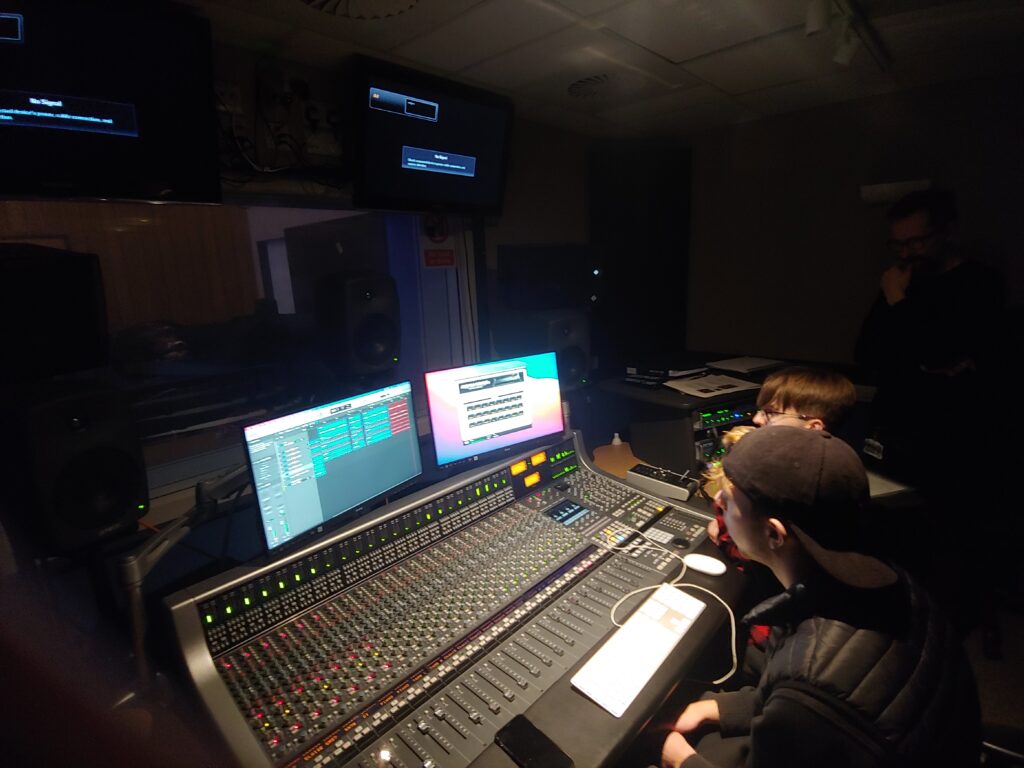
Studiocraft Module
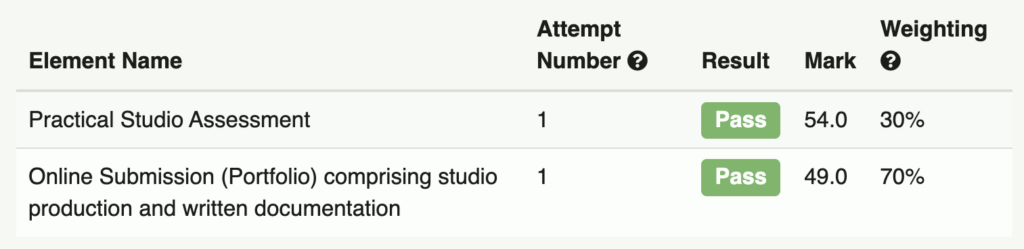
Module Description
“Studiocraft is about effective working with instruments, spaces, equipment and people, in the context of contemporary studio based music recording and production. Studiocraft introduces students to the art and craft of sound recording and focuses on both the technical and personal skills necessary for achieving high-quality recordings. These two themes are explored in parallel with students learning the psychology and diplomacy of getting the best performances from musicians, while also gaining a comprehensive introduction to the techniques of studio recording. The module follows the journey of sound from source to 17 of 103 recording media, and covers themes including acoustics, instrument optimisation, microphone technique and analogue and digital signal flow, as well as a variety of recording technologies. Students will be introduced to industry standard production techniques and workflows, which will be continuously measured against detailed critical listening. While this module has a predominantly practical focus, discussion around the key themes and technologies introduced will always be rooted in a critical, historical context. You will be actively encouraged to think creatively about the variety of possible modes of engagement and the associated material affordances and constraints you might have with studio technologies. The module also places a strong emphasis on session management, people skills, professional studio etiquette and work ethic, as associated with contemporary studio production. The module will be delivered through a series of practical, hands-on workshops and lecture-seminars and will include group critiques of student works in progress. Critical listening sessions will be integrated into the teaching, offering exemplars of techniques discussed. Projects will be supported by tutorials with staff, in addition to seminars and specialist lectures and blended learning materials.”
Assessment 1: Jazz Drumming Recording
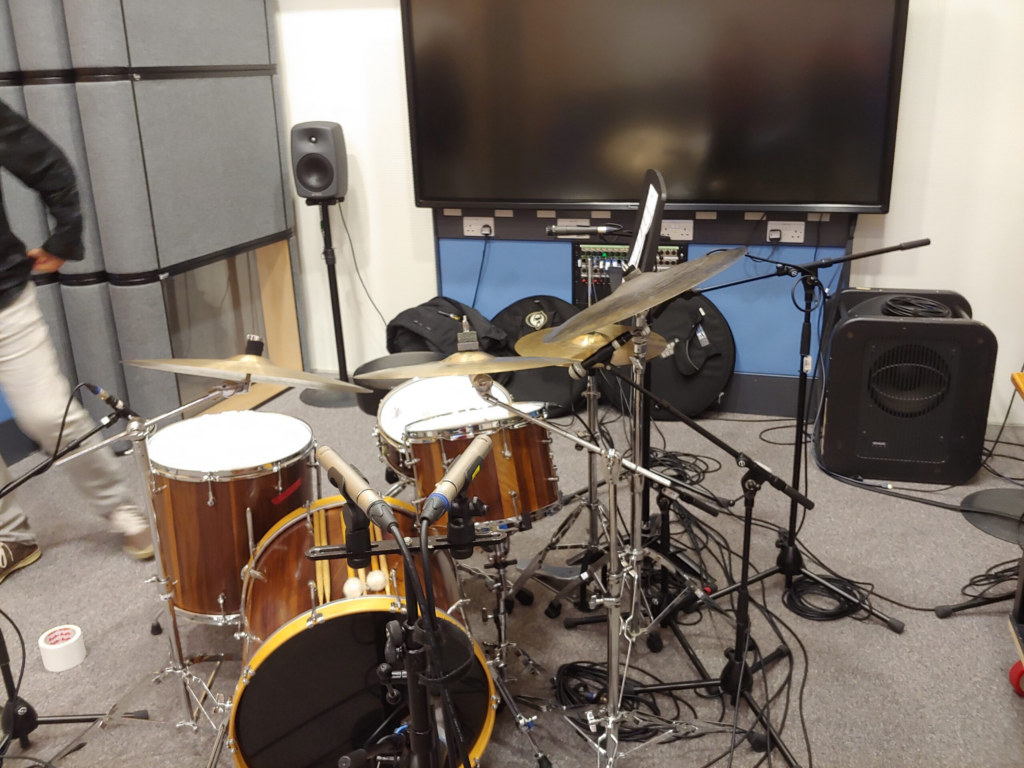
Lots of mikes !
Brief
The final recording (over backing track)
Feedback / Results
Assessment 2: Pop Band Recording
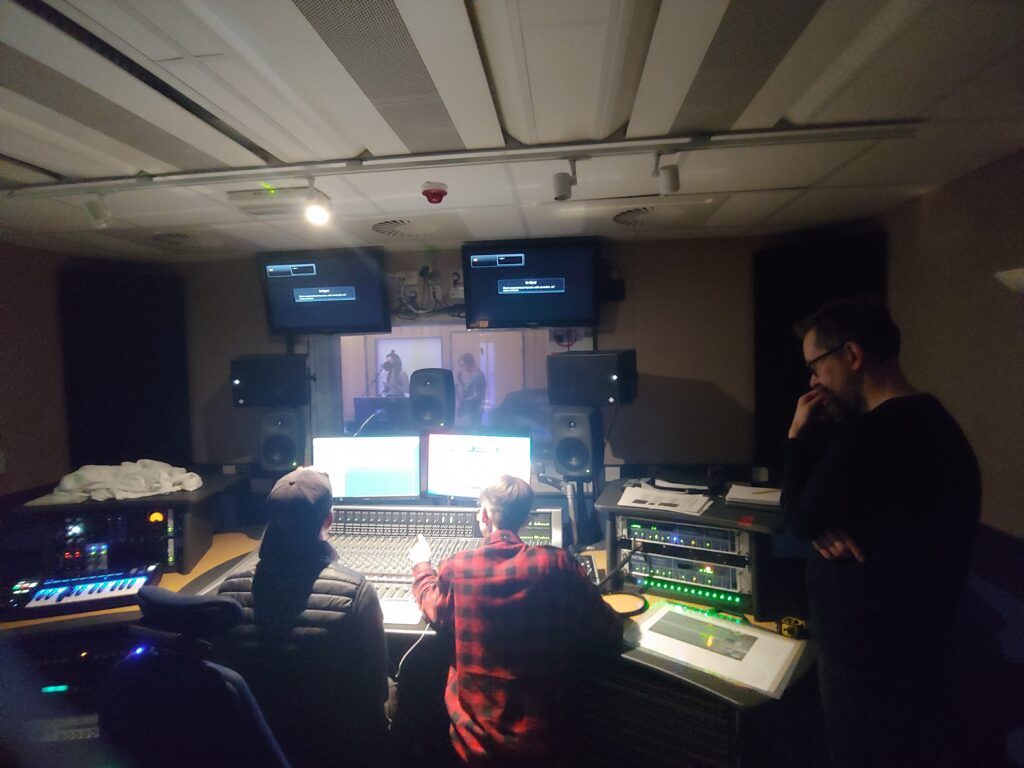
Session Photo’s
Screenshot