Drawing on your degree studies in the first and second year, a Dissertation is a written research project undertaken in the third and final year of your undergraduate degree.
A Dissertation involves independent researchabout a topic of your choice within the field(s) of your developing expertise in music and sound. Building on your work in the first and second year, the problem or question you propose will be based on contextual understanding of relevant and contemporary debates and discussions in your specific area of music and sound. You will carry out an in-depth and critical investigation into your Dissertation topic and research question with the aim of producing a well-structured written response to your research question that contributes to the wider knowledgeon your topic.
A good Dissertation demonstrates a well-researched understanding of the existing knowledge on a specific subject and proceeds to coordinate a written discussion and debate that provides new directions and offers interesting contemporary relevance. A Dissertation should engage with multiple perspectives and contexts; it is critically reflective and provokes considered discussion whilst proposing a central argument. By synthesising, analysing, questioning, and evaluating relevant research, the Dissertation should help you (and your readers) to better understand and critically question your topic.
Specialist Practice in Context (or ‘PIC’ for short) is one of two 30-credit modules in Study Block 1 of Year 3 / Level 6. It anticipates the world of work, employment and professional practice by providing you with an opportunity to design and complete a project that will help you to develop skills, experience and contextual knowledge in the specialism you want to focus on.
Module aims
This module aims to provide students with:
The confidence and ability to operate independently and strategically as an arts practitioner
The appropriate level of compositional, practical and project management skills necessary to see a project through, from proposal to realisation, in a professional manner
Knowledge and understanding of the relationship between specialist practice and a relevant context.
Assessment Brief
Submission
Here is my presentation. Video slides have a still video slide, then the actual video below it.
“This module immerses you in the possibilities of performance technology. You will be exposed to new ideas and workflows that will provide an elevated sense of ‘liveness’ to your practice. You will be encouraged to integrate different kinds of technology into your current musical approach, so as to push the boundaries of your performative and compositional practice. This module is suitable for anyone interested in live performance and technology – particularly if you want to realise your songs / tracks live; or you want to devise improvised performances with technology; or you perform to a backing track, but want to introduce further interactivity and musicianship into your practice. There are no prerequisites for the module and beginners are welcome, however, task based and independent learning is essential to achieving the learning outcomes.”
Assessment Brief
MSI310 Specialist Practice in Context Assessment Brief: Presentation & Viva (100%)
Task Deliver a 40-minute presentation about your specialist project, followed by a 10-minute Viva/Question and Answer session.
Brief You will design and undertake a project (about 240 hours of independent study) that explores your artistic practice, a specific context (e.g. industry sector, genre, geographical location, community or scene) and the dynamic relationship between them. Your project must include creative outputs that have been informed through working in your chosen context and evidence your learning.
For your chosen context, you will need to research relevant historical aspects, current trends and the work of key practitioners. You will also need to consider the development of your context-specific knowledge, experience and skills. Placements, work experience, shadowing or internships are useful ways to do this as all or part of your project (see the ‘Resources’ section of Learning Space for links), but you can also design your own project.
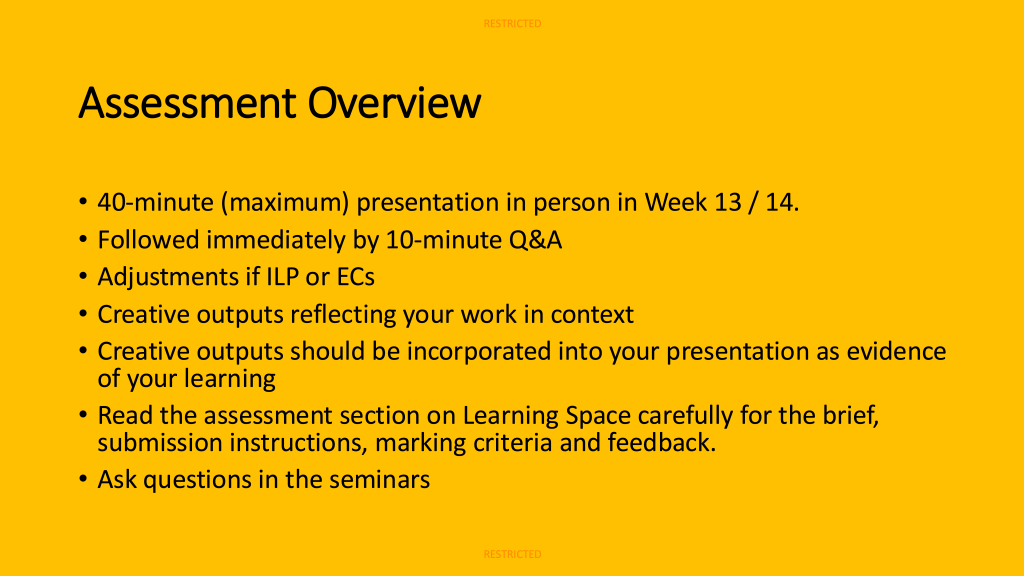
Your project will be assessed by a 40-minute in-person presentation, immediately followed by a 10-minute Viva/Q&A session. Vivas are an opportunity for you to expand on and clarify any issues that may have seemed unclear or incomplete during the presentation.
You should plan, research, document and reflect on your project using a journal. The form that this takes is up to you. This is essential to demonstrate reflective practice to generate material for your presentation.
Your presentation will focus on your own development, rather than the creative outputs you produce during your PIC. However, the presentation should include examples of creative work, extracts from your journal, and research and citation as evidence of your learning.
While you are free to choose the structure of your presentation, it should include:
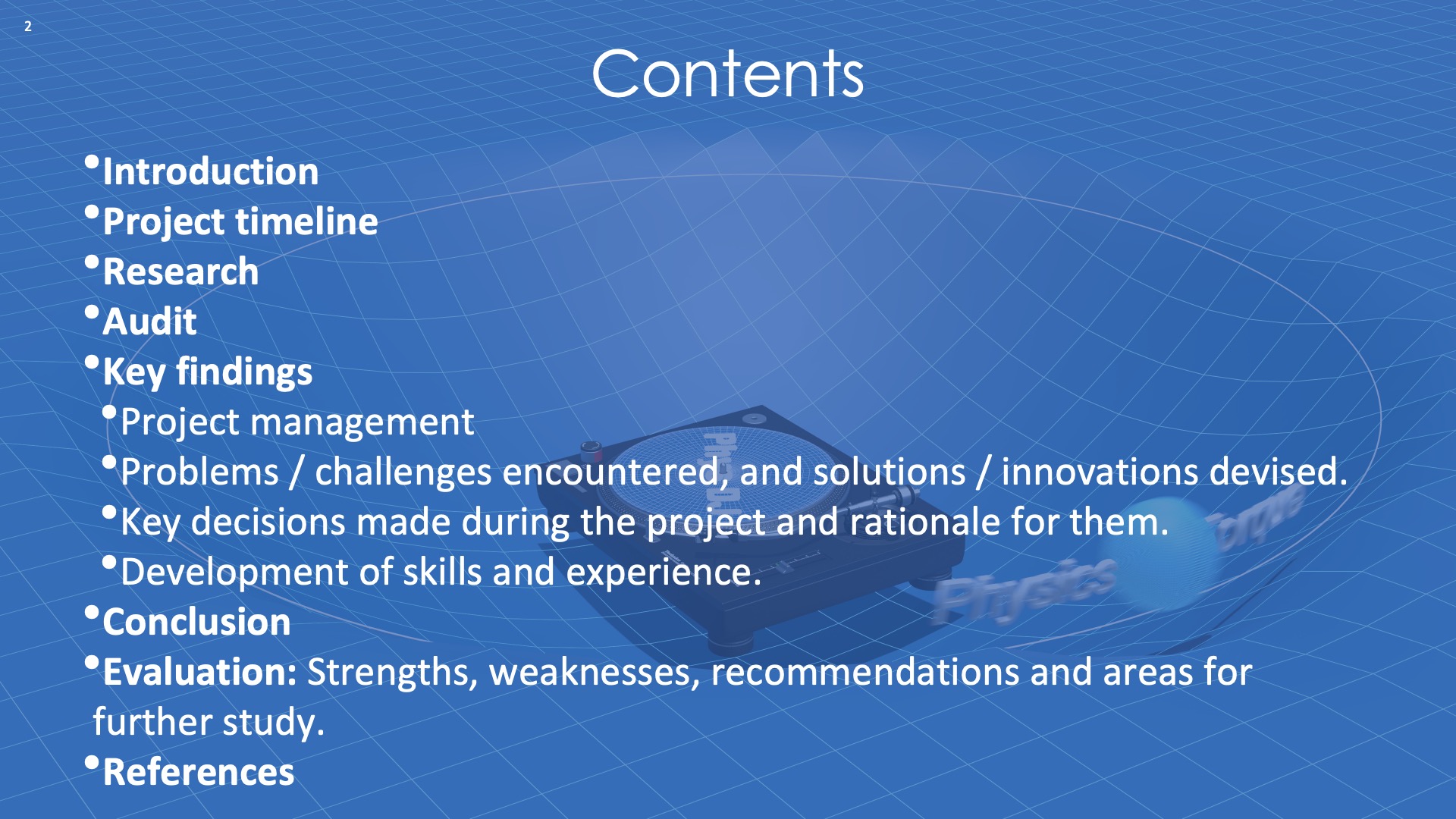
Title slide Contents slide Introduction: brief project summary, project aim and project rationale Project timeline: overview of the project journey Research: field review relevant to your practice and chosen context, including appraisal of sources Audit: how do your skills, experience and contextual knowledge compare to the professional requirements? Key findings from your project including: Project management: covering budget, time and personnel management Problems / challenges encountered and solutions / innovations devised Key decisions made during the project and rationale for them Development of skills, experience and contextual knowledge These findings should be evidenced by: Examples of creative outputs Extracts from your project journal Conclusion: reflection on project aim Evaluation: strengths, weaknesses, recommendations and areas for further study References: a slide containing all sources in the Harvard format (as well as in-text referencing throughout).
Submission You will deliver a 40-minute (maximum) presentation. This will be immediately followed by a 10-minute Viva/Q&A session.
Your slot will be published on your timetable several weeks in advance. It is essential that you are available in Week 13 and 14 to deliver this.
Presentations and Viva/Q&As will be in-person unless you have an ILP that covers alternative submission formats. If you have Extenuating Circumstances then you will submit a video presentation to the online link on the Learning Space and the Viva/Q&A will be done via an online meeting.
If submitting a video, please compress your file using software such as Handbrake and check that it plays back without error. When uploading, use a stable internet connection (on-campus recommended) and allow plenty of time. In case of any issues with your upload contact Digital Learning team dlsupport@falmouth.ac.uk for help and take screenshots showing your upload time.
In the following video I had originally “borrowed” a beautiful female assistant from the AMATA stores 😆 (she was employed there hiring music equipment out to students) to test the sensor implementation of the sound installation. However she had not originally given permission for public publication of the video so I had to cut those parts out.
This module builds on the fundamental set of skills and knowledge developed at Level 4 with the continuing focus to move you towards the realities of working in the sound and music industries as a professionally minded creative individual. You will continue the acquisition, development, deployment and evaluation of your specialist skillset. Strong emphasis is based on the ability to evaluate your practice with respect to professional contexts, as well as to seek out future development and career opportunities. A key aim of the module is to provide insights into the music industry, whilst helping to focus and develop your own specialist practice in your field. You will continue the analysis and evaluation of the ‘music industry’ initiated at Level 4 and work towards your emergent ‘professional futures’.
The module seeks to inculcate the key skills pertinent to all music professionals and creative entrepreneurs, such as project management, business planning, communication, collaborative work, independently managed self-discipline and a strong work ethic. The Module will also support you in your planning of the Level 6 projects and options, which are the key elements in the curriculum bridging your specialist practice to future employment/enterprising futures.
Module Aims
You will develop and nurture your specialist practice
You will articulate an informed understanding of sound and music industries, professional context and associated personal development via a presentation
Development of a strong portfolio of transferable skills for the sound and music industry
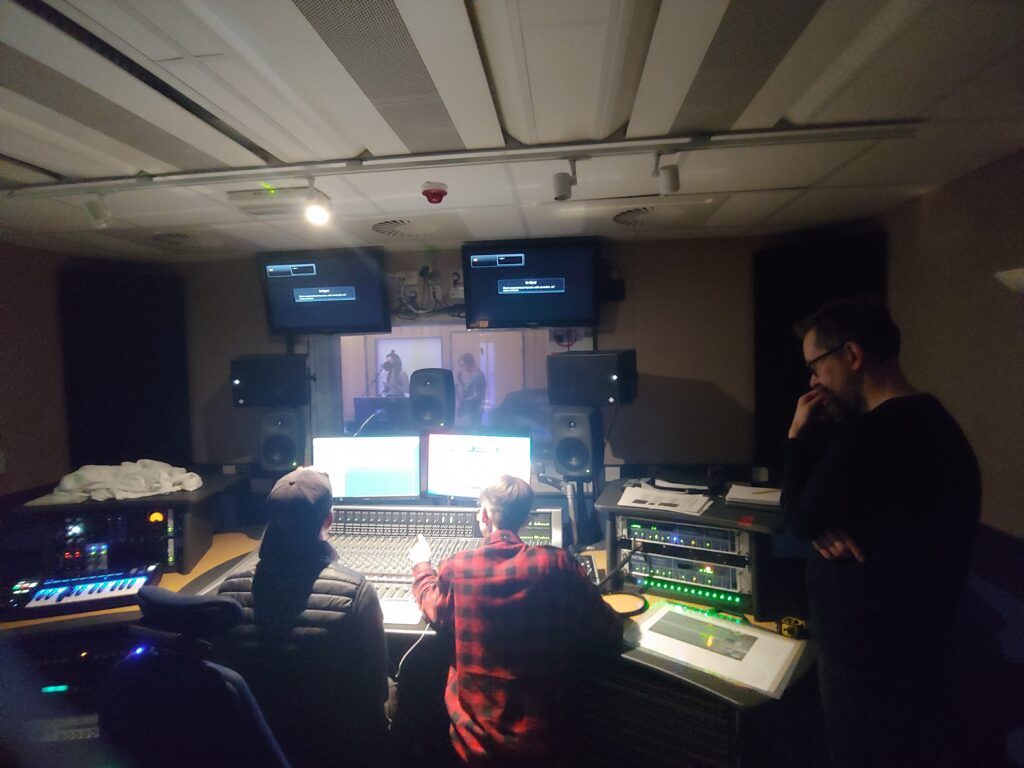
“This module enables students to initiate and execute a creative music production project, from pre-production to final mastered output. The pre-production phase includes rehearsal, arrangement and project planning as well as technical preparation for recording. The module then provides an environment in which to explore advanced recording and mixing techniques and students are required to select and provide a rationale for the approaches that they use. The practical element of the module culminates in an introduction to audio mastering. Alongside this practical focus is an ongoing enquiry into the changing role of the producer and as part of their final submission, students will provide a critical commentary on their work, which situates the decisions they have made within a broader historical context.
To develop a critical, historically-informed understanding of the role of a producer as applied to a specific musical context.
To develop critical, creative judgement in approaches to pre-production, recording, mixing and mastering within a particular musical context.
To develop technical skills in advanced sound recording, advanced mixing and mastering using a range of analogue and digital technologies.”
“Supersonic is a module that examines new creative approaches to composing with sound, through the study of electroacoustic music. Whatever style and genre of music you make, we will locate fundamental elements of electroacoustic composition i.e. gesture, transformation and texture. Lectures and workshops are designed to broaden your compositional vocabulary and expand your creative horizons. Throughout the module, you will compose a series of miniature compositions alongside a more substantial final portfolio element using ideas developed from the activity sessions and by responding to the subjects discussed in class. The miniature composition assignments will be showcased and marked every two weeks, with a final showcase at the end of the module to premiere your major composition. This module requires engagement with and beyond the DAW or other studio-based compositional environments.”
Assessment Brief
“Supersonicis assessed 100% by Portfolio Elements submitted to the learning space, evidencing 200 hours of work, and comprising:
Miniature composition (90-120 seconds*) with 200 word artistic statement and engagement with Super Texture sessions.
Miniature composition (90-120 seconds*) with 200 word artistic statement and engagement with Super Transformation sessions.
Miniature composition (90-120 seconds*) with 200 word artistic statement and engagement with Super Gesture sessions.
Final composition (3-5 minutes°) with 400 word artistic statement and engagement with final Supersonic playback event. Your final piece should respond to the themes of the module taking into consideration issues surrounding texture, gesture and transformation.
“This module explores the interdependency of technology, language and culture through research into music/sound based media and media theory. The module will equip you with a working knowledge of key concepts in cyberstudies, digital aesthetics and technoculture so that you develop a critical awareness of professional digital creative contexts. The module pays particular attention to the language used to create media profiles and identities whilst creatively working with an understanding of trends and trajectories in reviews of music, production and sound art. The module provides you with an opportunity to become critically and creatively engaged with language, text and visual representations of sound and music as they construct bodies of understandings in cyberspace and the ‘real world’. Students will elect to undertake a project based on advertising and self-promotion (writing about yourself) OR analysis and evaluation (writing about others) of a relevant case study. Either project will need to carefully consider context, module concepts, critical reflection, thorough research and appropriate language as you creatively respond to your project in writing.”
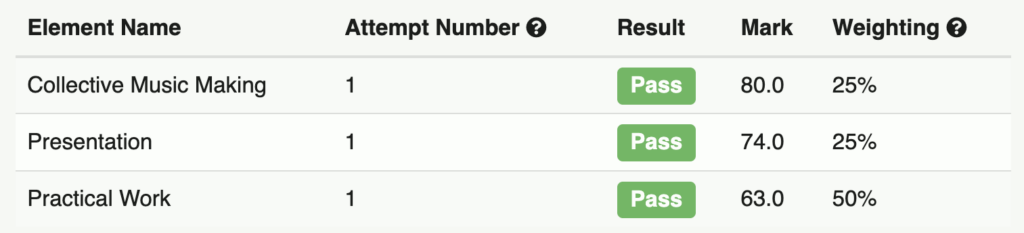
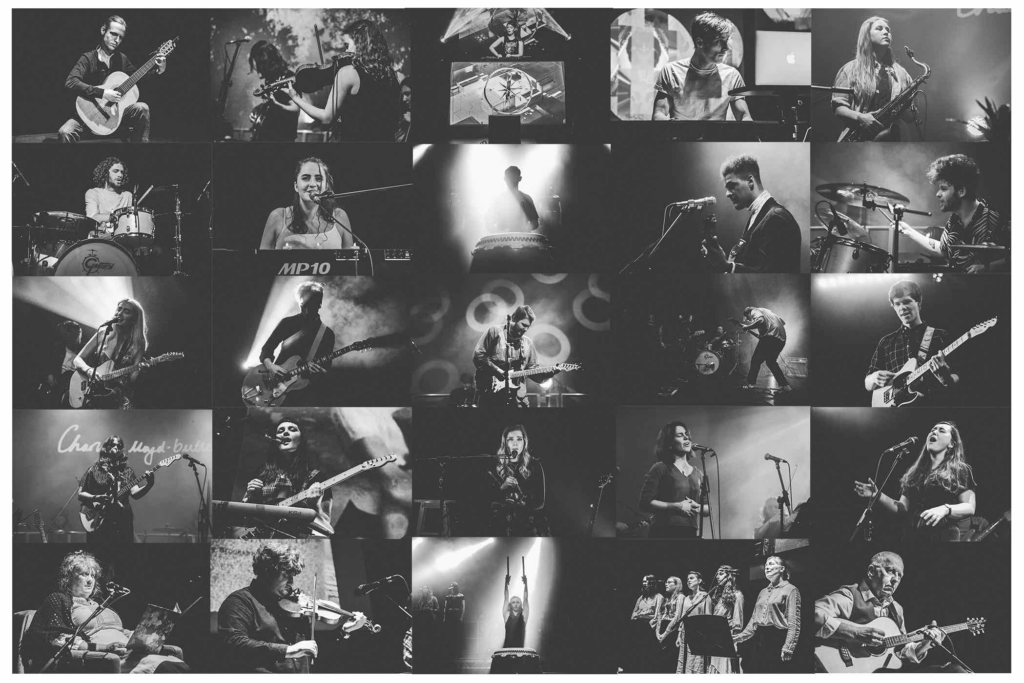
“As a practitioner in music and sound, you are preparing to become part of a very diverse, challenging and exciting working environment. This module equips you with a fundamental set of skills and knowledge that will enable you to move towards the realities of working in the sound and music industries as a professionally minded individual. You will be introduced into a wide variety of approaches and roles within the vast and broadly termed ‘music industry’ that will allow you to understand the requirements of certain industry roles such as: freelance session musician, a self-releasing label owner, a music educator, a producer, a music writer, composer, sound artist and so on. Despite this diversity, the module acknowledges and explores fundamental key skills pertinent to all professionals such as communication, collaborative work, independently managed self-discipline and a strong work ethic. A key aim of the module is to provide insights into the music industry, whilst helping to focus and develop your own specialist practice in your field. This individual focus is complimented by building on your ability to communicate via sound and music vocabularies in collective music making contexts.”
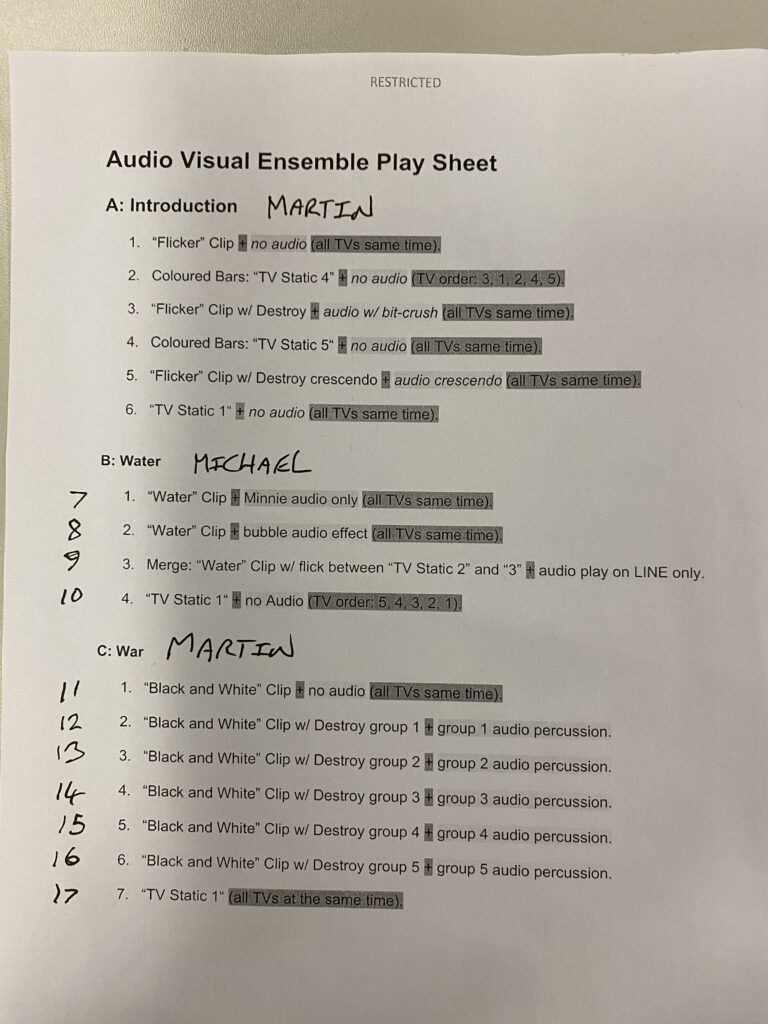
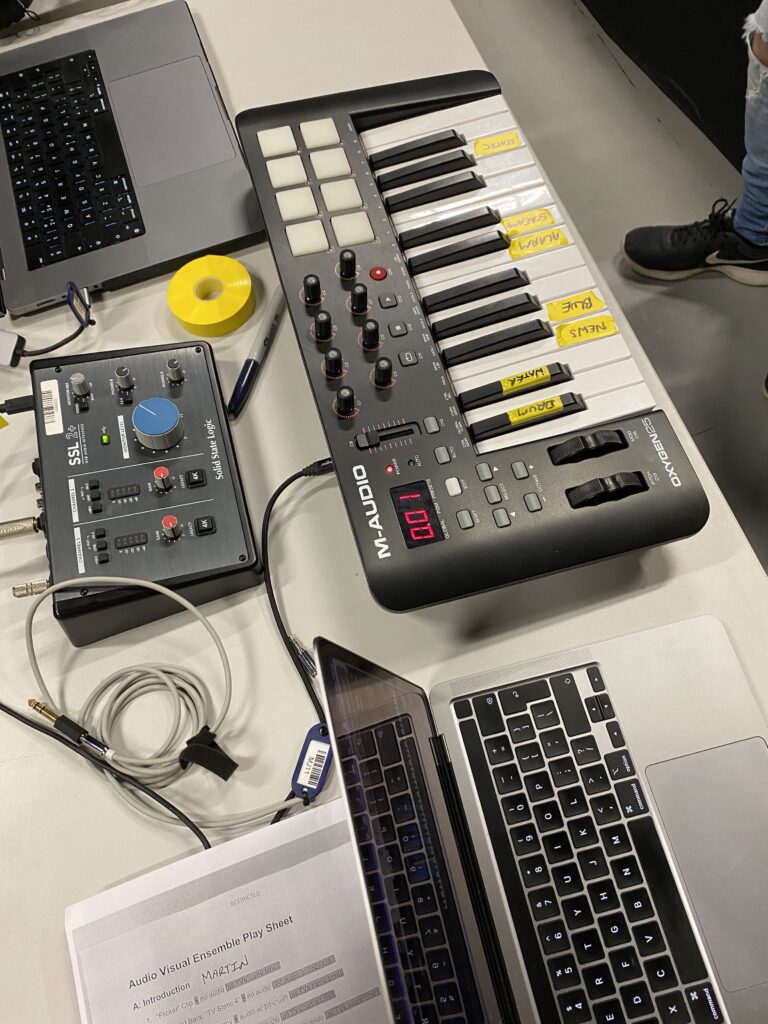
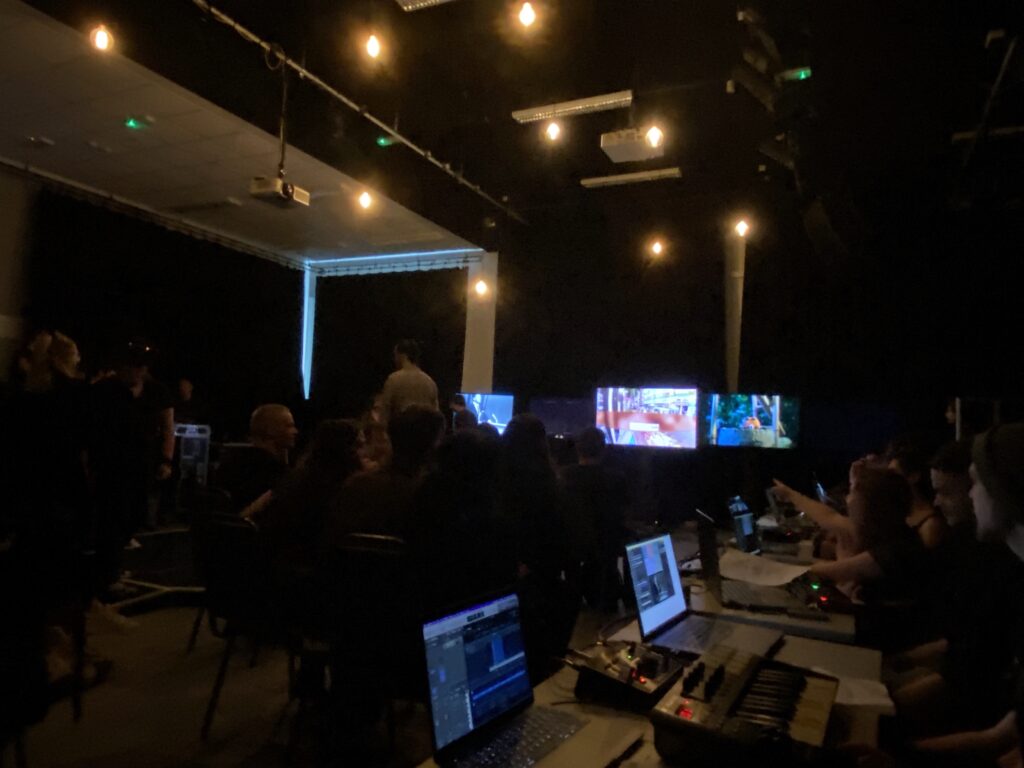
“Audio Visual performance was great! Full audience! They all clapped a couple of times at the end ! Spoke to Antti and Will Parker outside about it afterwards and they said they were in the audience!”
“This module focusses on electronic music, covering the fundamentals of sound synthesis and audio signal processing in an applied musical context. Through lectures and practical workshops, you will gain a thorough understanding of electronic music history, contexts, technologies and creative techniques.”
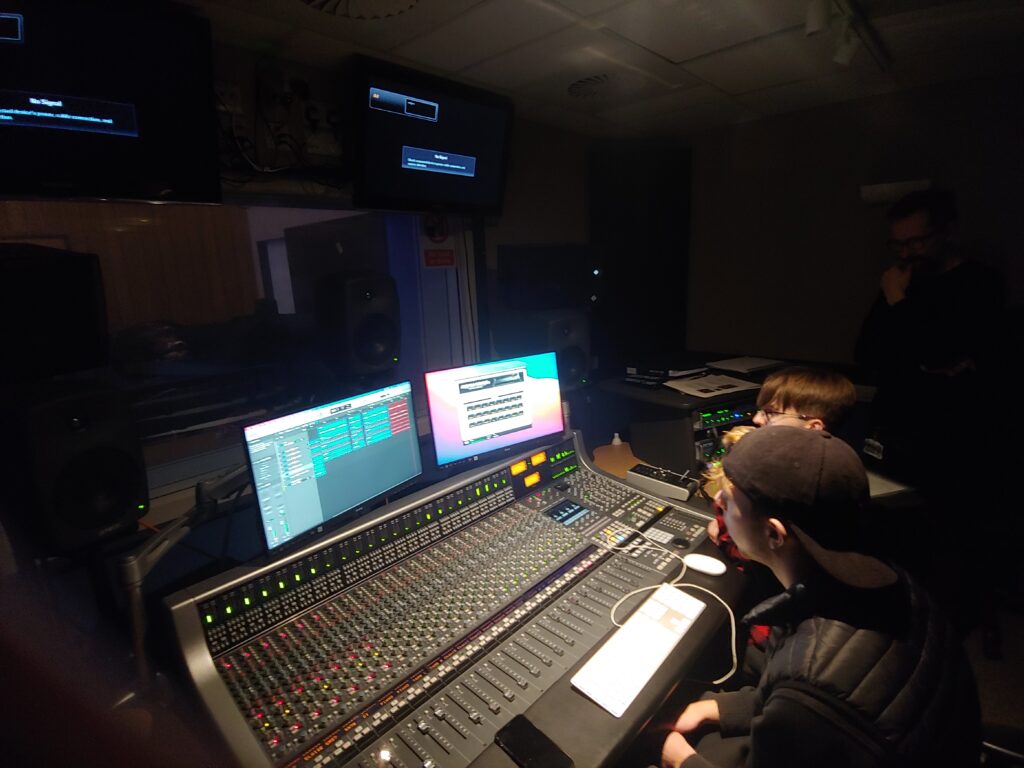
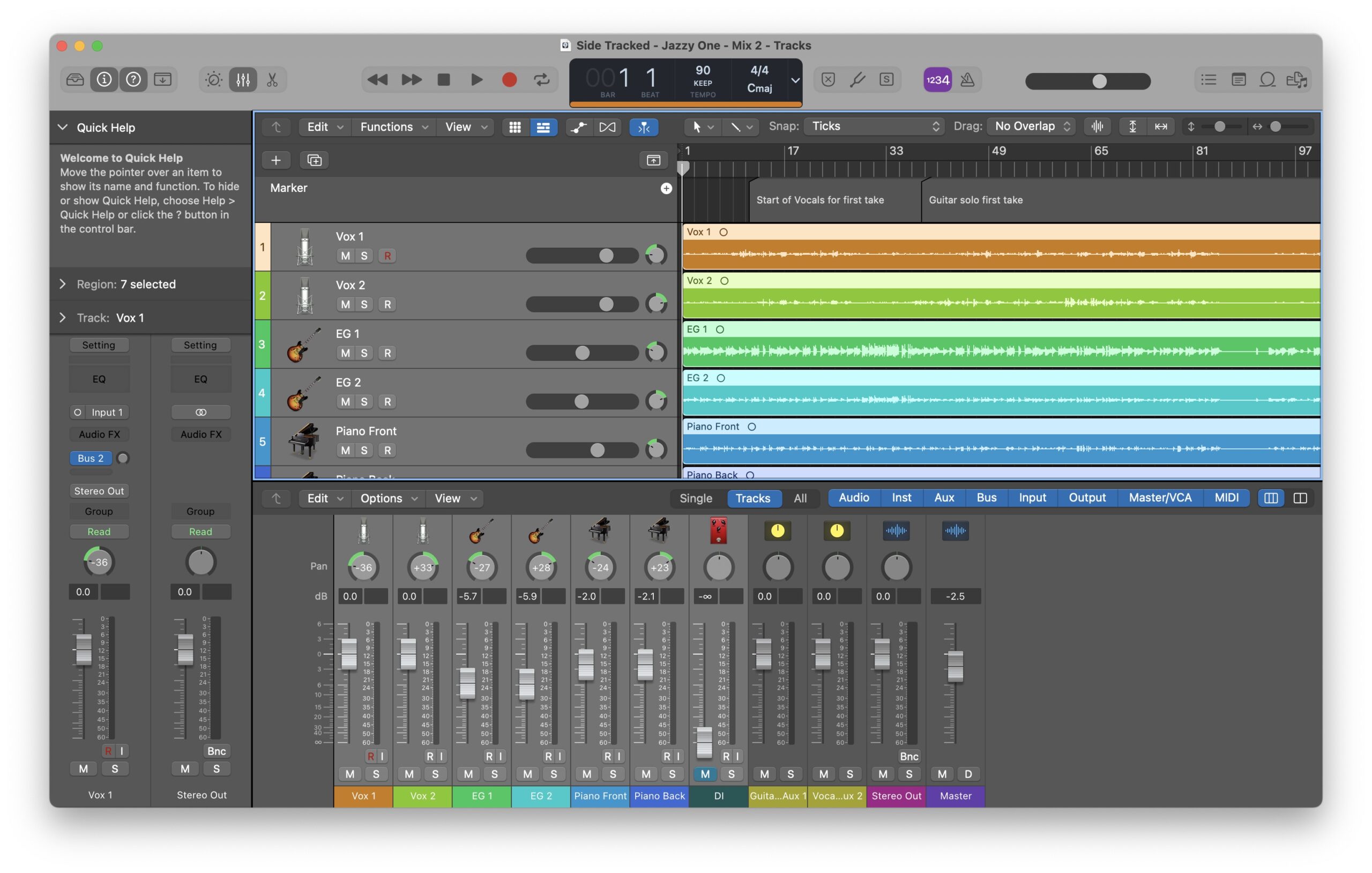
“Mixcraft introduces students to the art and craft of sound mixing and focusses on both the technical and aesthetic aspects of the mixing process. Working across a wide variety of genres using examples from students’ own work, the work of their peers and professional multi-track recordings, Mixcraft covers multiple mixing paradigms, from the naturalistic to the transformative.
Mixcraft aims to:
1. Develop critical, creative judgement in approaches to mixing applicable to a wide range of musical genres
2. Develop technical skills in sound mixing across a range of technologies
3. Develop a critical understanding of the relationship betwee mixing processes and musical practic
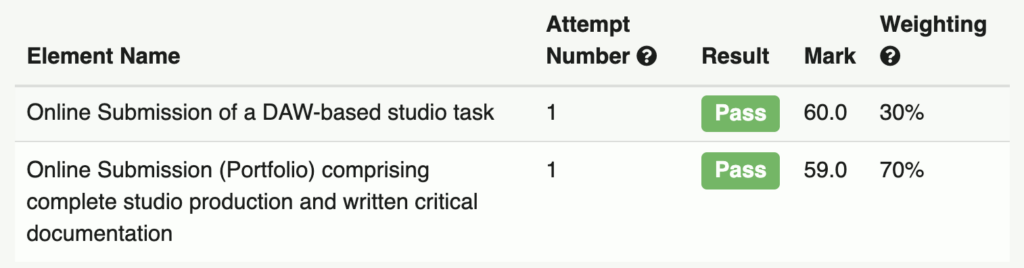
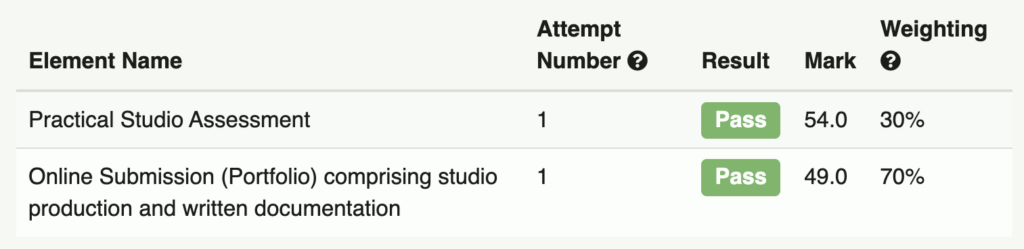
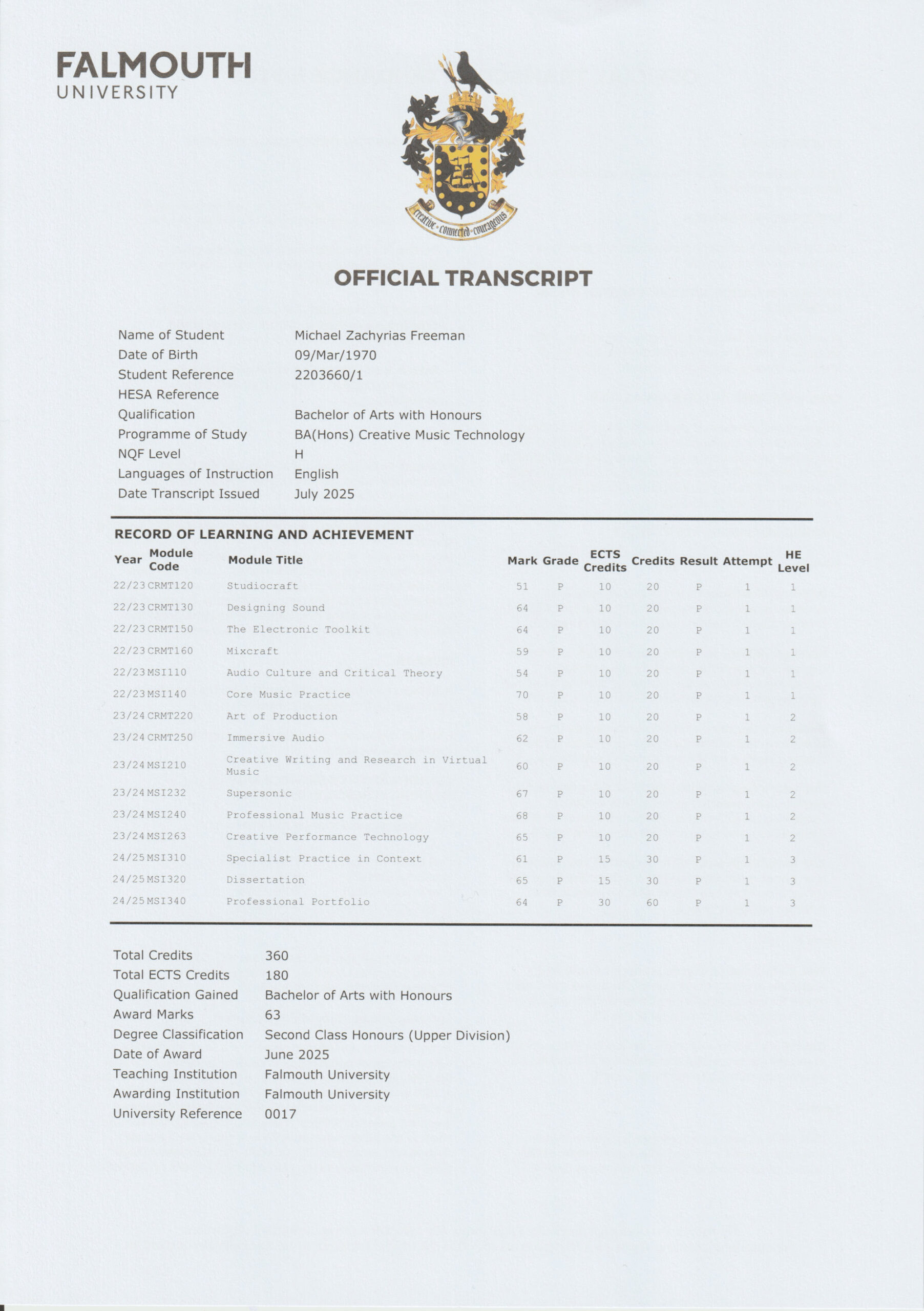
The medium mark reflected my unfamiliarity with the academic process they were looking for not my ability to write, as was verified in the feedback (see below).
Module description
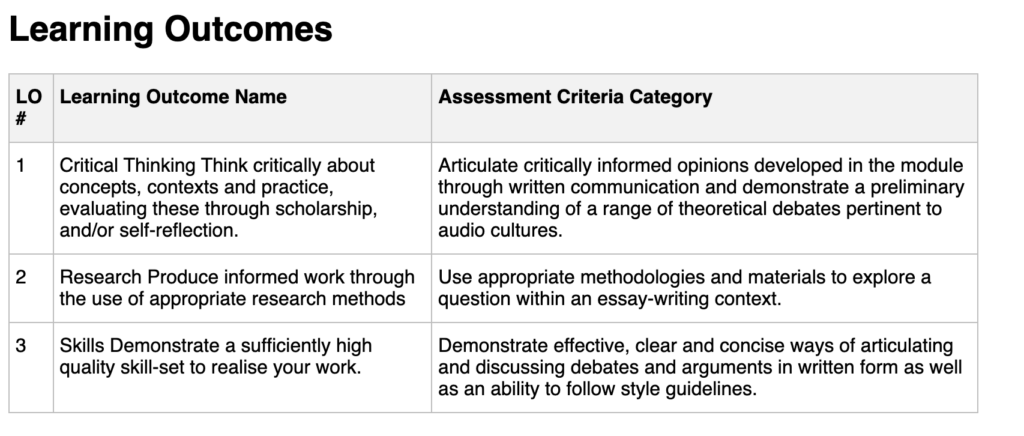
“This module explores sound and music practices as they evolve within ever changing audio cultures. We will be examining the context and culture, in which you as artists and musicians are working, so as to better understand and critically question the relationship between music, sound, noise and culture. we will be engaging with various theoretical concepts that will enable you to develop interpretations of audio culture and to formulate critical theories whilst becoming self reflective of practice.”
“This module focusses on two themes. The first is an exploration of the ways in which recorded sound can be edited, manipulated and mixed. In thinking about sound as a material that can be sculpted, the module develops skills, knowledge and understanding that can be applied to other musical projects. The second theme involves introducing the professional workflows involved in putting sound to picture and exploring the ways in which sound can bring new depth and meaning to moving images.”
Assessment 1
Brief
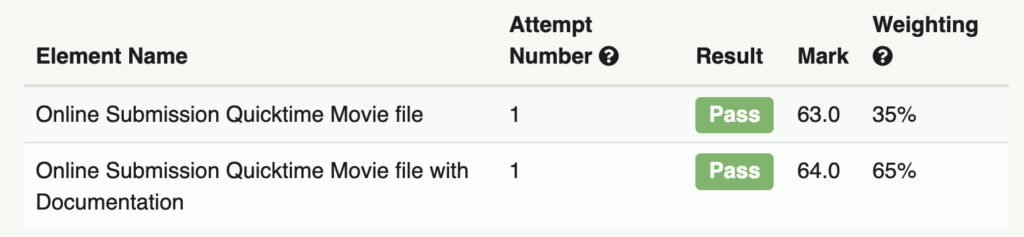
Assessment #1: Detailed Brief – Online Submission of QuickTime Movie (35%)
Completion requirements
Brief:
Assessment #1 is a practical task that will be completed in groups with each member playing an integral role in the project and demonstrating the key skills acquired for the task. Each group will select a movie clip lasting around 2 minutes (+/- 15 seconds), and create a believable sonic accompaniment to the scene. For this first task, your focus should be on making a credible, realistic sound world that corresponds to what we are seeing on screen. Think Foley, Sync and realism. The clip can be documentary, live action, animation or gameplay but needs to portray characters, spaces and objects that we recognise from the real world. For this task, please focus only on atmospheres, sync effects and Foley and avoid straying into dialogue or music.
Please remove the original sound track from your clip and refrain from downloading sounds from the internet.
Submission:
Each student will submit a QuickTime movie file via the link on the learning space – making sure that the sound is encoded onto the QuickTime file at 16 or 24 bits, 44.1 or 48Khz and that the whole file does not exceed 1GB.
Each member of the group should submit the same file i.e. no separate mixes or edits
Each student submit a (300 words max) PDF which outlines the role you played in the group and how you contributed to the final product.
The PDF should include …
A list the members of the group and the different roles you played and or different contributions to the project,
A link to the original clip
Any relevant materials such as spotting lists etc.
Any particular techniques and or processes that helped form the clip
Both files should be submitted in a zipped folder labelled as follows: CRMT130_Assessment1_Surname_Forname
Please allow plenty of time for uploading, bearing in mind that upload speeds are often much slower than download speeds.
If you experience any technical problems submitting, email dlsupport@falmouth.ac.uk. Take screen grabs of any errors and issues.
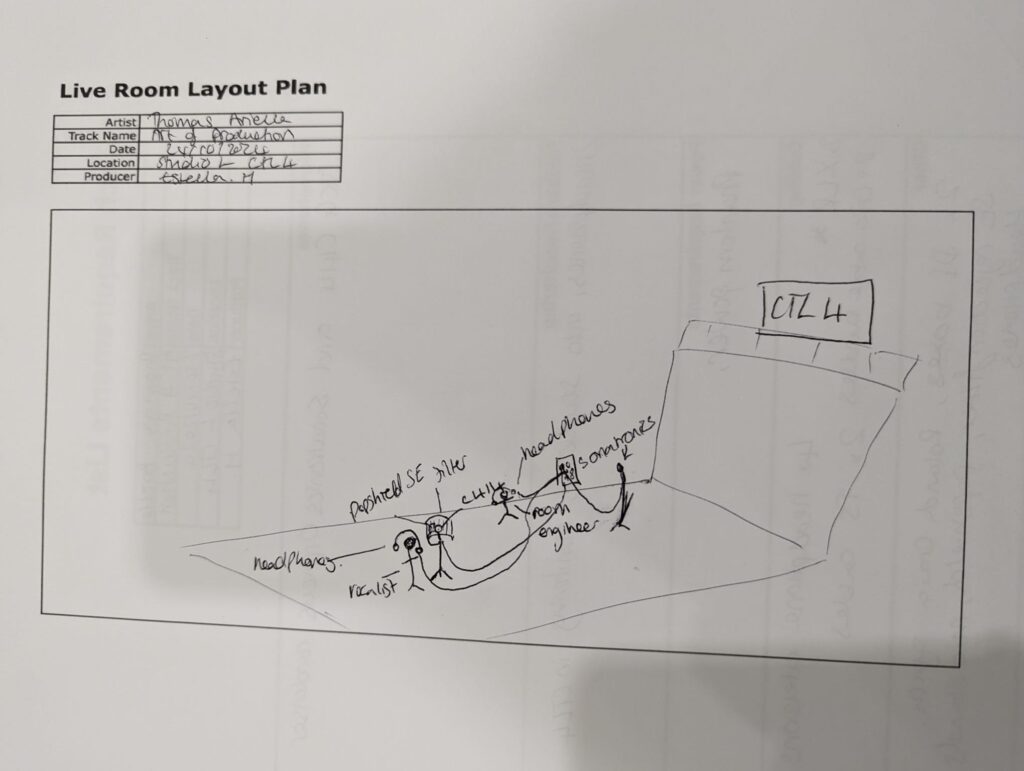
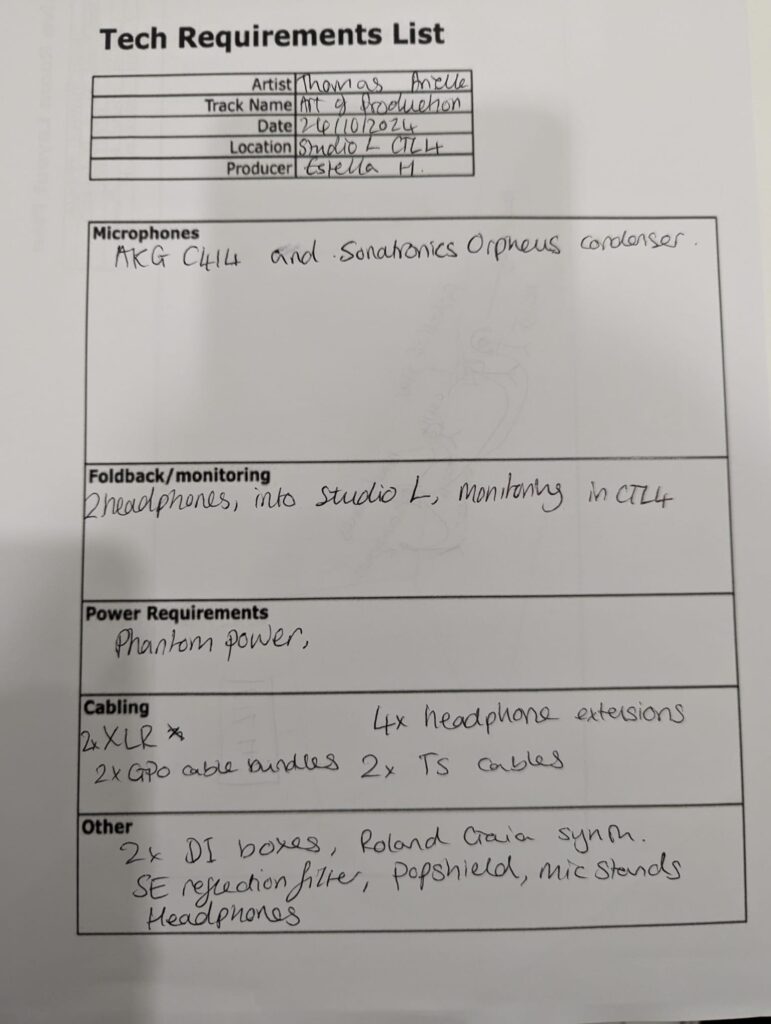
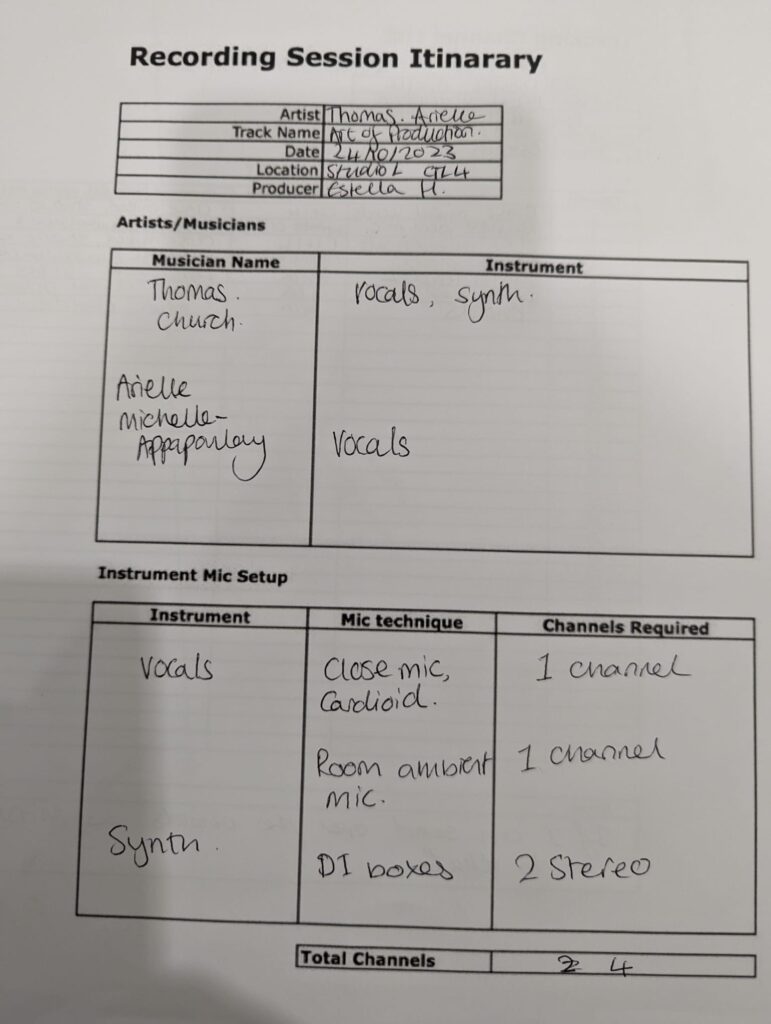
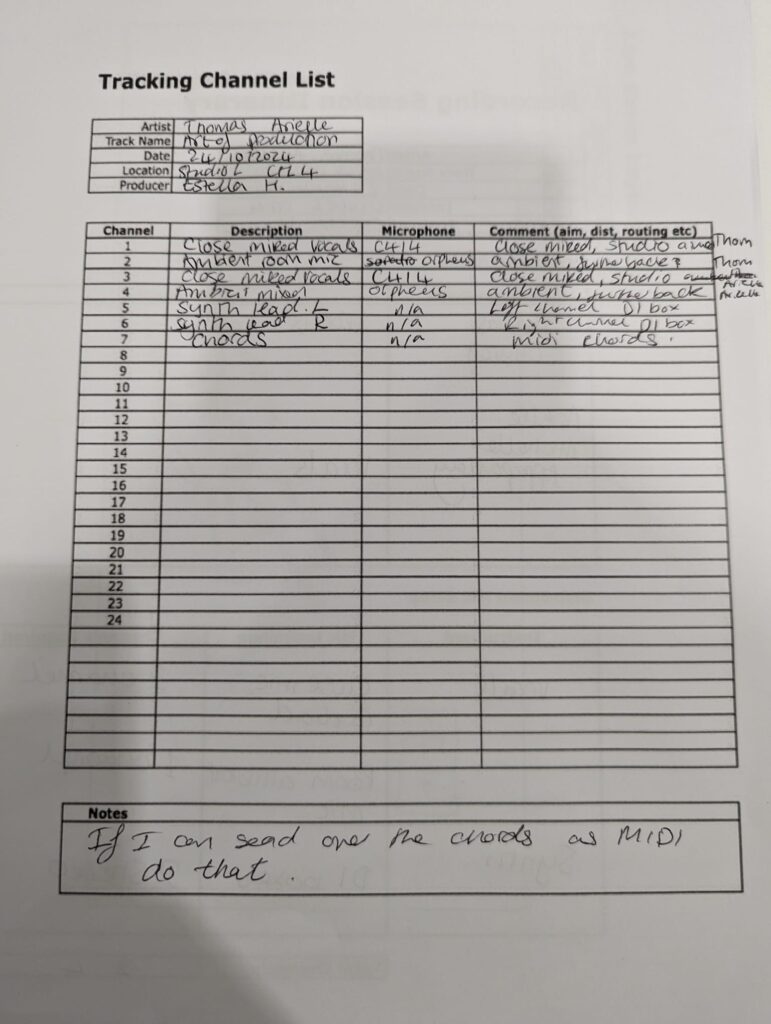
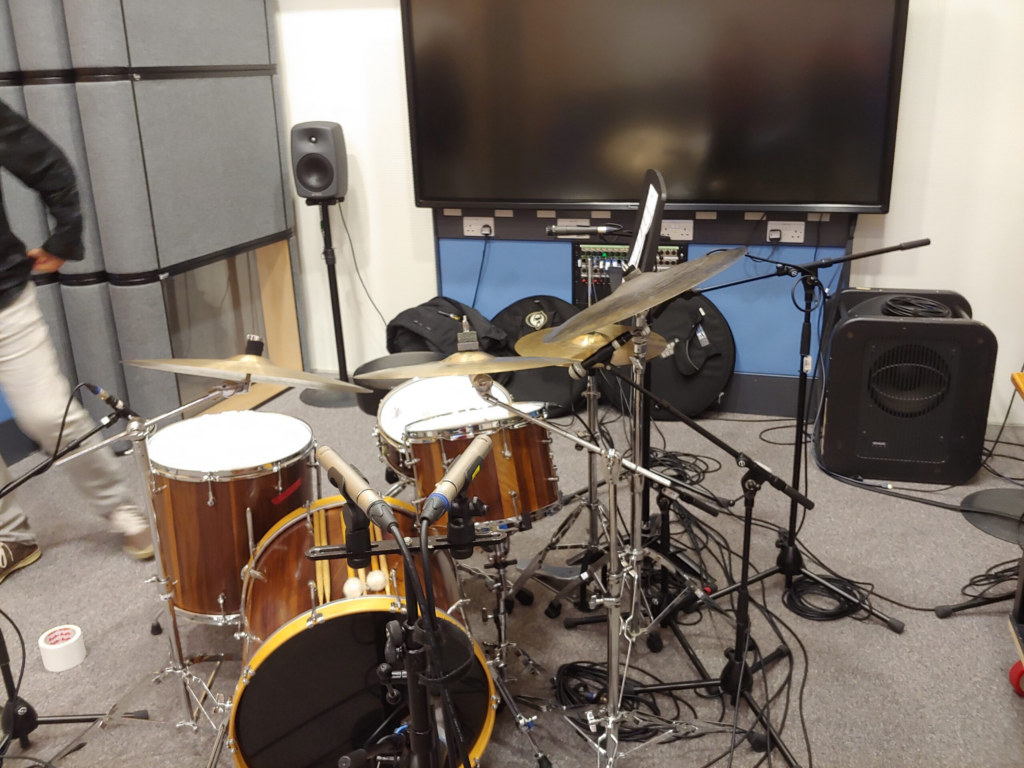
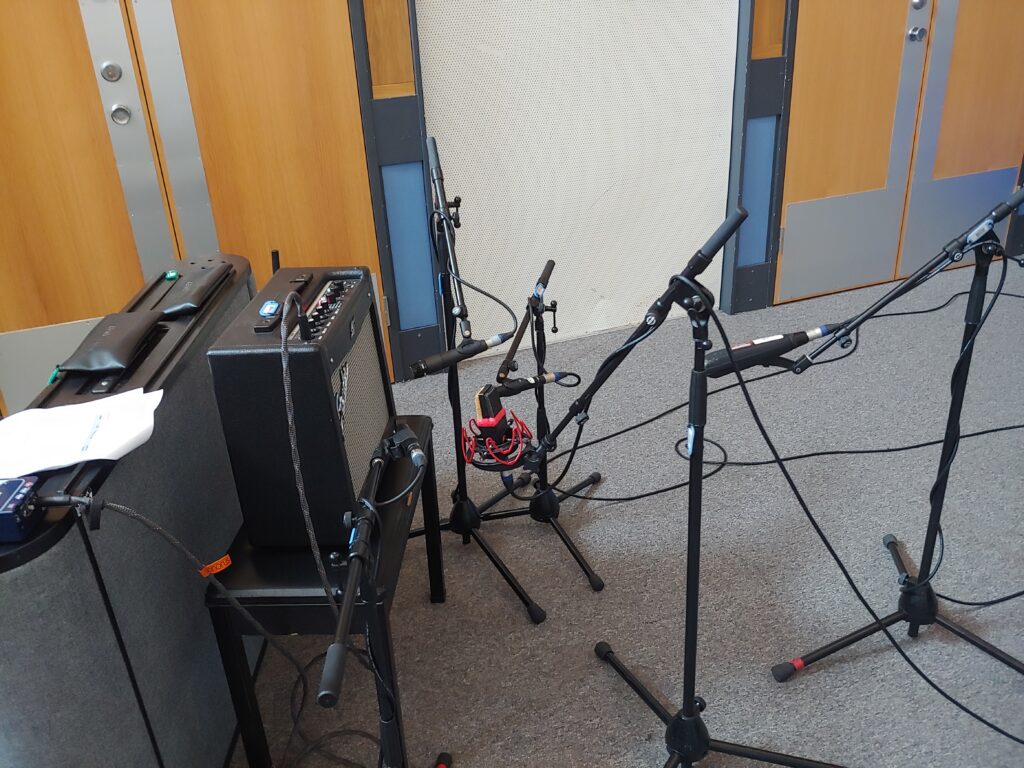
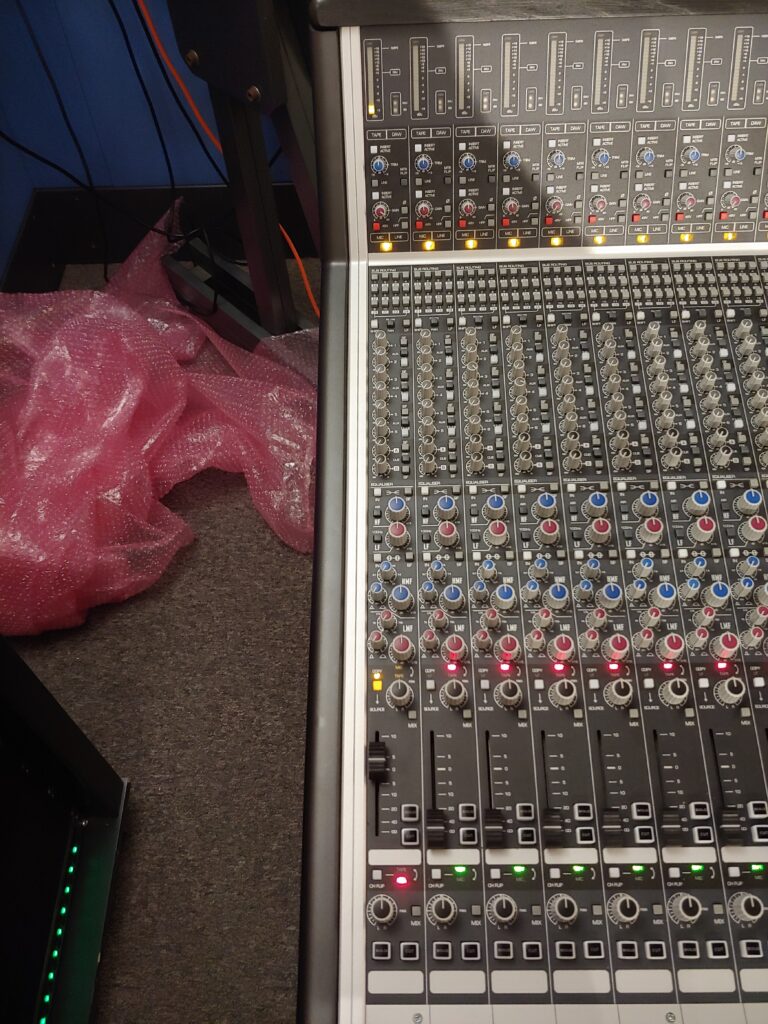
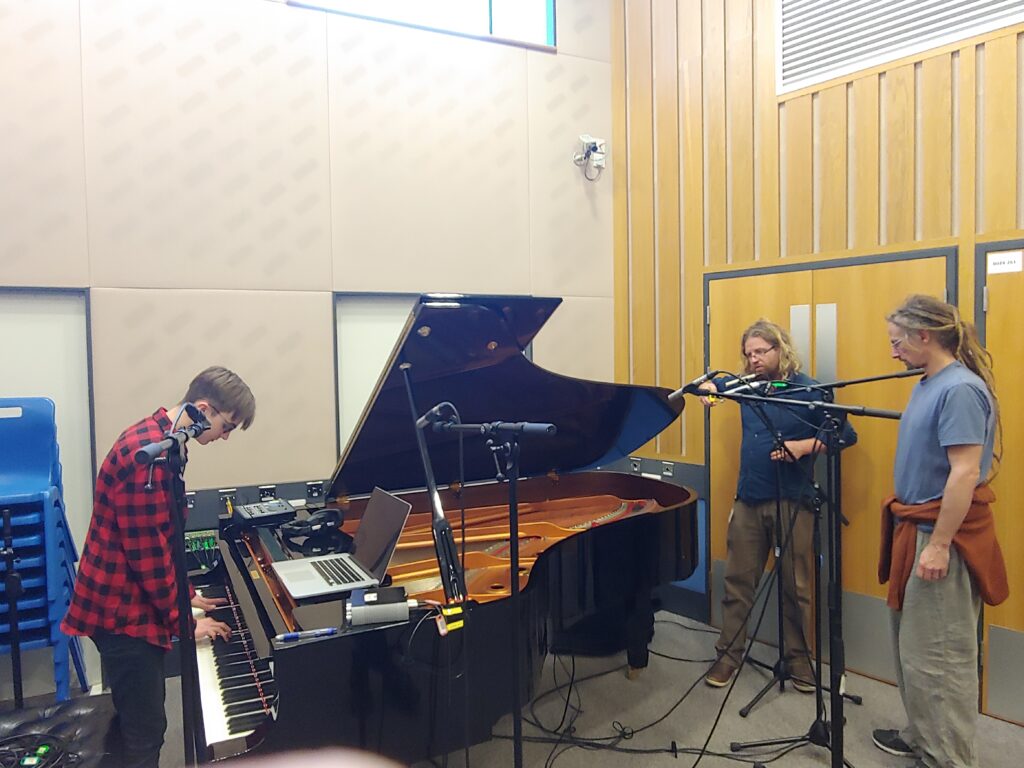
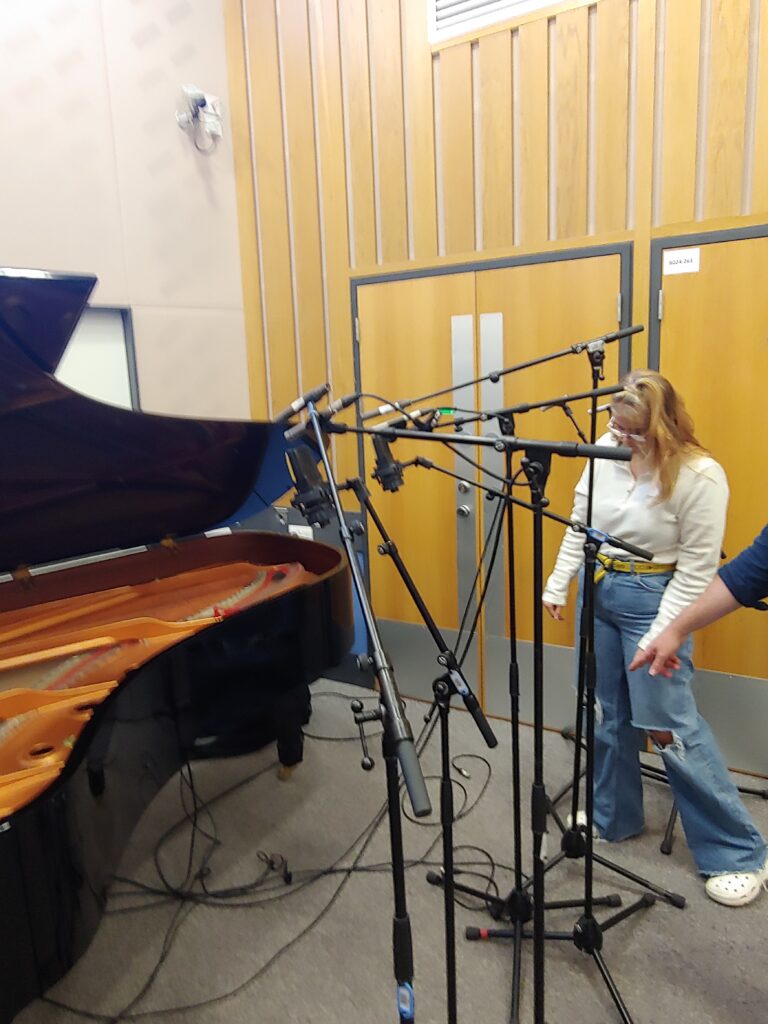
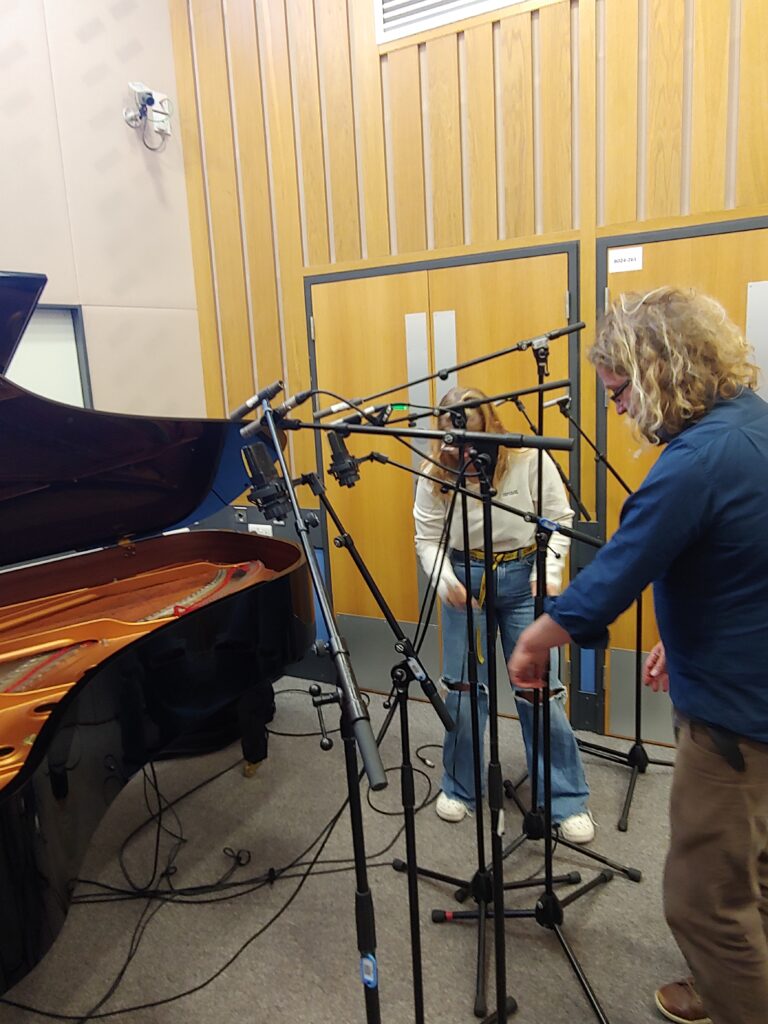
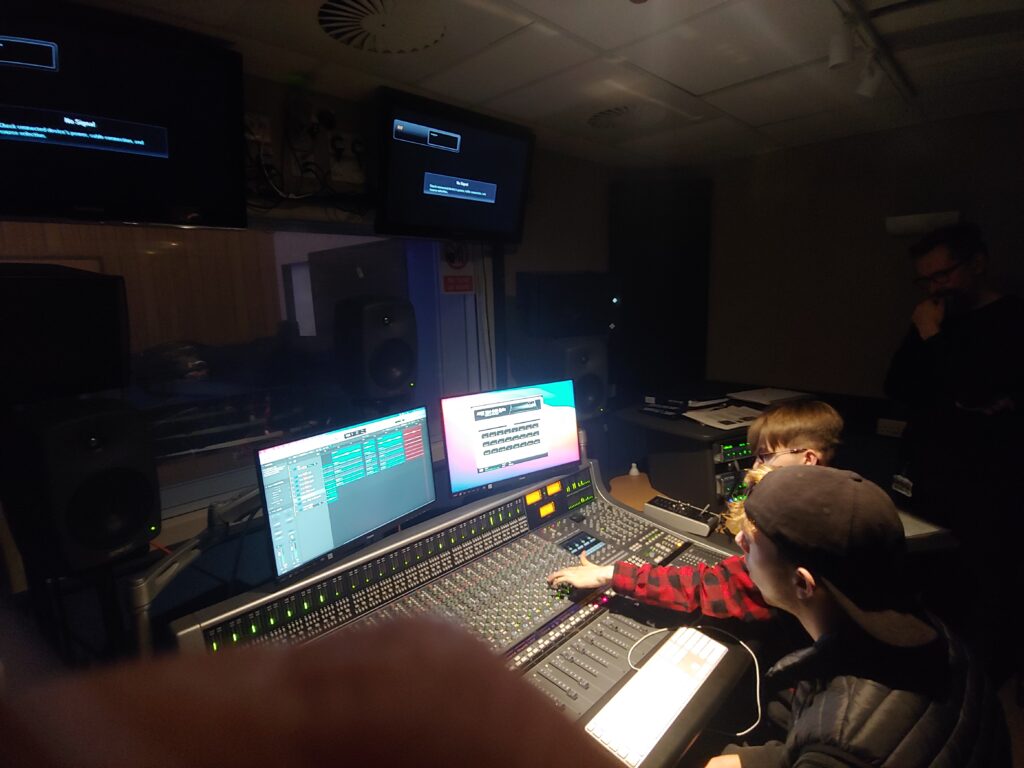
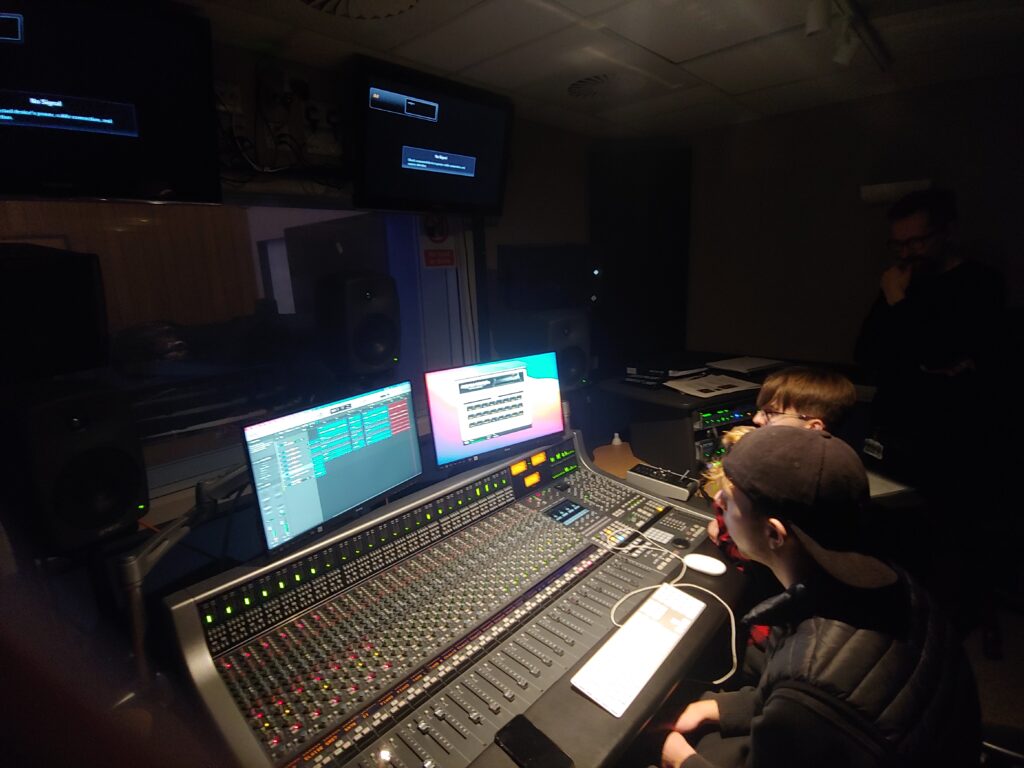
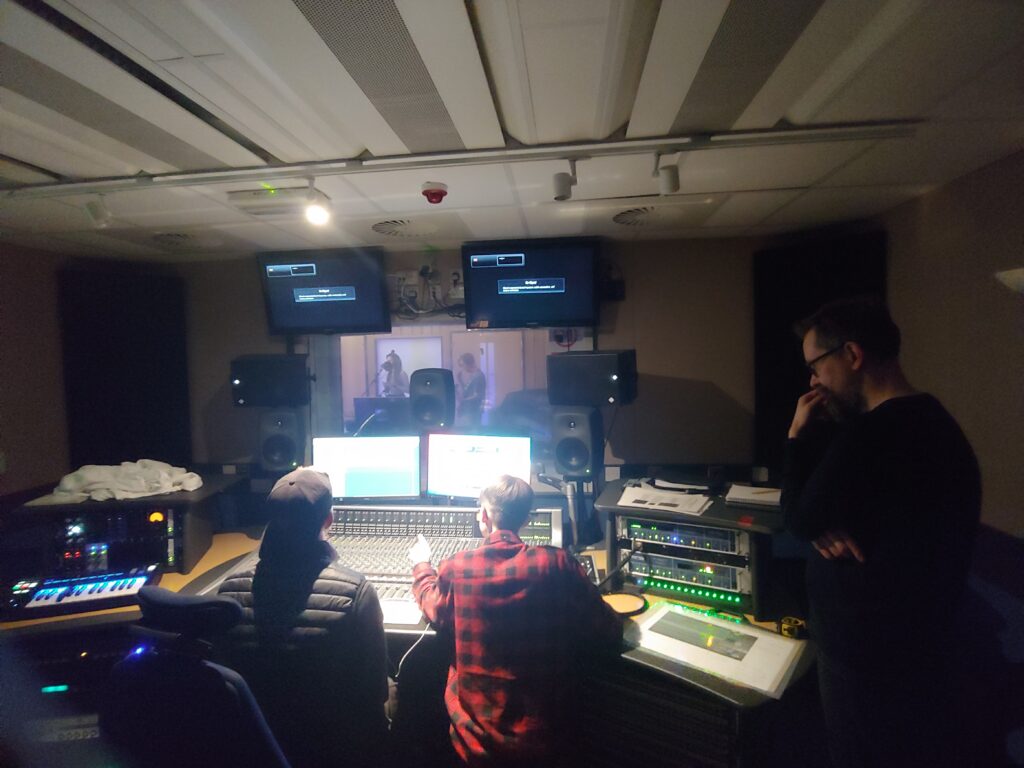
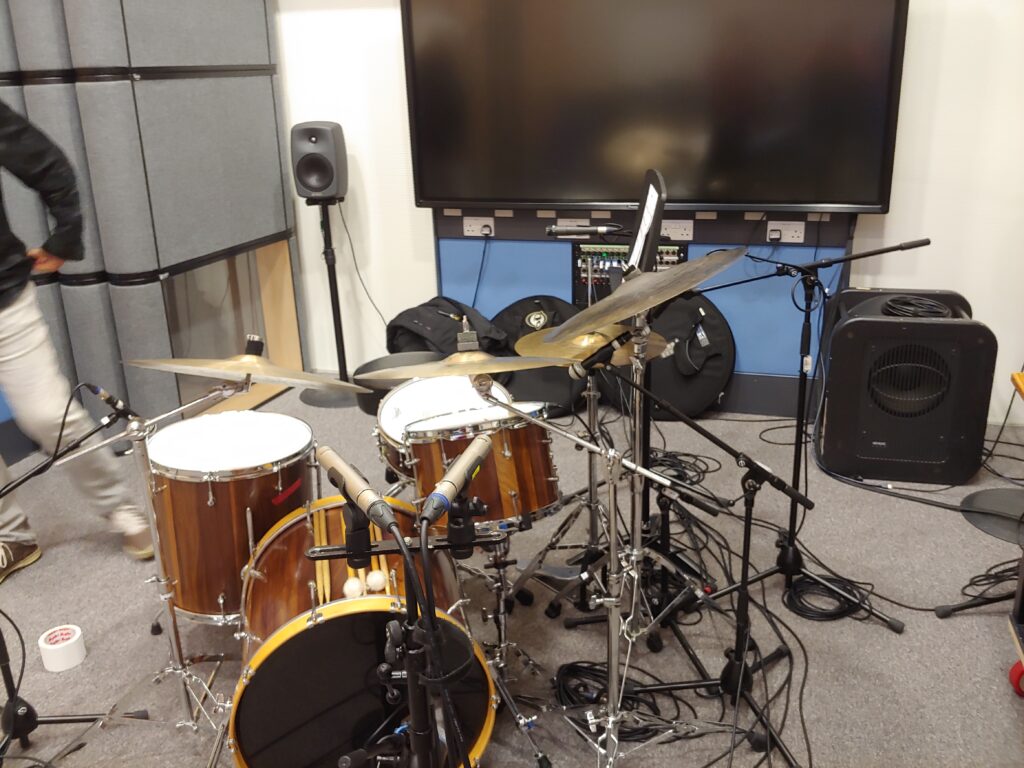
“Studiocraft is about effective working with instruments, spaces, equipment and people, in the context of contemporary studio based music recording and production. Studiocraft introduces students to the art and craft of sound recording and focuses on both the technical and personal skills necessary for achieving high-quality recordings. These two themes are explored in parallel with students learning the psychology and diplomacy of getting the best performances from musicians, while also gaining a comprehensive introduction to the techniques of studio recording. The module follows the journey of sound from source to 17 of 103 recording media, and covers themes including acoustics, instrument optimisation, microphone technique and analogue and digital signal flow, as well as a variety of recording technologies. Students will be introduced to industry standard production techniques and workflows, which will be continuously measured against detailed critical listening. While this module has a predominantly practical focus, discussion around the key themes and technologies introduced will always be rooted in a critical, historical context. You will be actively encouraged to think creatively about the variety of possible modes of engagement and the associated material affordances and constraints you might have with studio technologies. The module also places a strong emphasis on session management, people skills, professional studio etiquette and work ethic, as associated with contemporary studio production. The module will be delivered through a series of practical, hands-on workshops and lecture-seminars and will include group critiques of student works in progress. Critical listening sessions will be integrated into the teaching, offering exemplars of techniques discussed. Projects will be supported by tutorials with staff, in addition to seminars and specialist lectures and blended learning materials.”
Executive Summary: The course helped me combine artistic and musical skills with tech. Think of the kind of thing that Steve Jobs excelled at which was bringing aesthetics and art to technology.
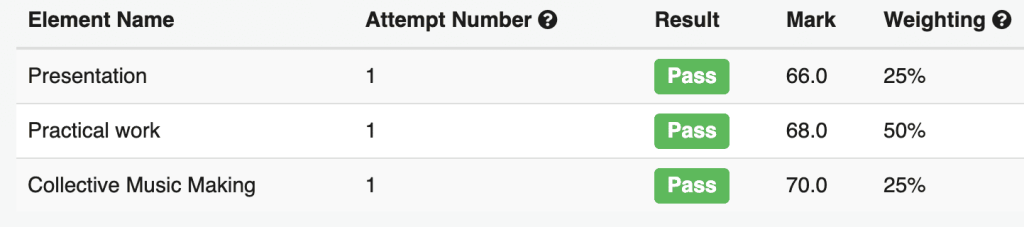
My highest mark in the first year of 70% was in Core Music Practice which reflected my strengths in software development and coding rather than studio recording work.
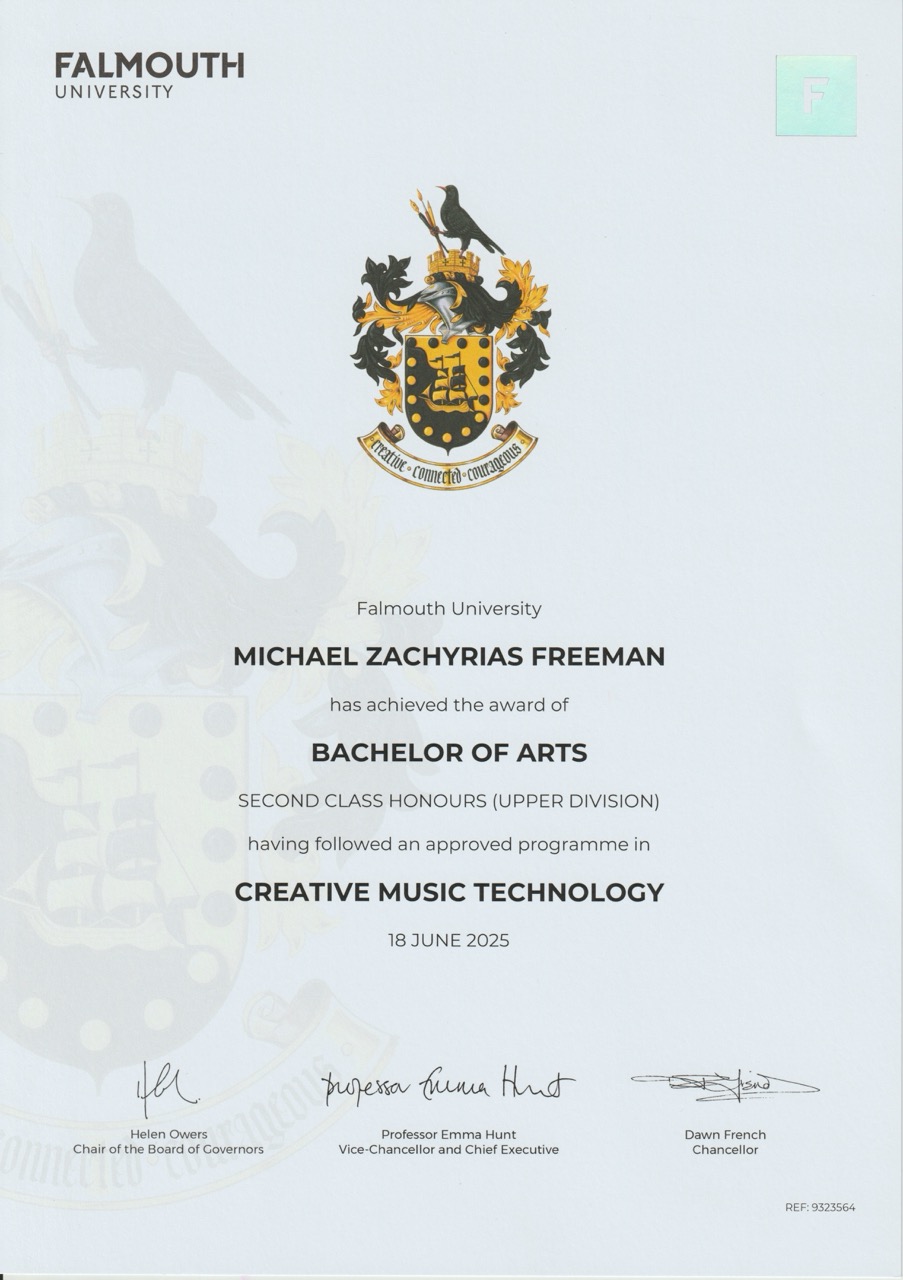
This post was originally the portfolio for my Entrepreneurship & Innovation Management MSc course application in 2025. I was accepted based on this. I deferred entry on the course to 2026.
Table of Contents
Welcome to my portfolio for my Entrepreneurship & Innovation Management MSc course application.
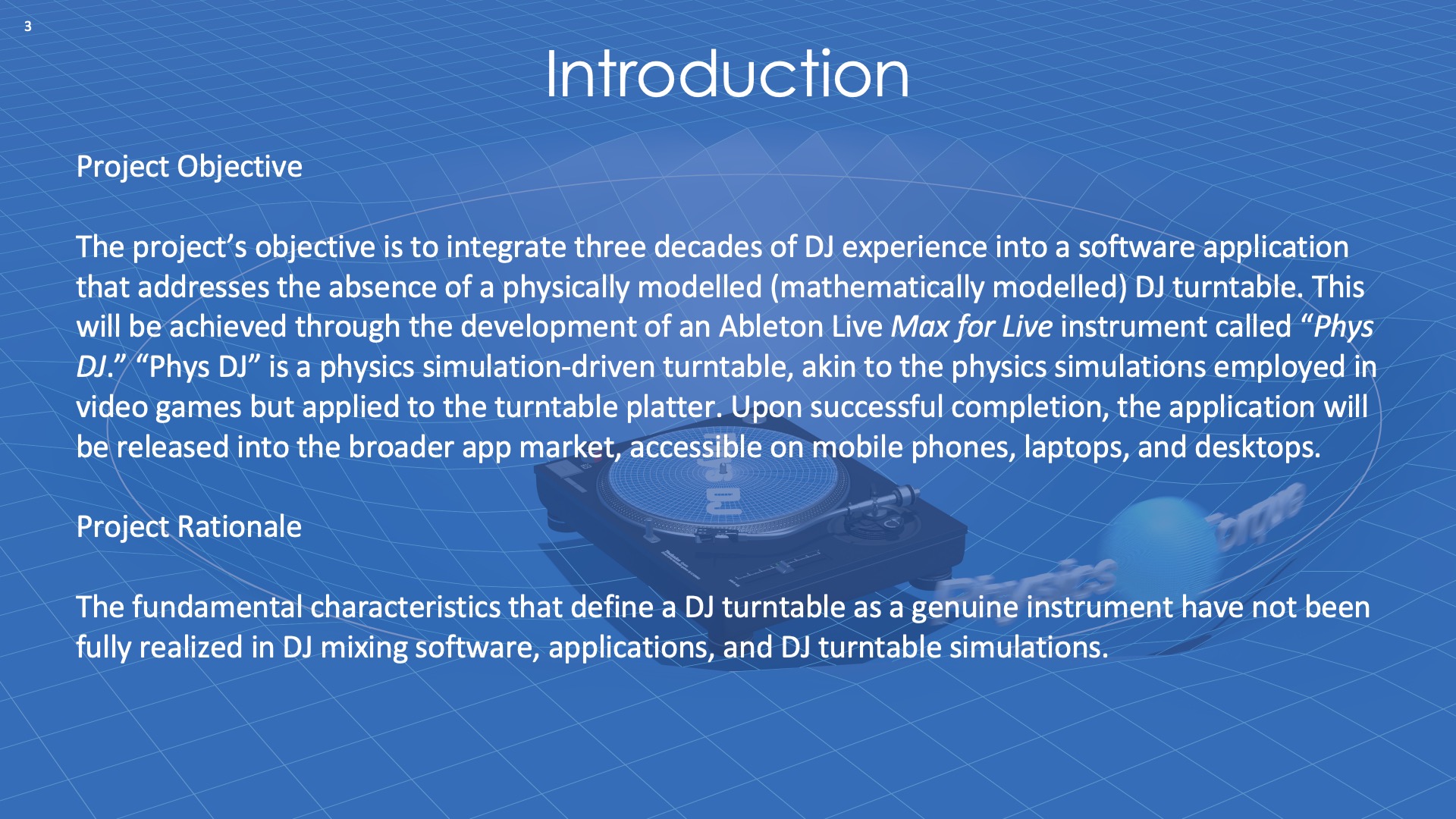
My core innovation and enthusiasm for a business venture, that I hope to consolidate by doing this masters, is this. As a DJ and musician with experience going back to the early 1990’s, I noticed a critical failure by the music technology industry to carry through performance techniques into the digital realm. These were developed over decades, but have been thrown out by an industry that would rather force inappropriate technology on artists, for technologies sake and with little or no understanding of how DJ’s, musicians and artists actually work (“Beware of geeks bearing gifts”). I know I have a better way, and I know other musicians and DJ’s agree with me because, like them, I love what I do.
The work I have been doing on the BA(Hons) Creative Music Technology is relevant to the masters as I went into the BA with the intention of developing the innovation that I have been working on since 2016. This indeed turned out to be the case, and the following projects show my enthusiasm for the product and its continuing development towards a future business venture.
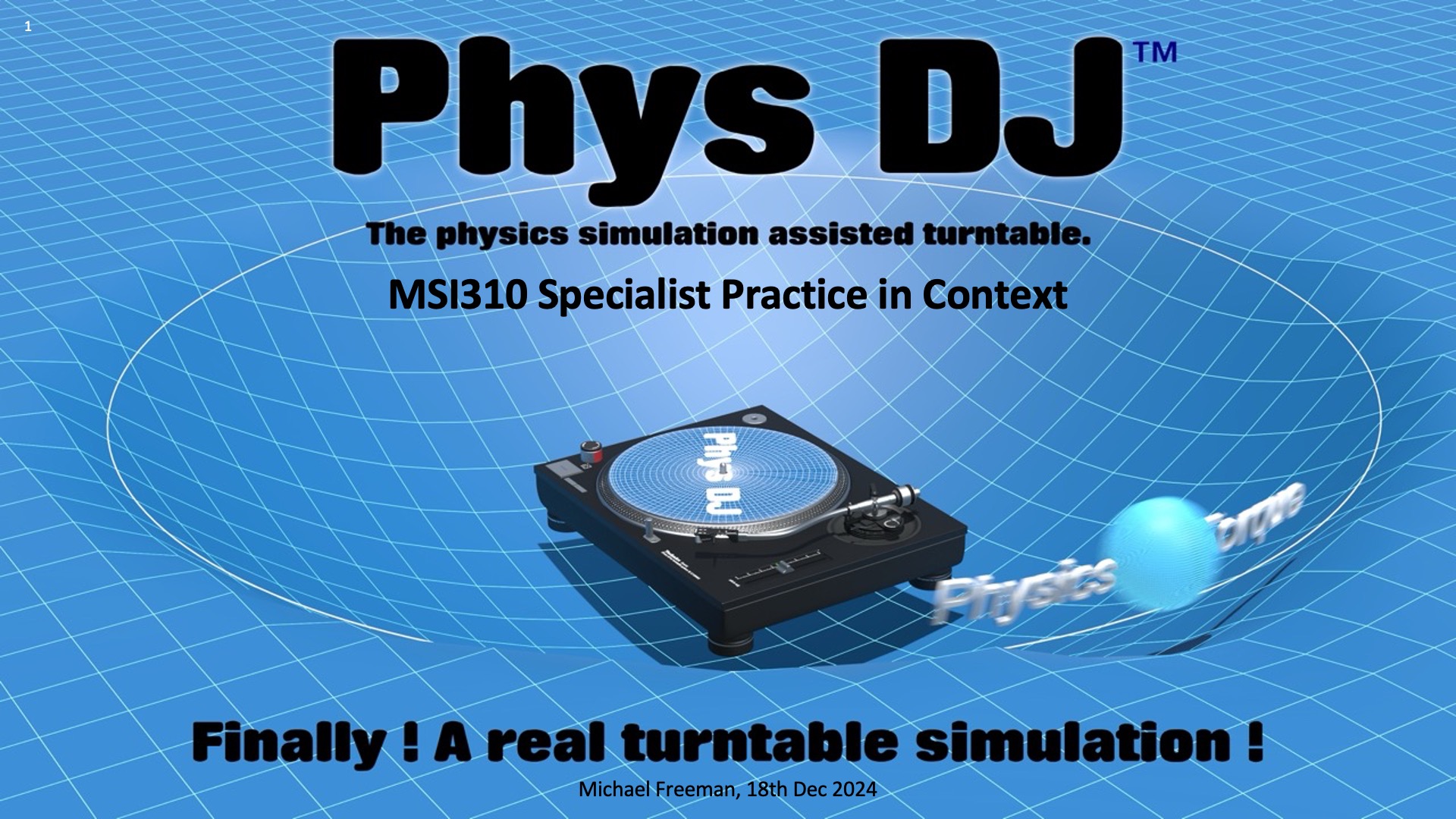
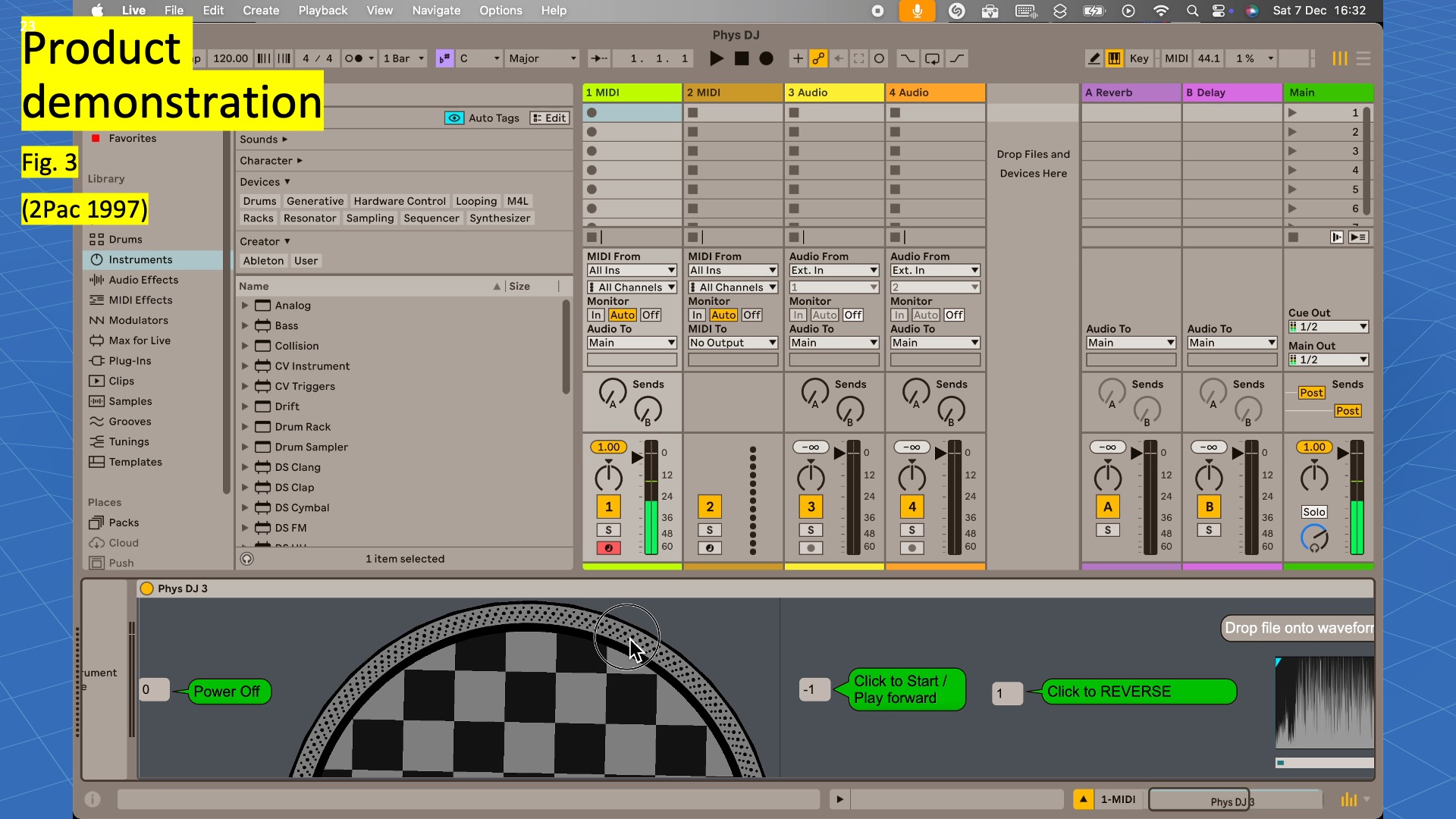
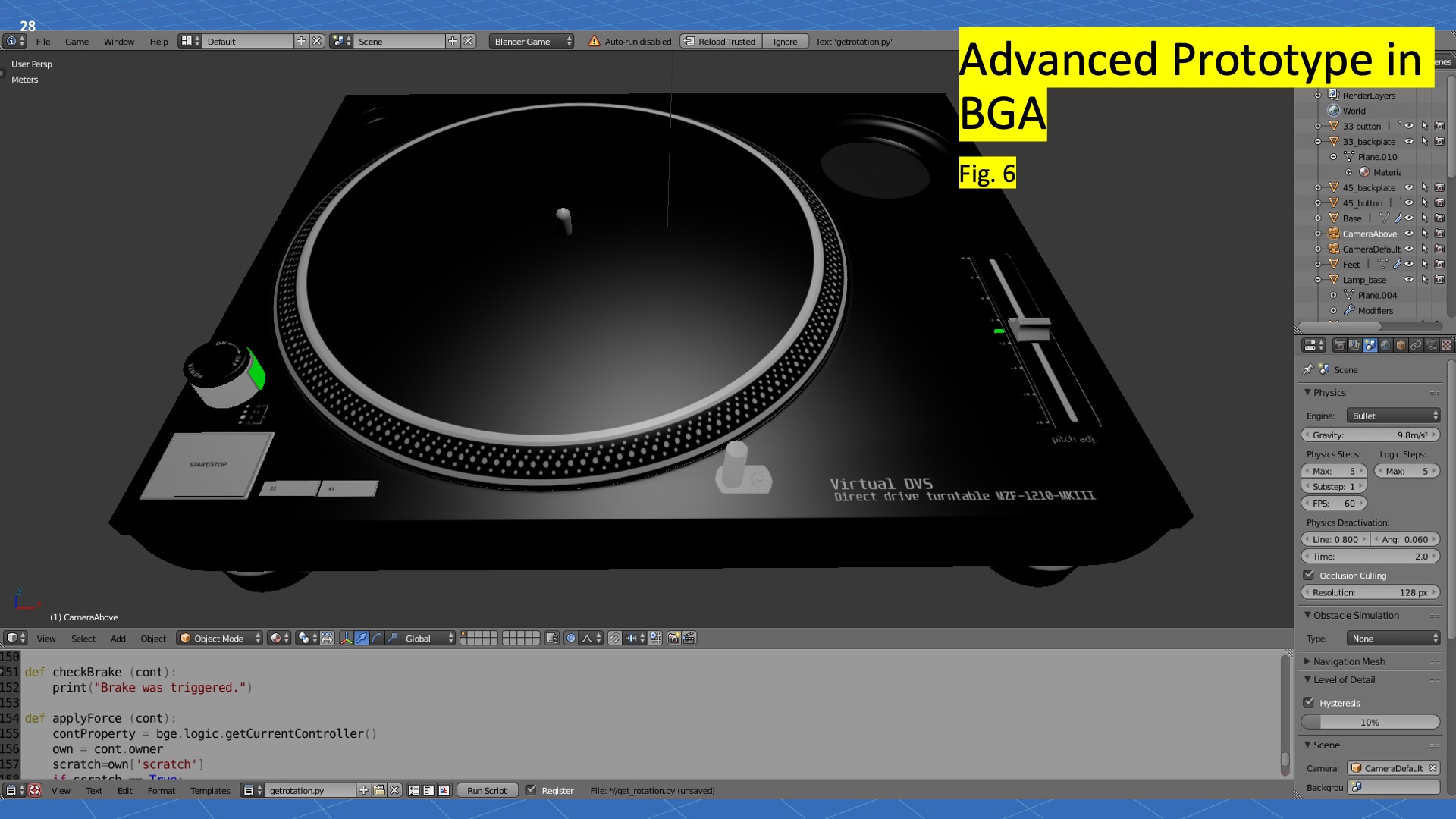
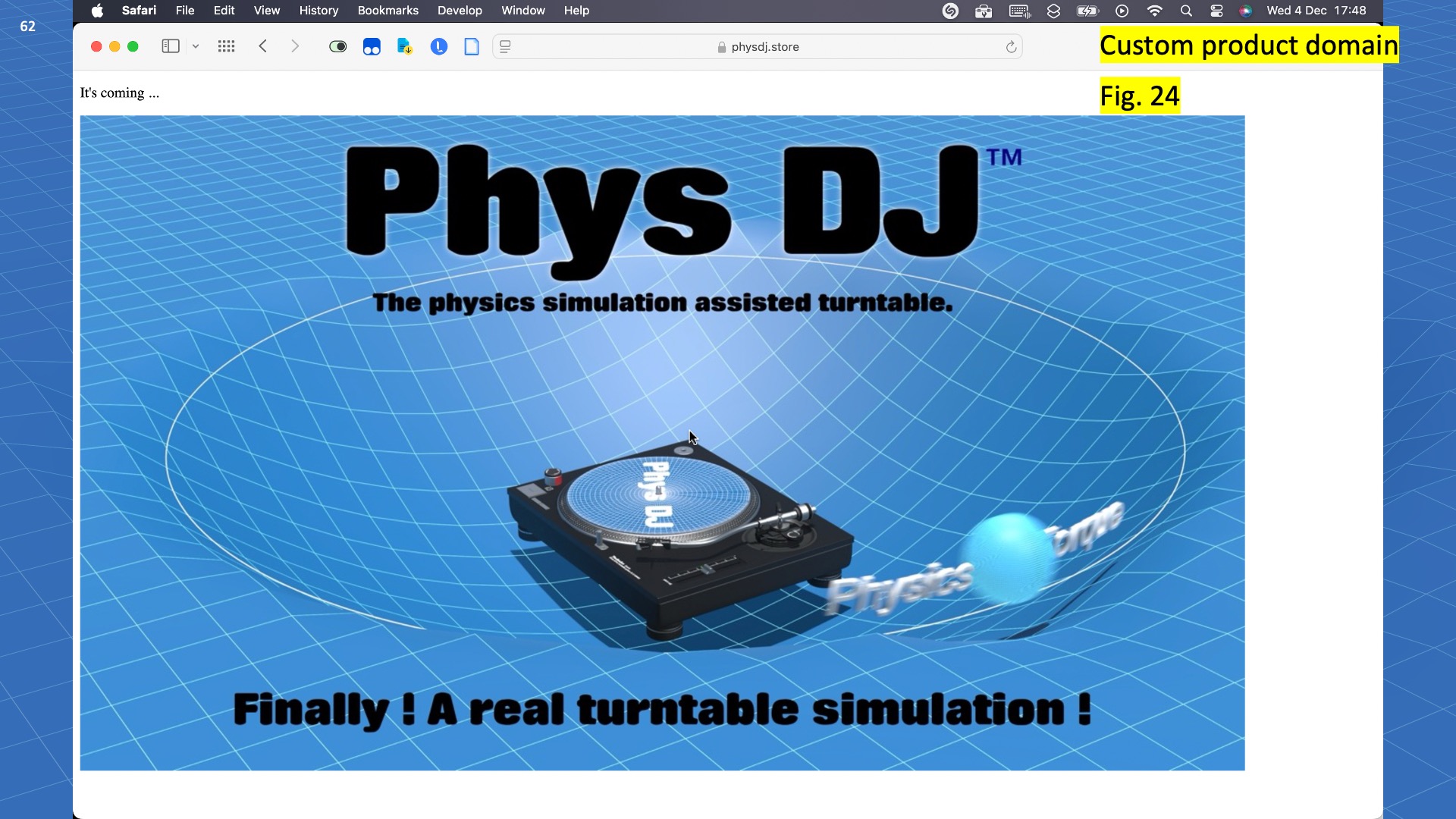
Demonstration of Phys DJ product
The following live demonstration of the Phys DJ product was included as a video as part of a 45 minute presentation (see next section).
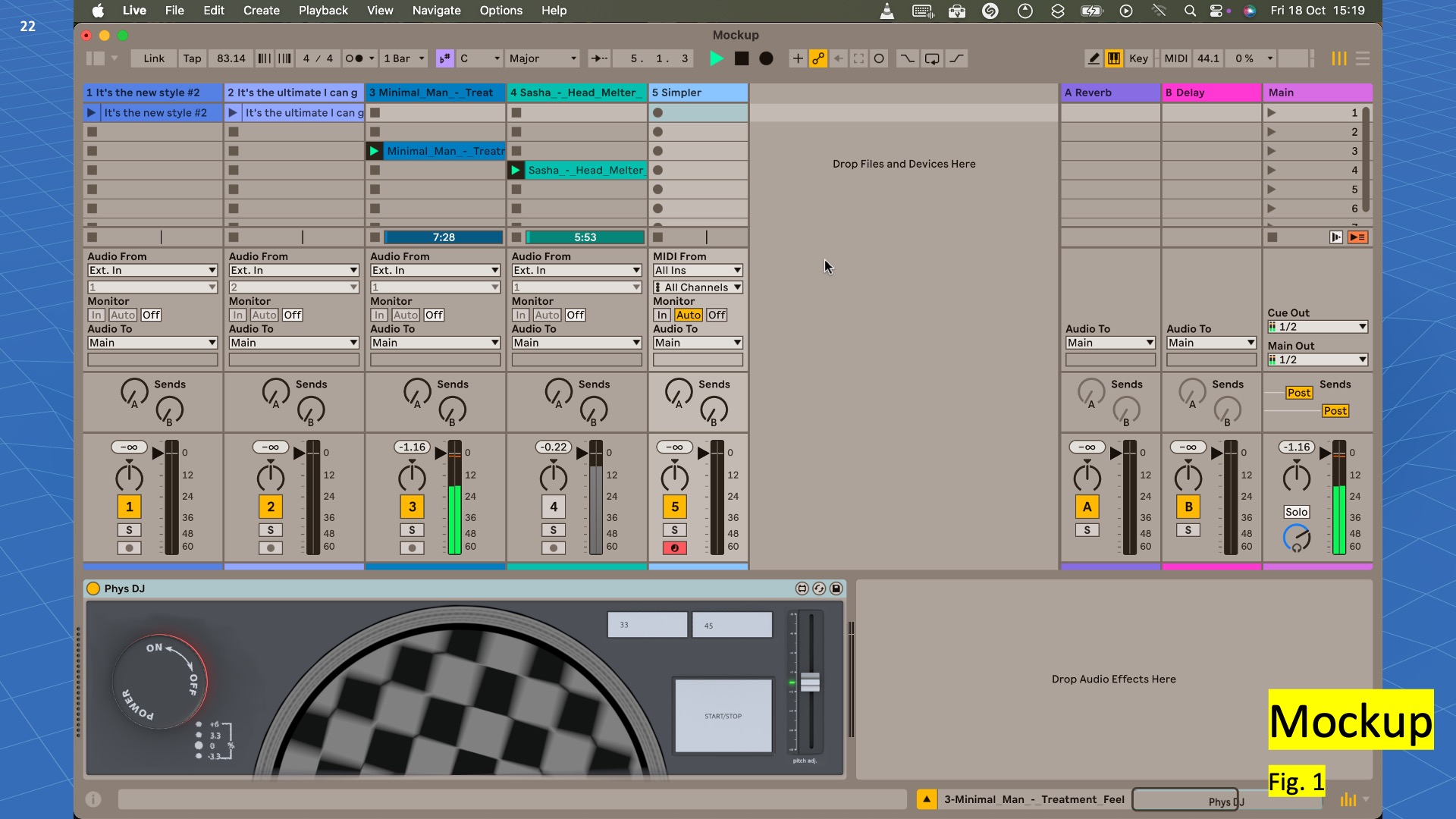
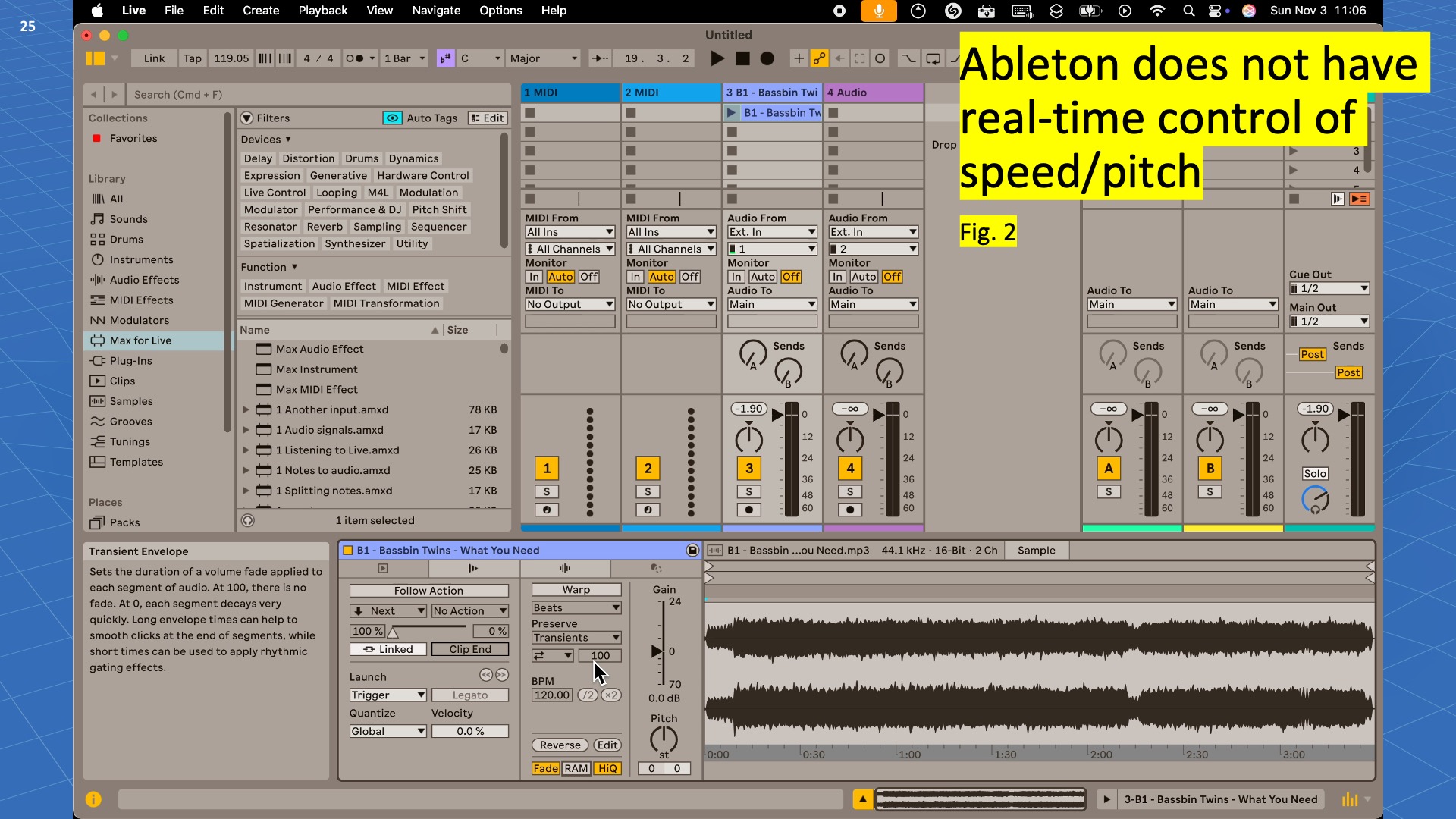
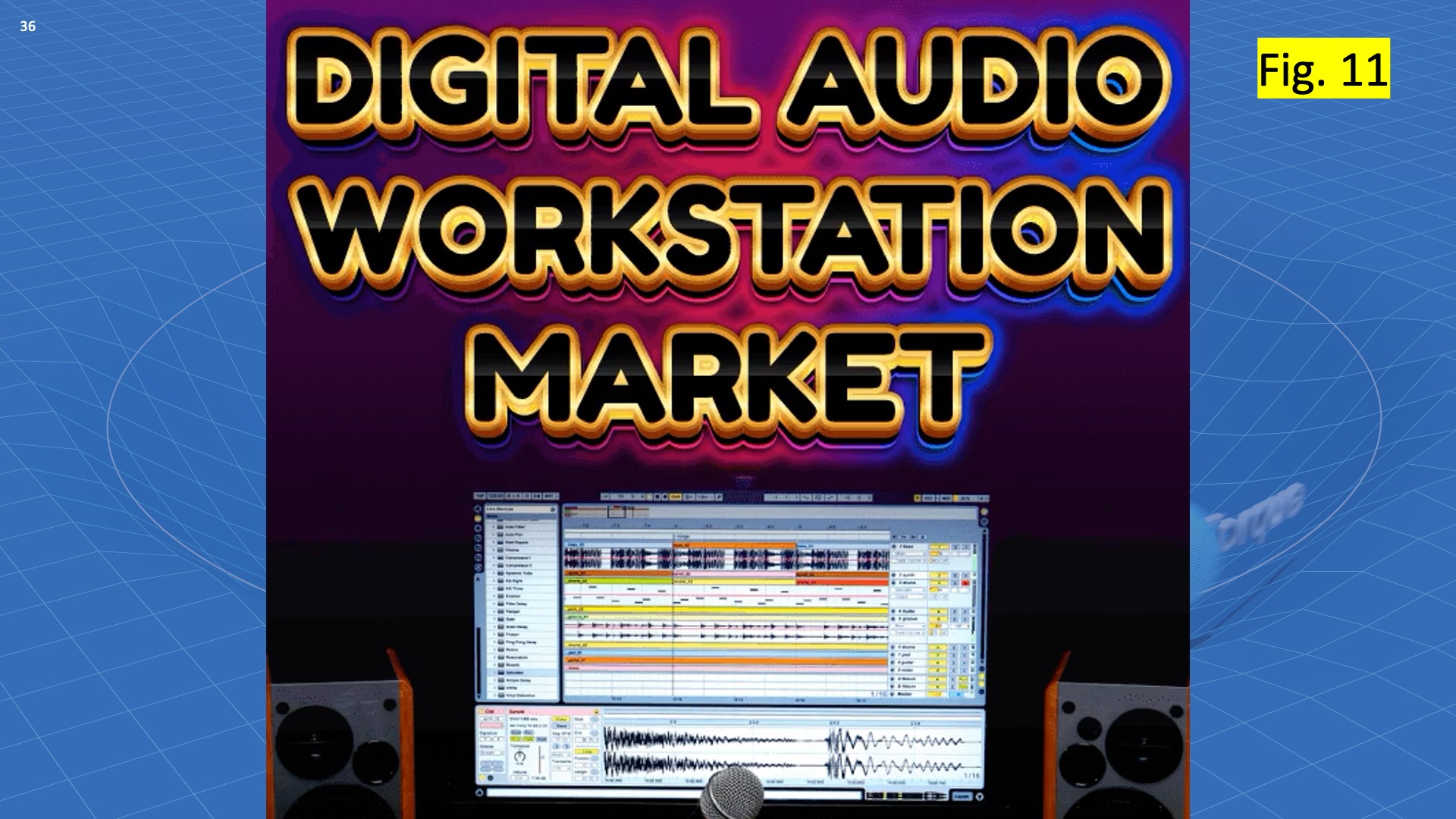
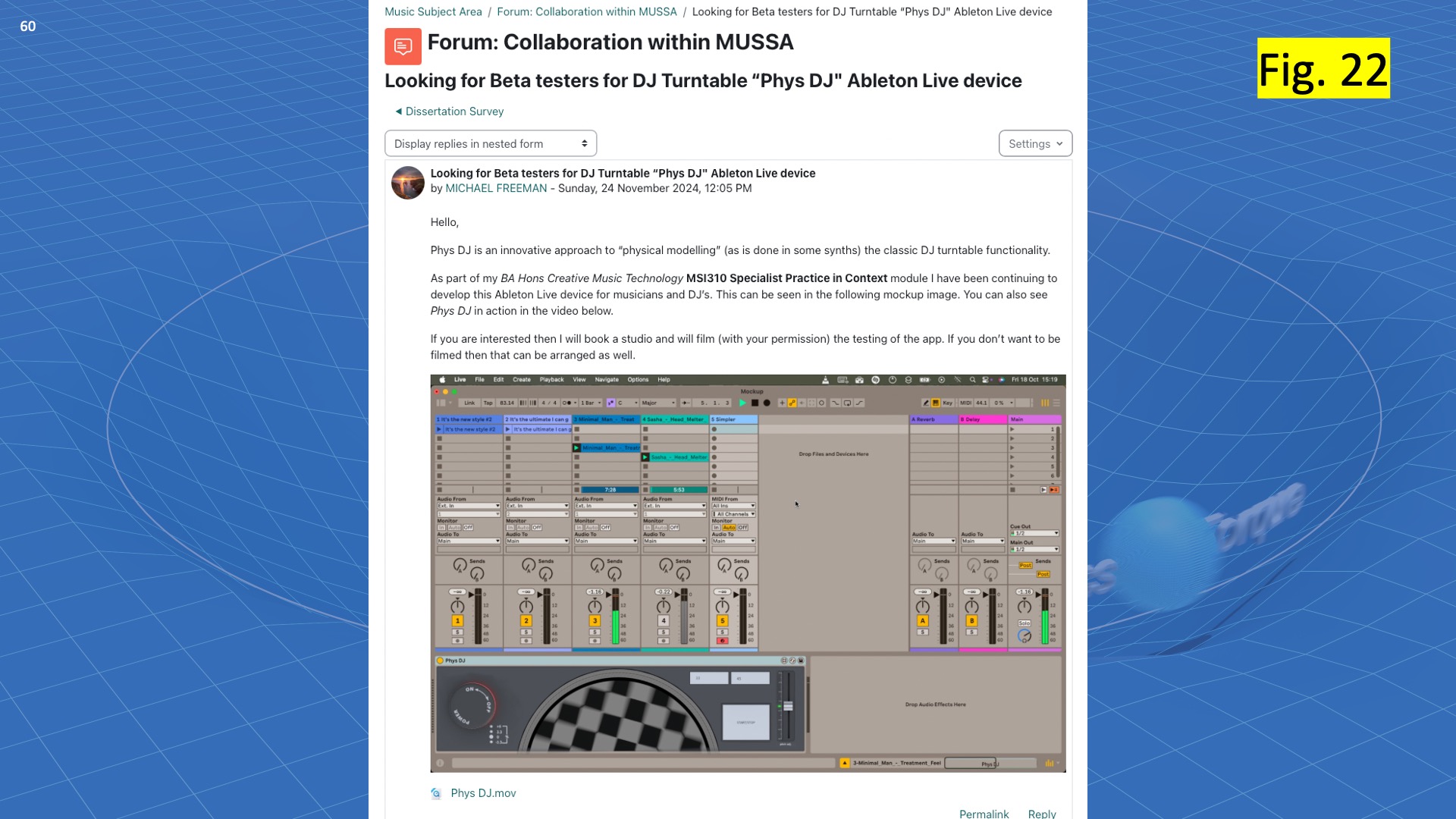
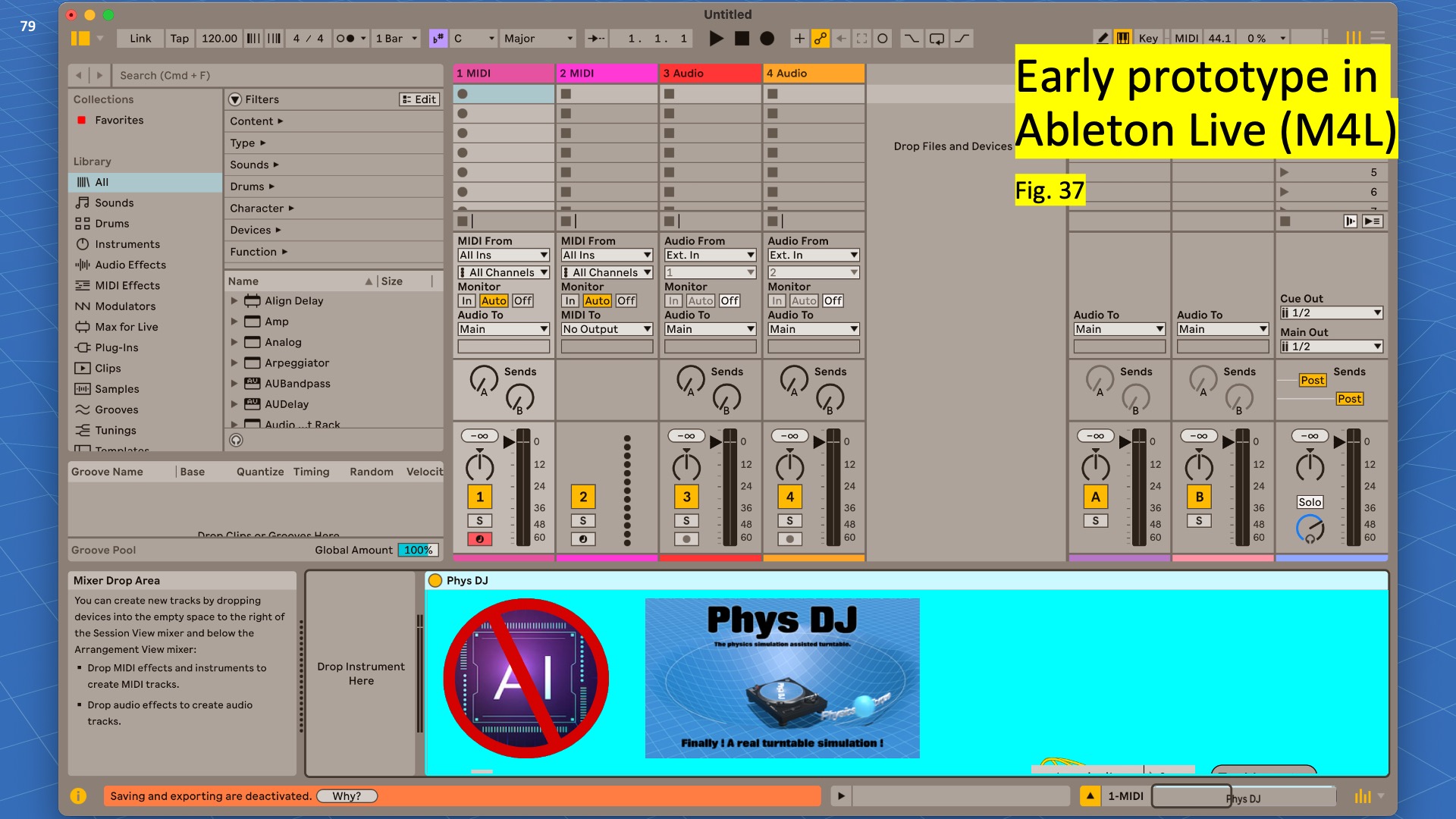
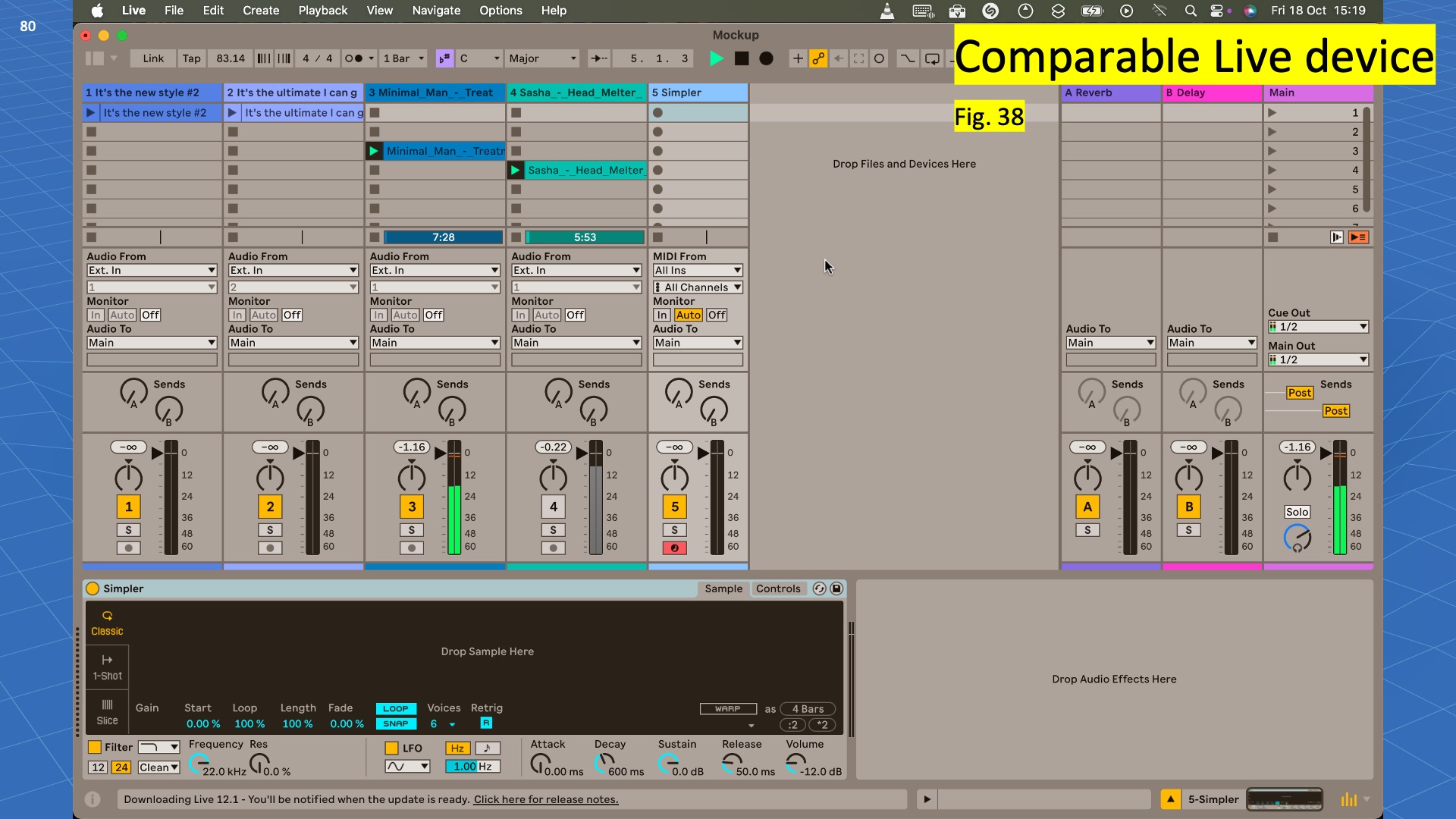
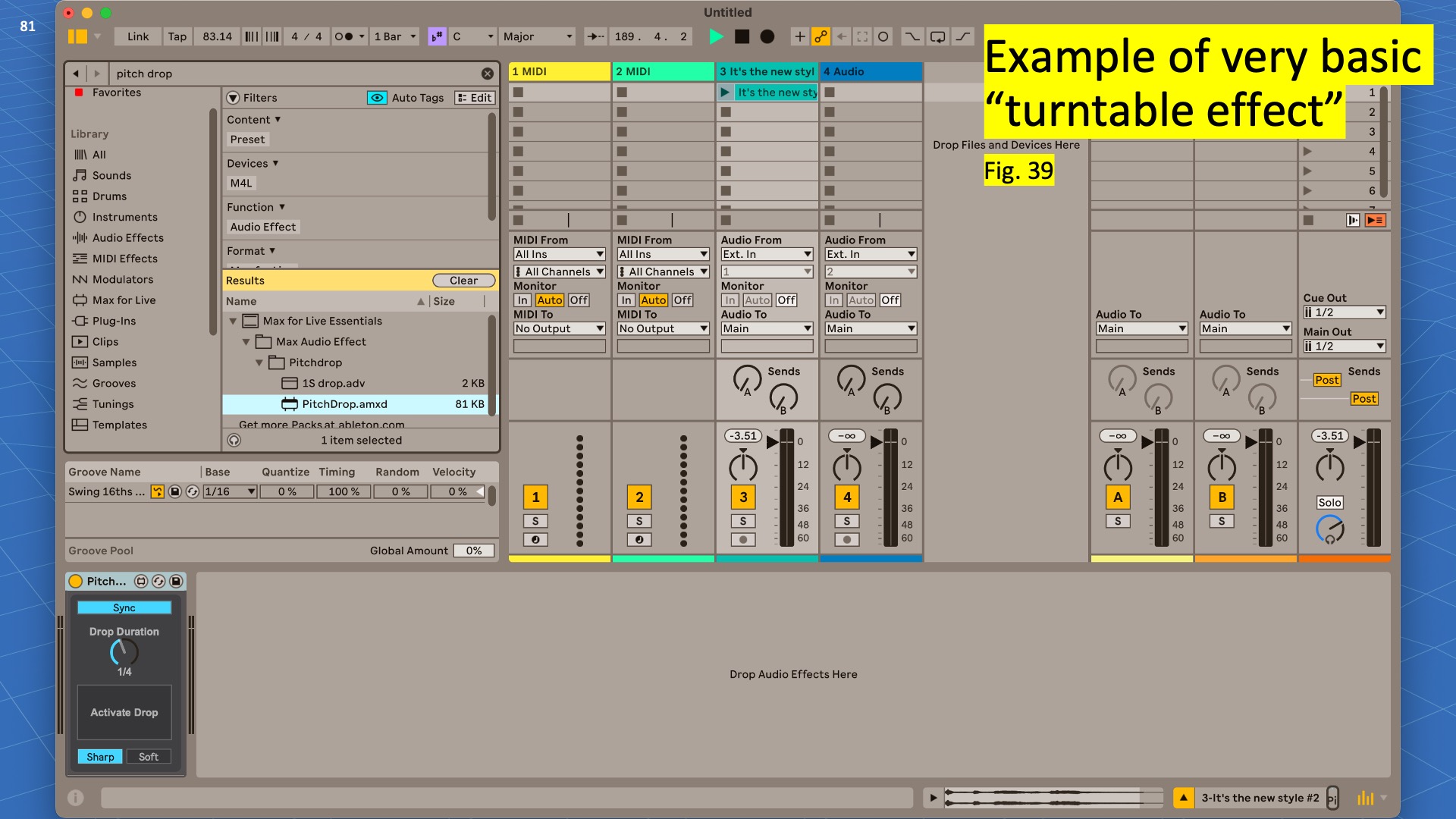
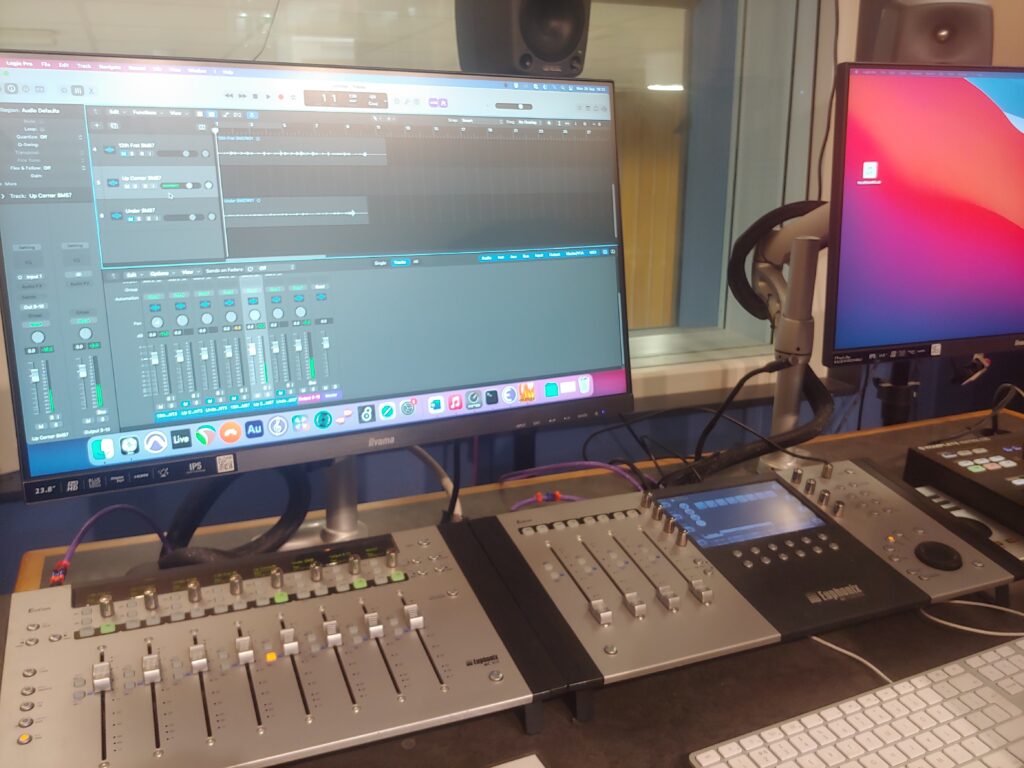
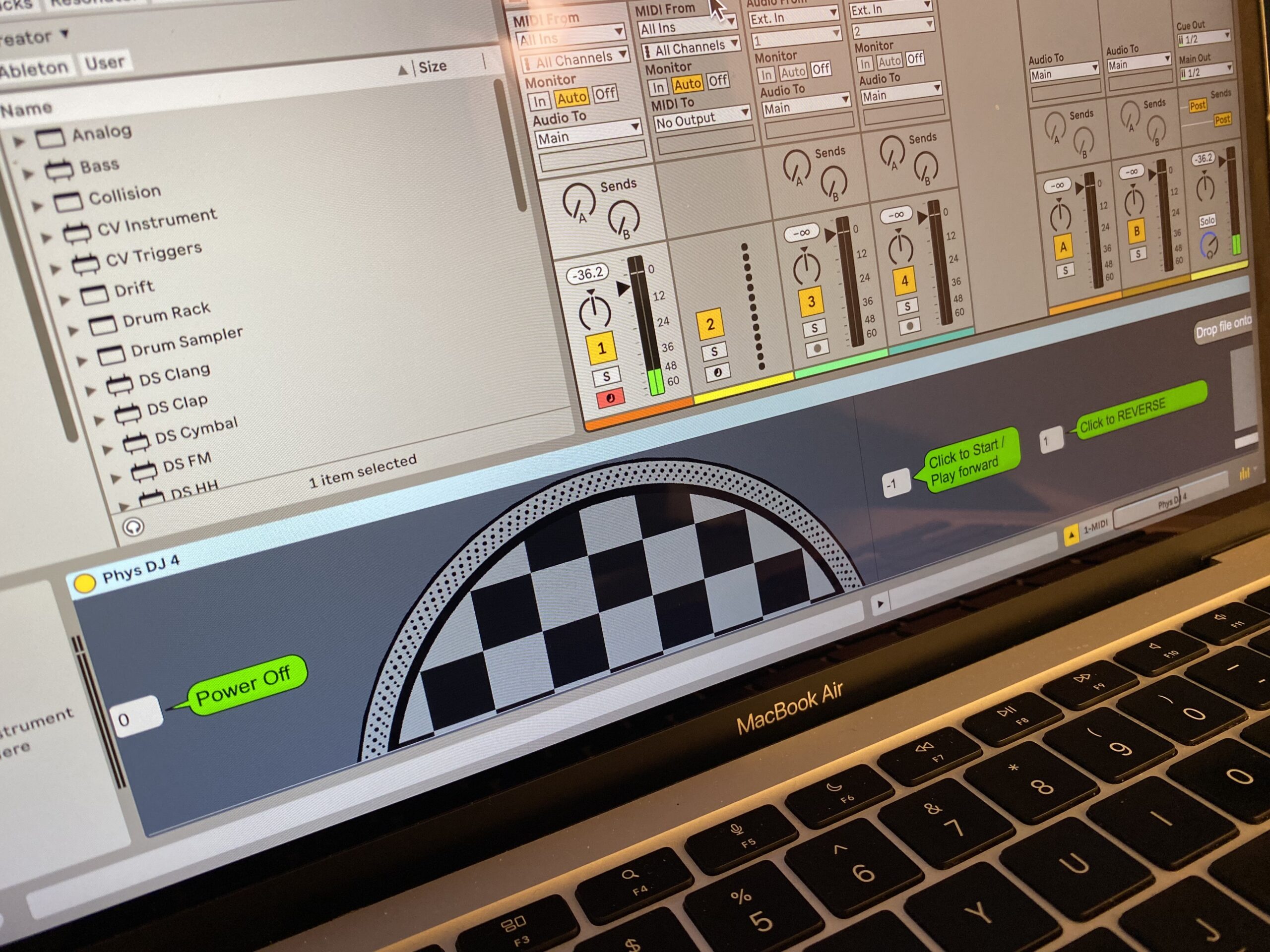
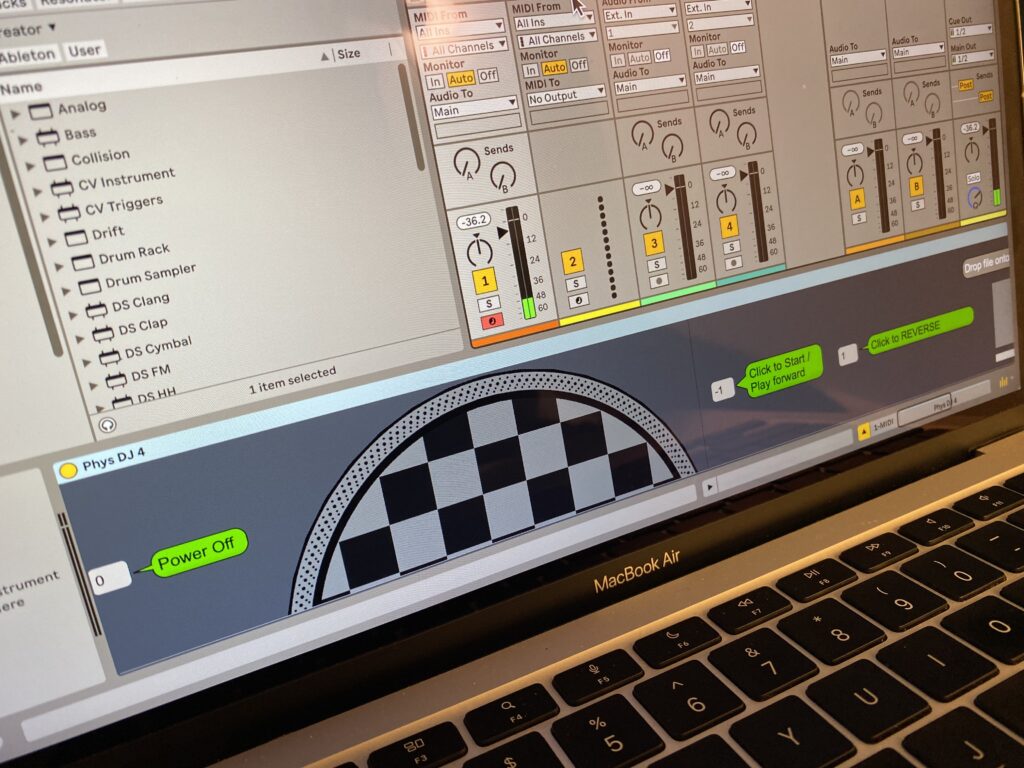
What you are seeing is the popular “DAW” Ableton Live.
‟A digital audio workstation (DAW /dɔː/) is an electronic device or application software used for recording, editing and producing audio files”.
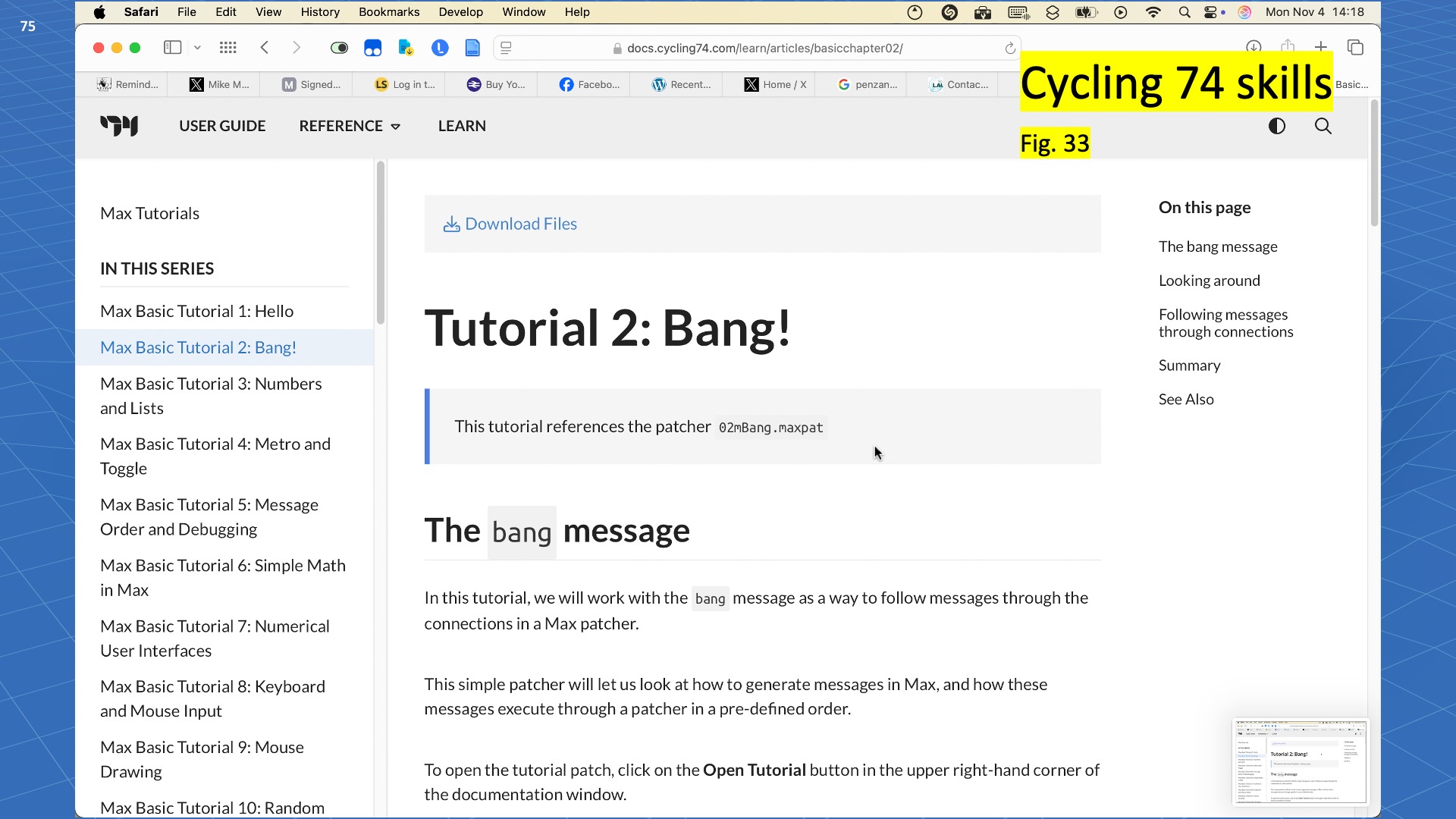
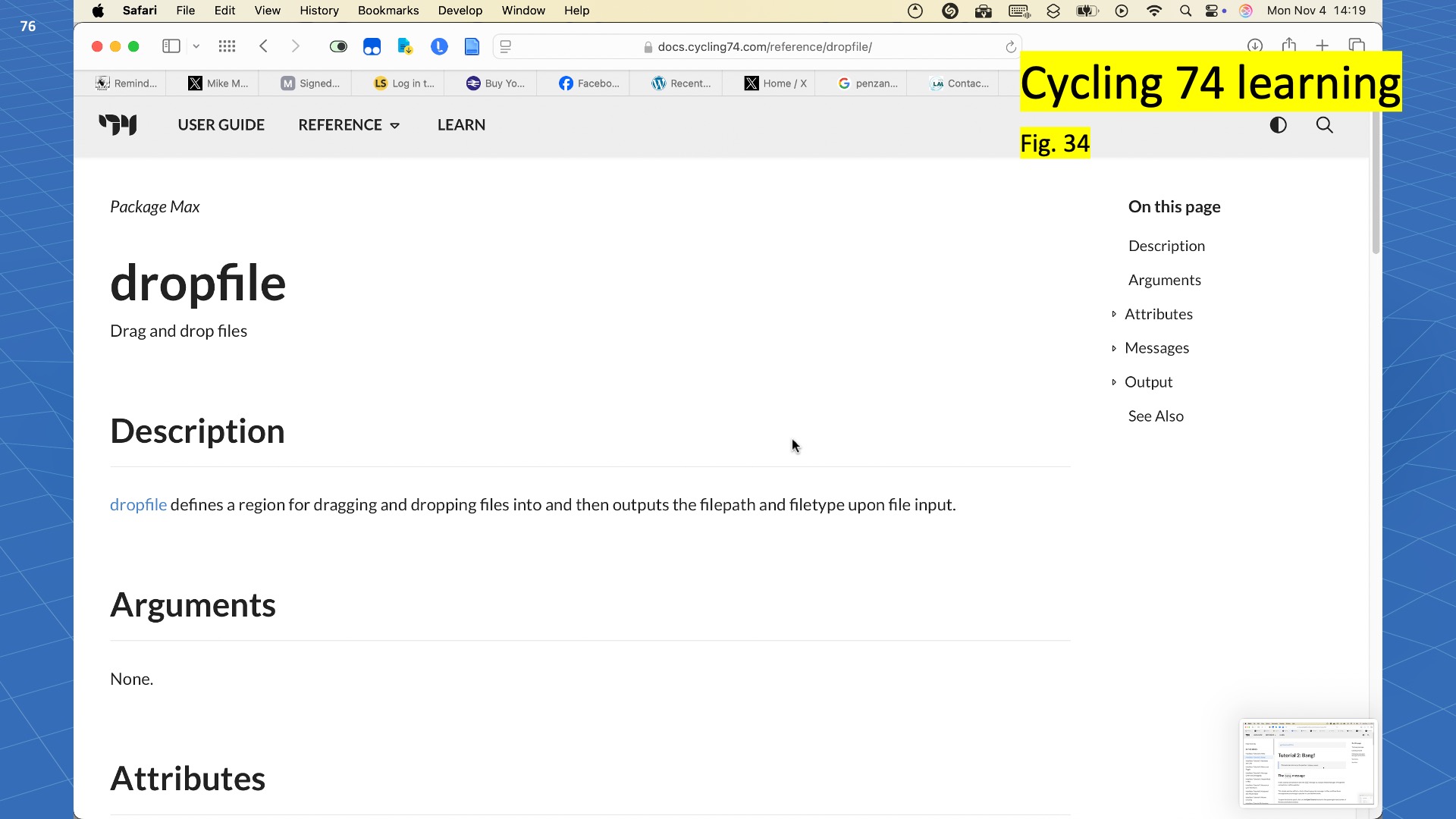
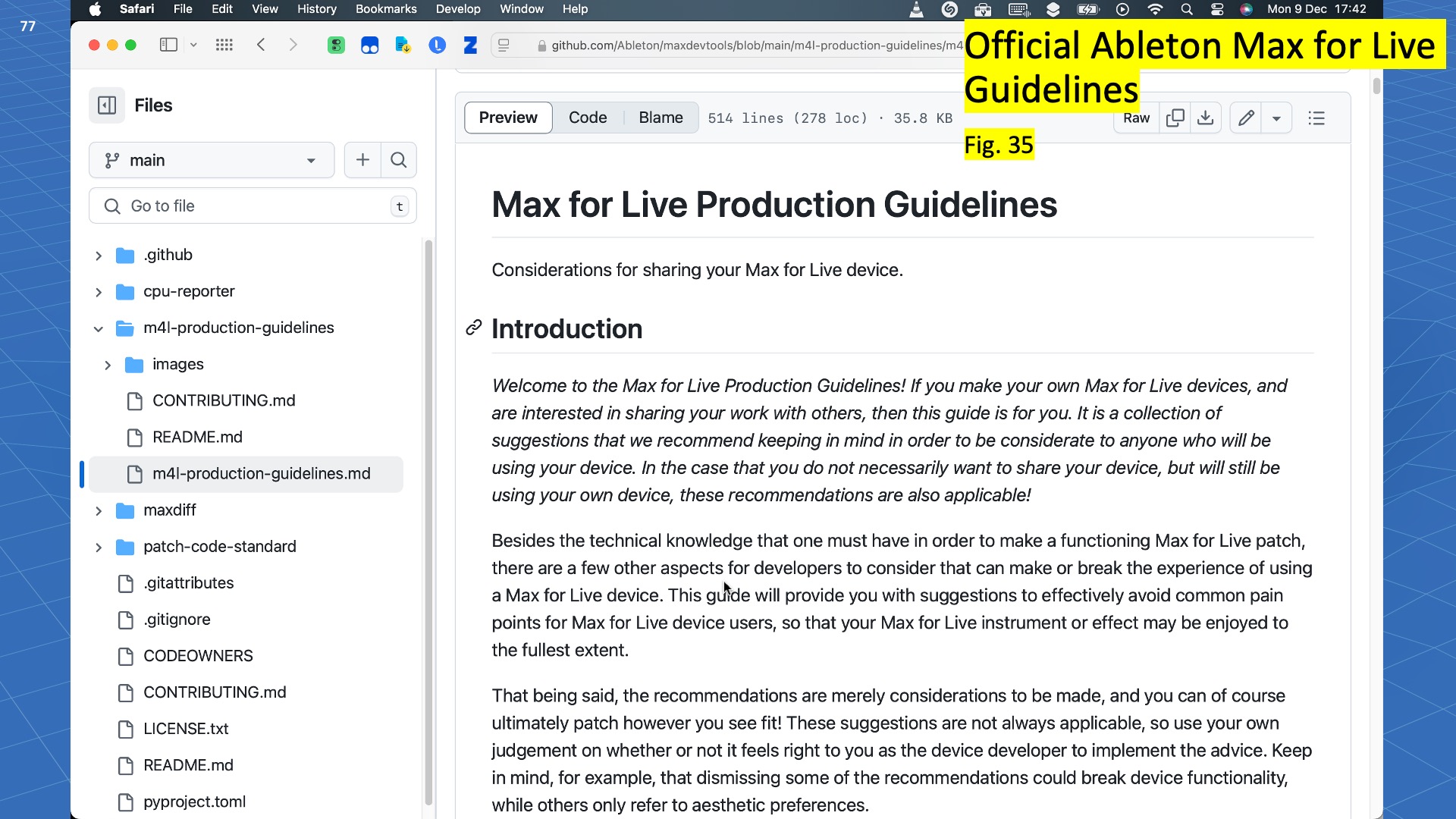
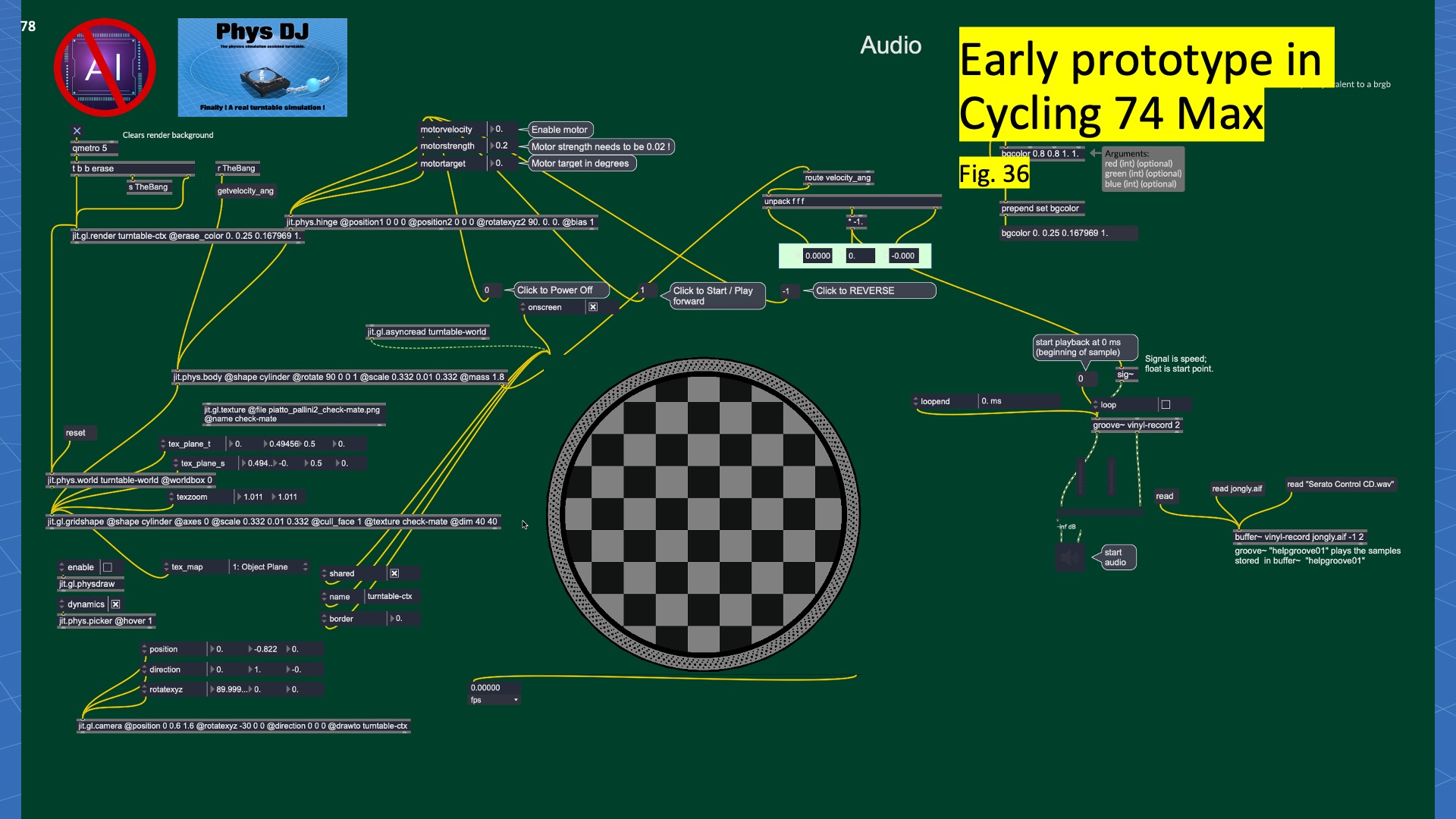
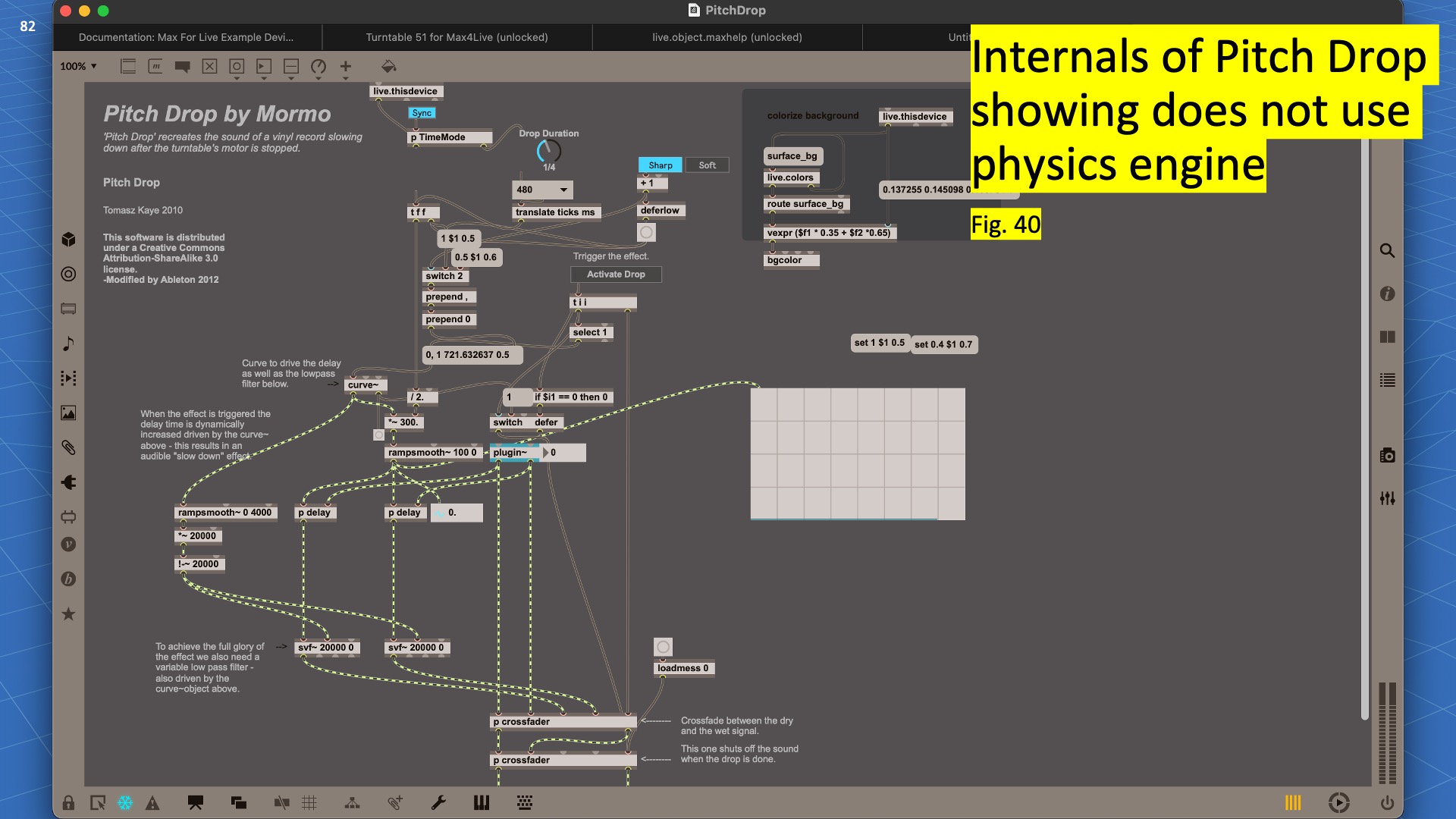
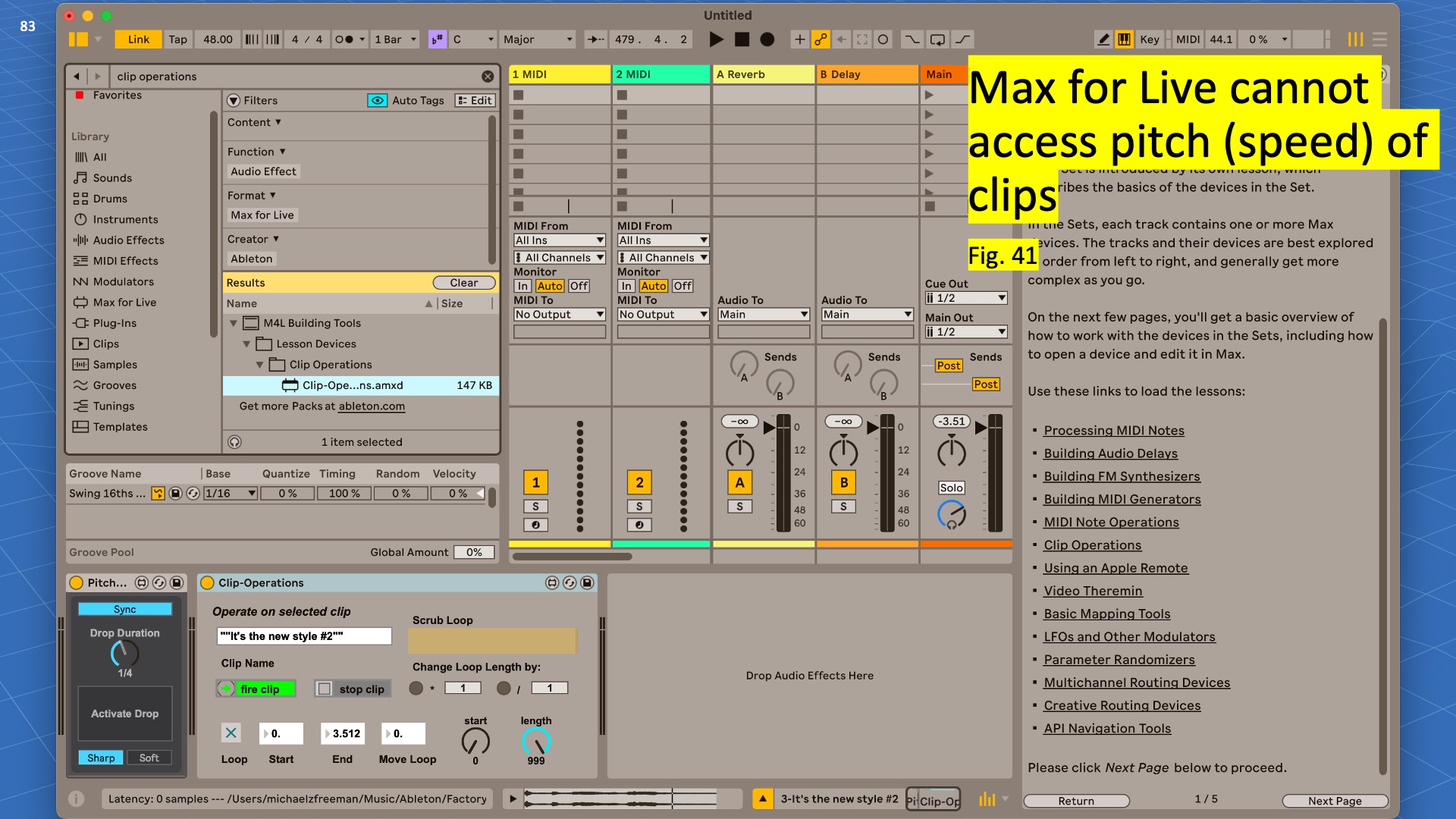
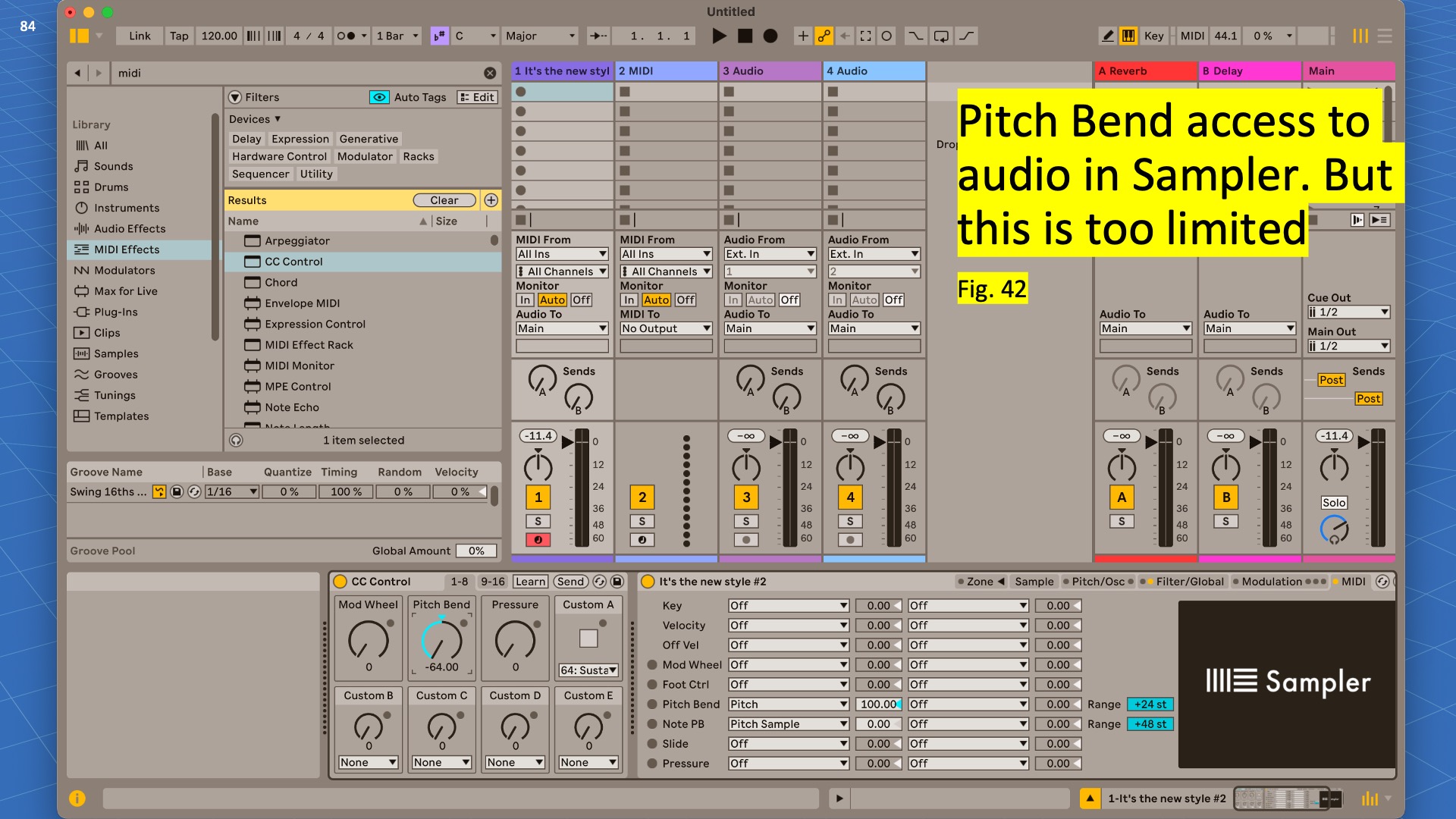
The product (not the final version) is in the lower portion of the screen and has been developed in the programming application Cycling 74 Max.
‟Max, also known as Max/MSP/Jitter, is a visual programming language for music and multimedia developed and maintained by San Francisco-based software company Cycling ’74. Over its more than thirty-year history, it has been used by composers, performers, software designers, researchers, and artists to create recordings, performances, and installations.”
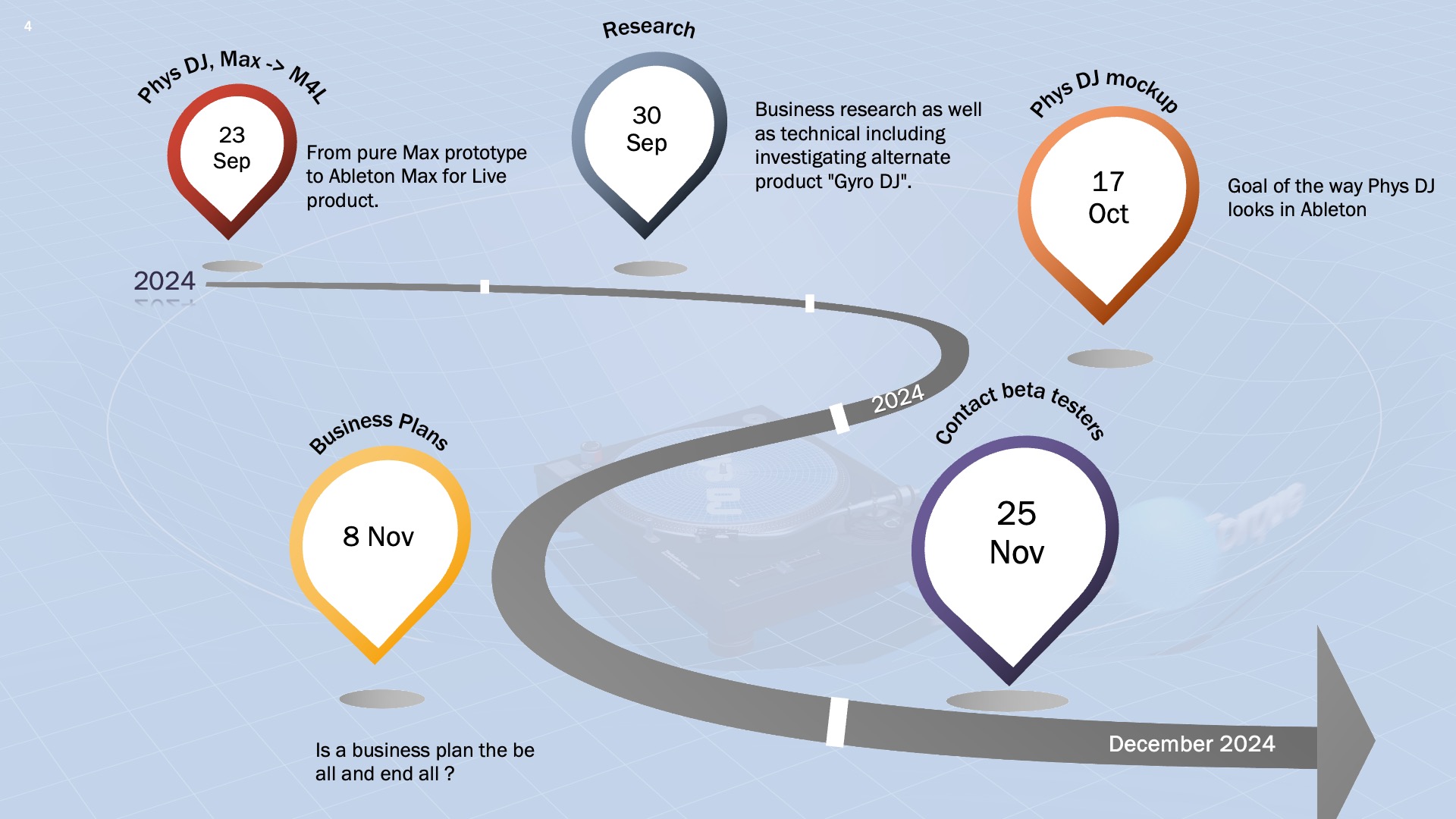
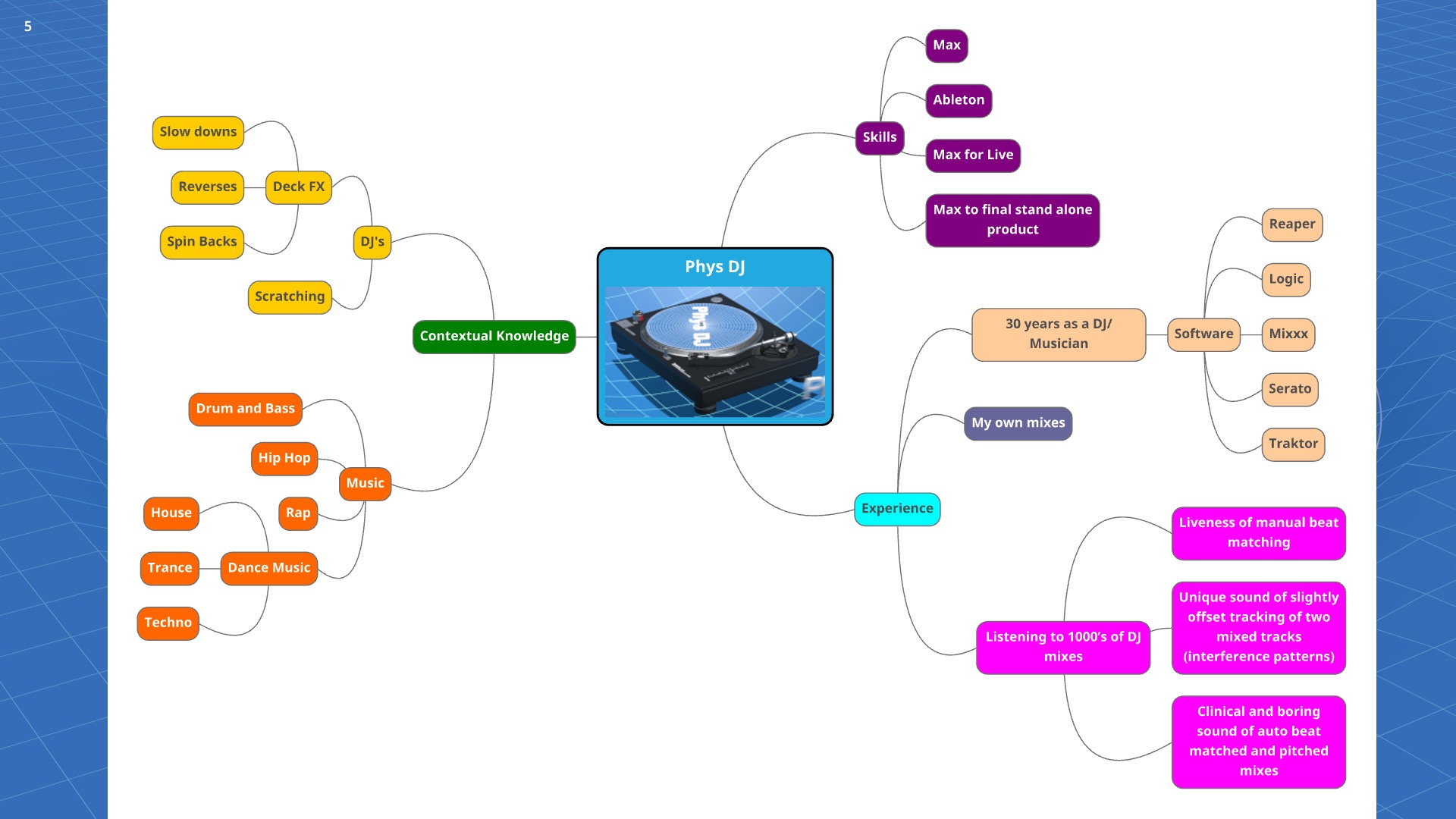
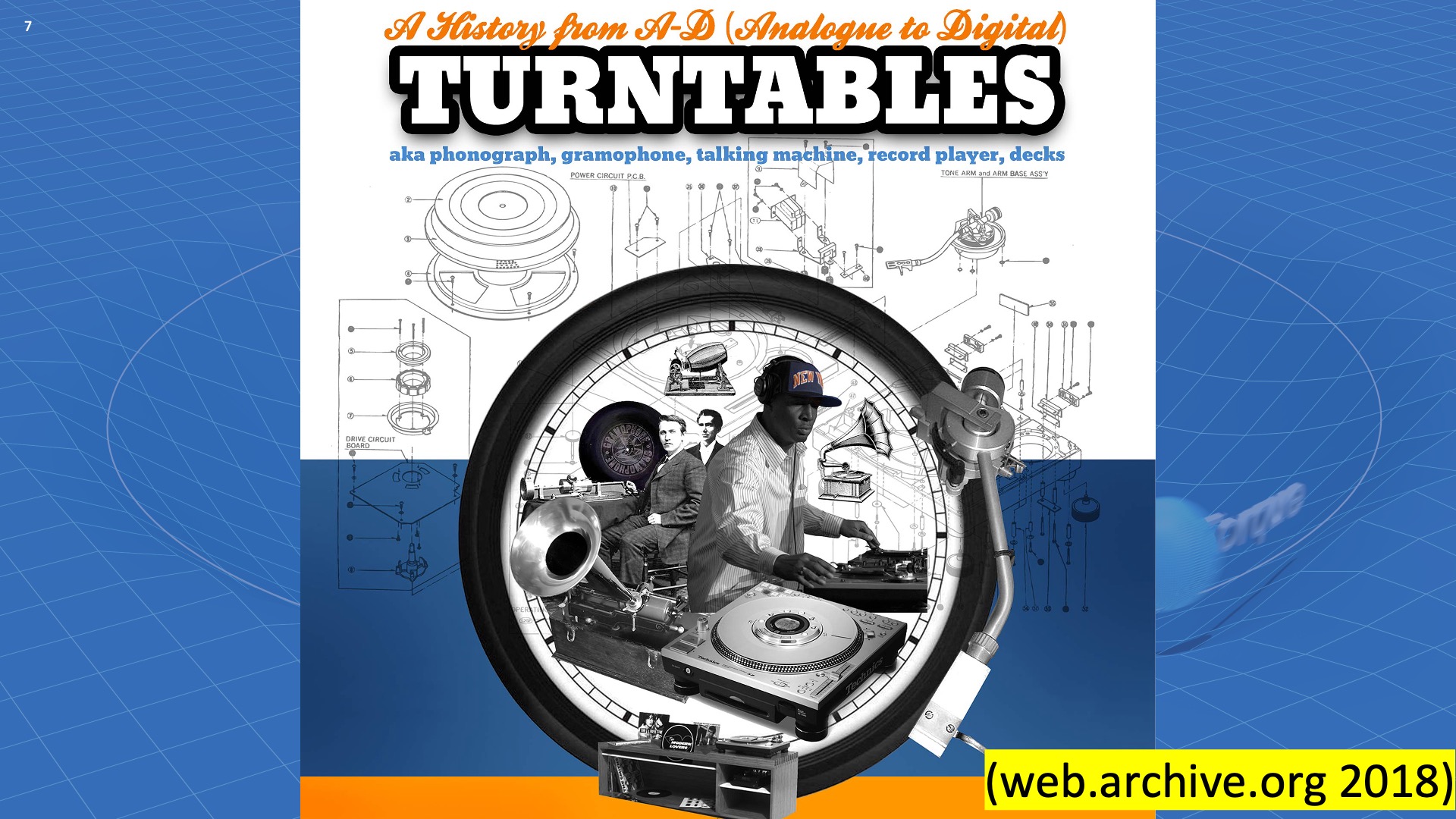
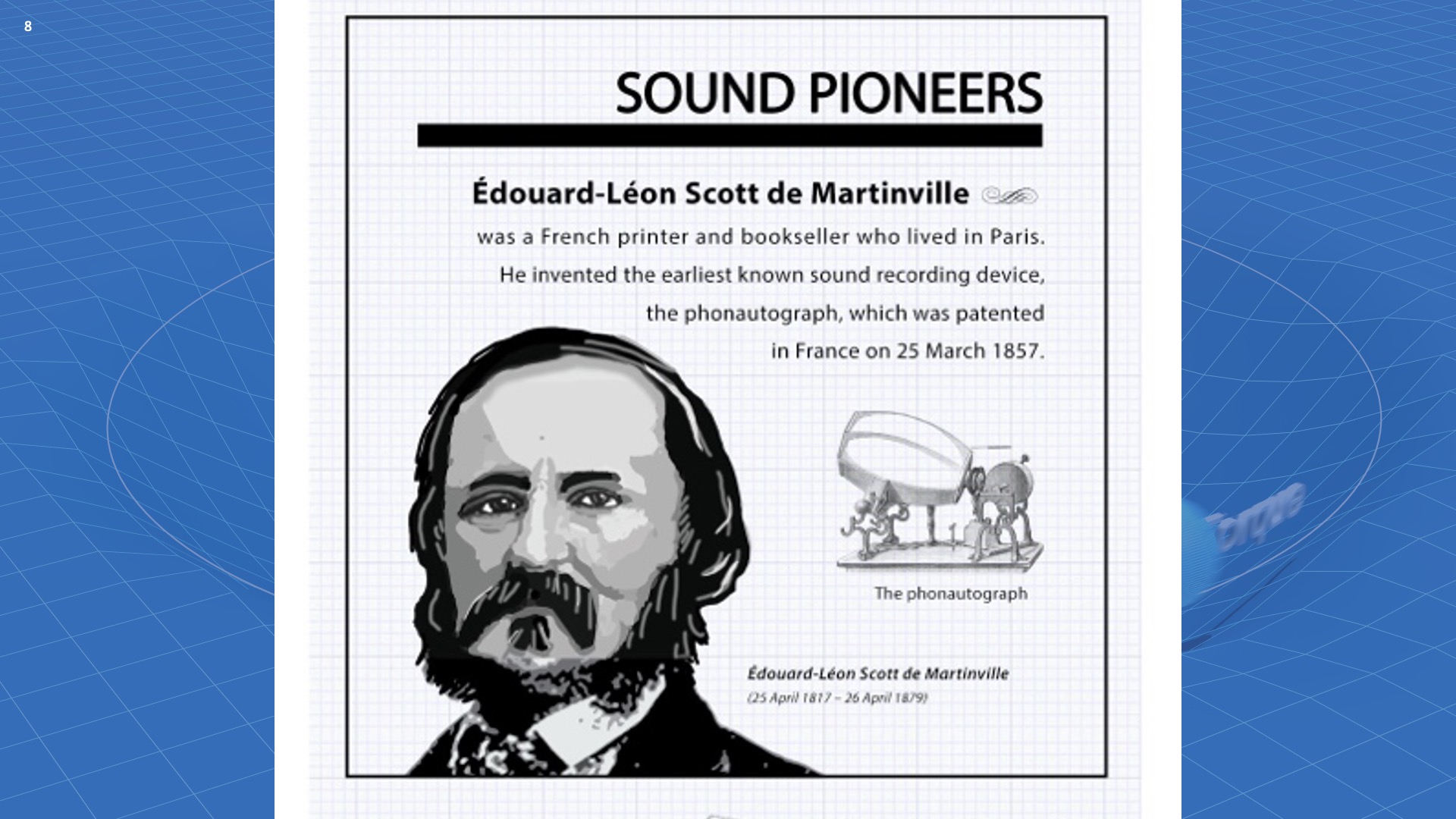
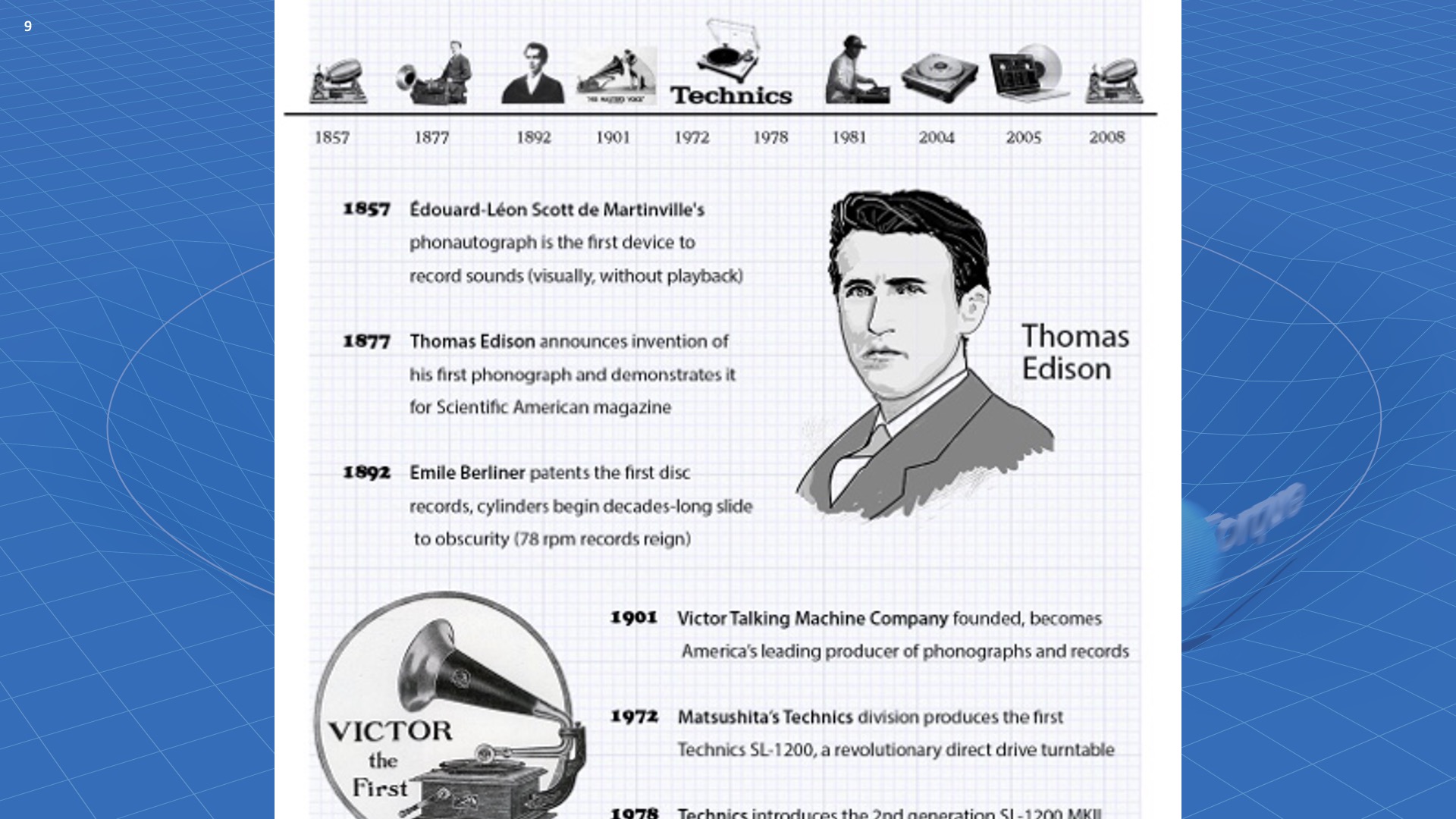
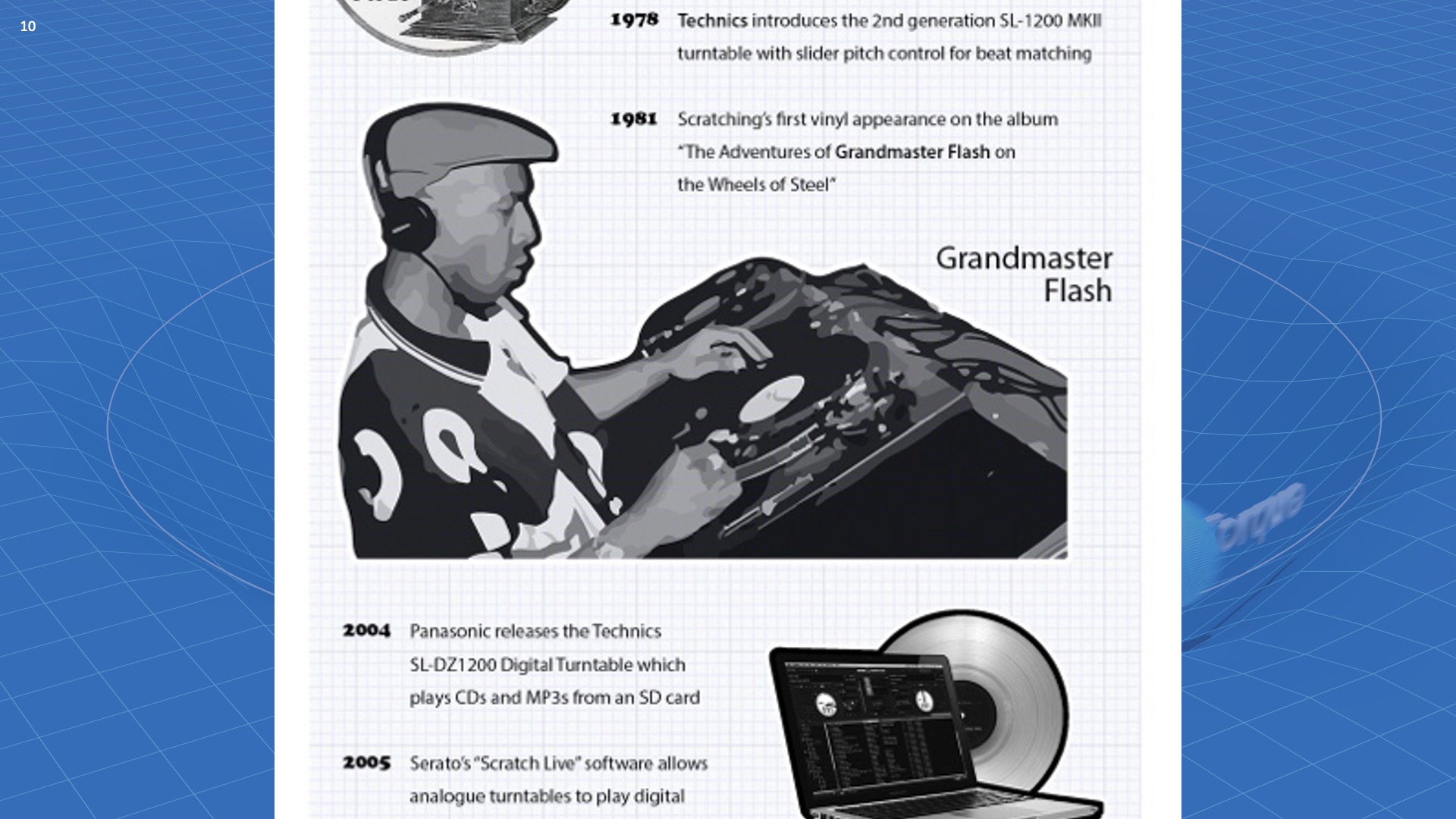
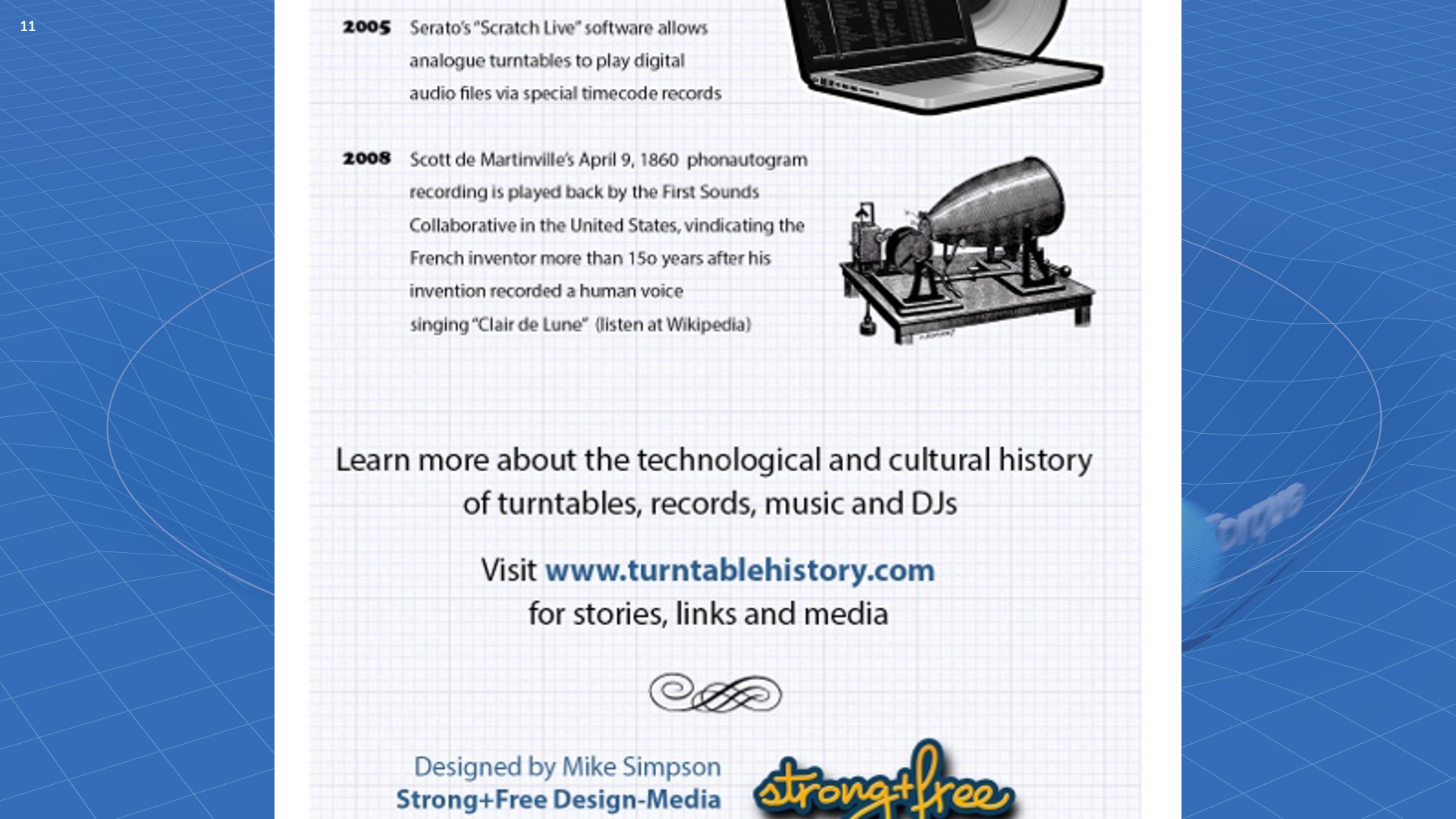
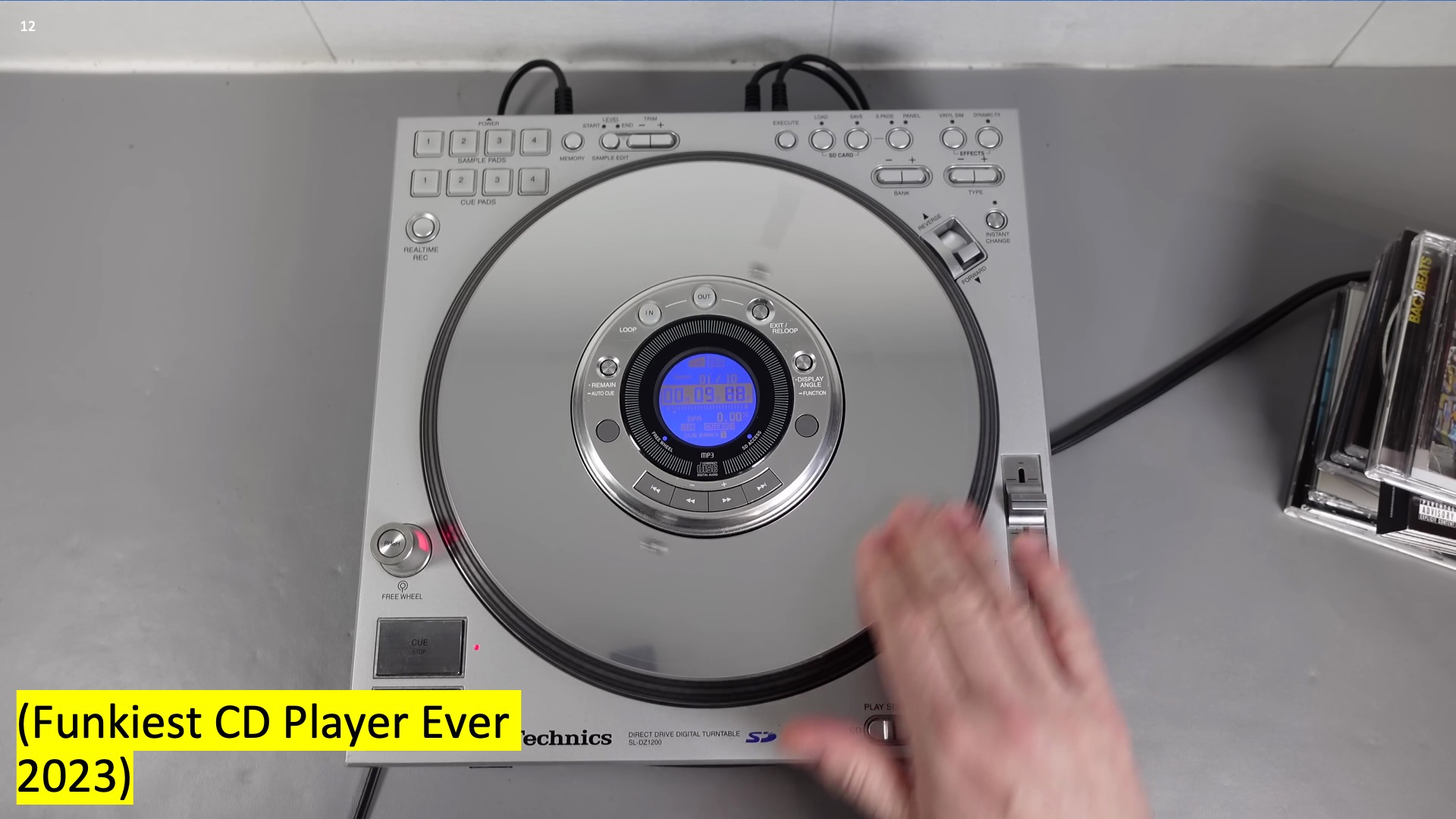
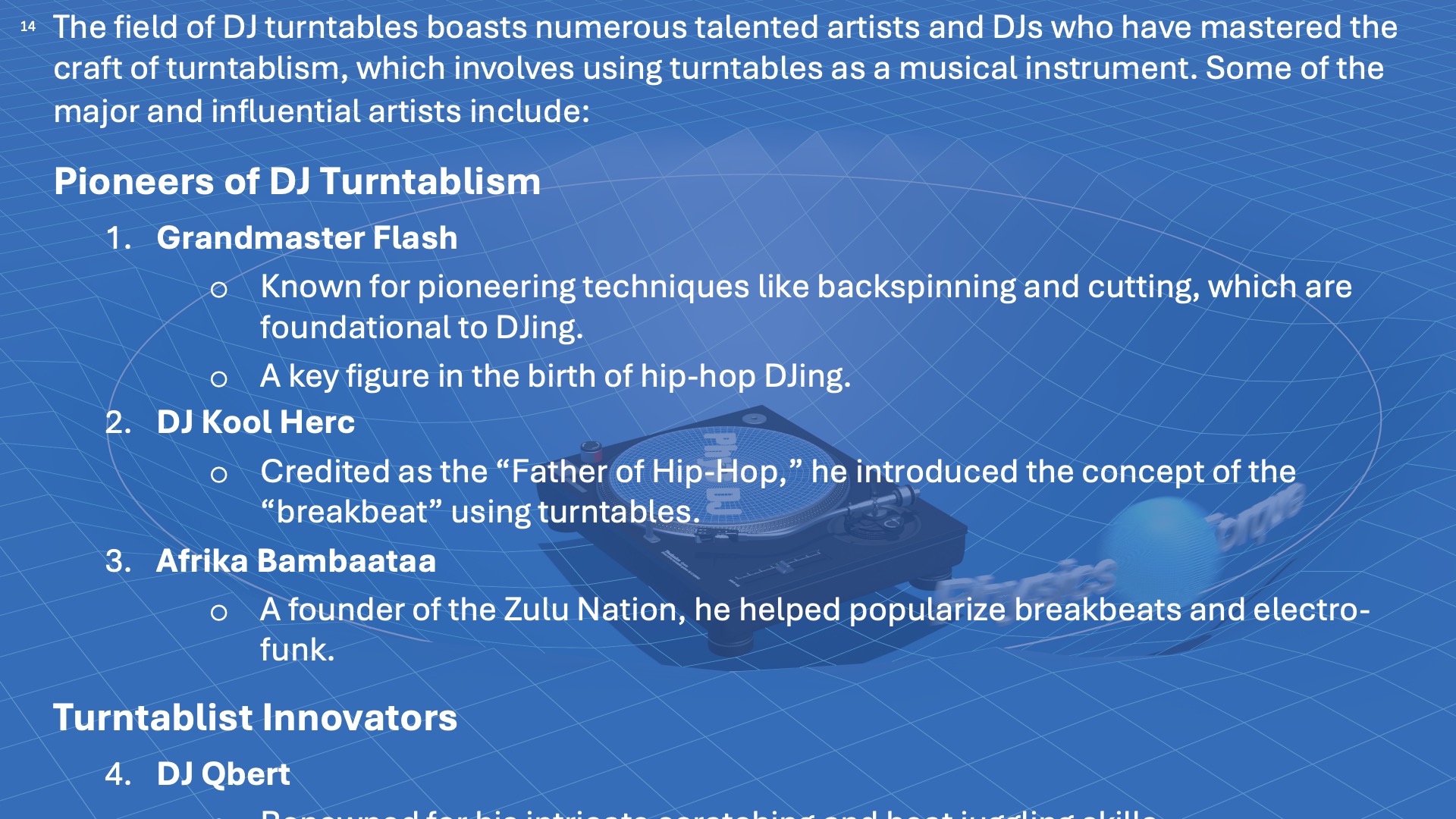
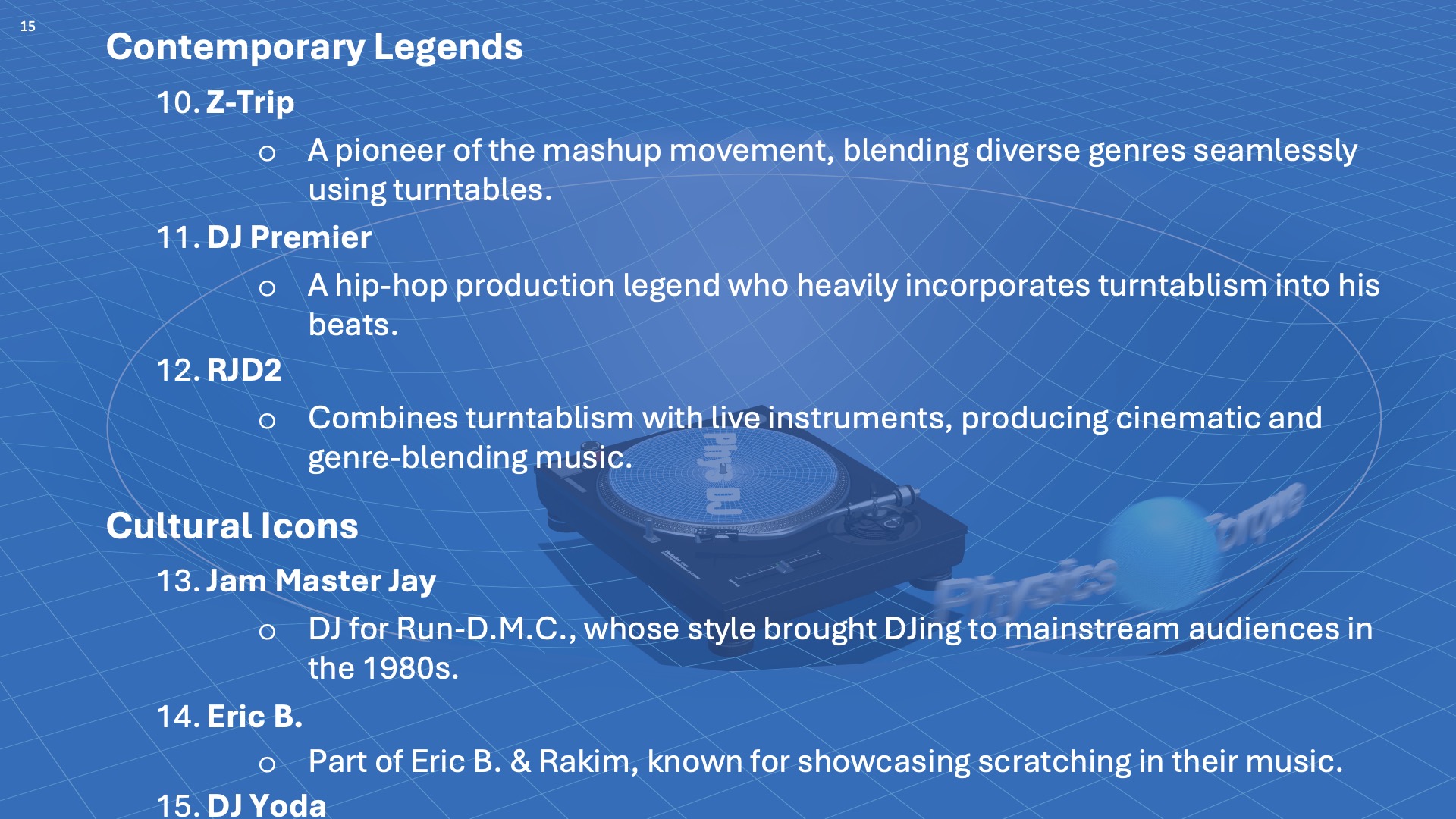
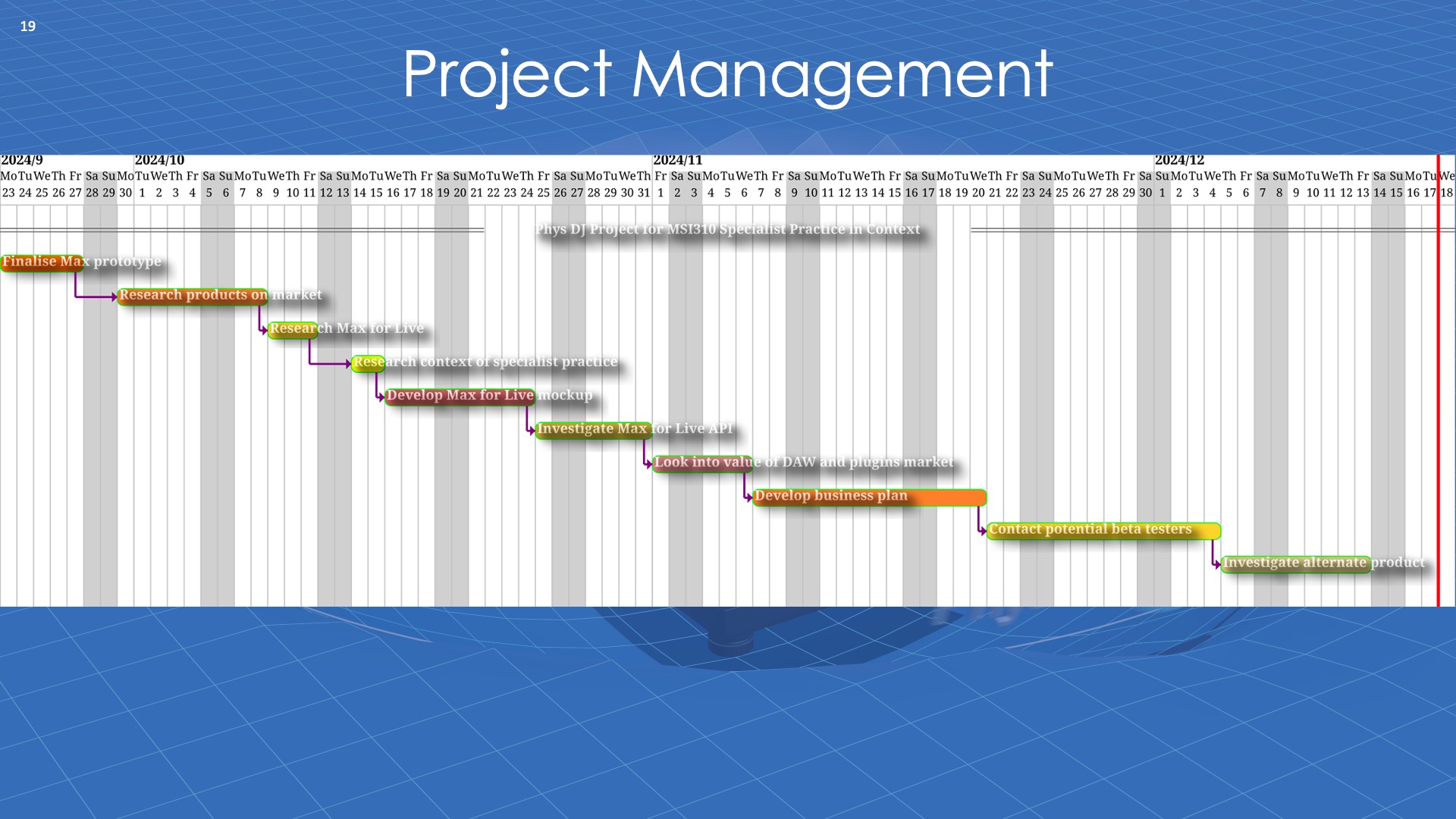
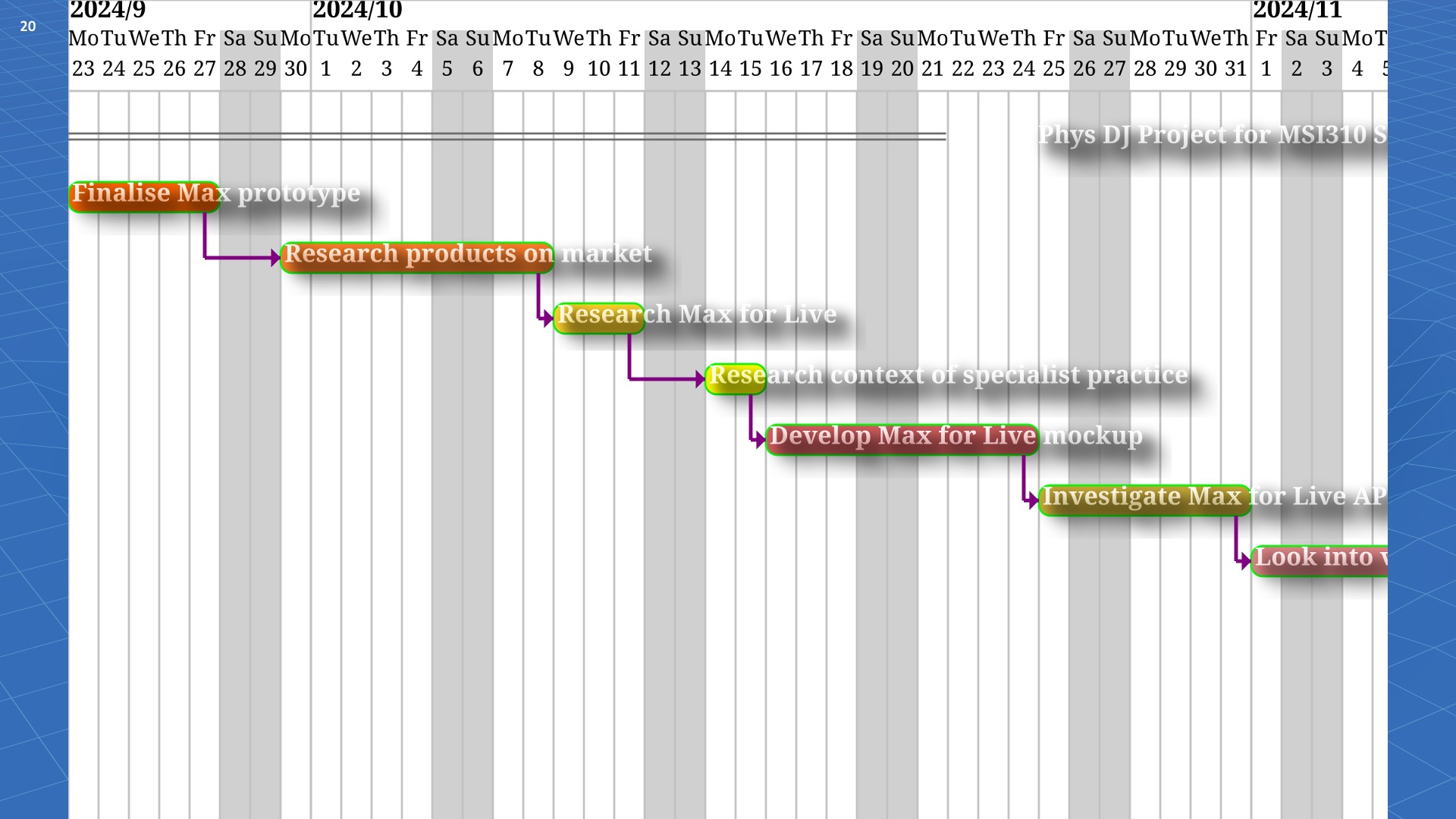
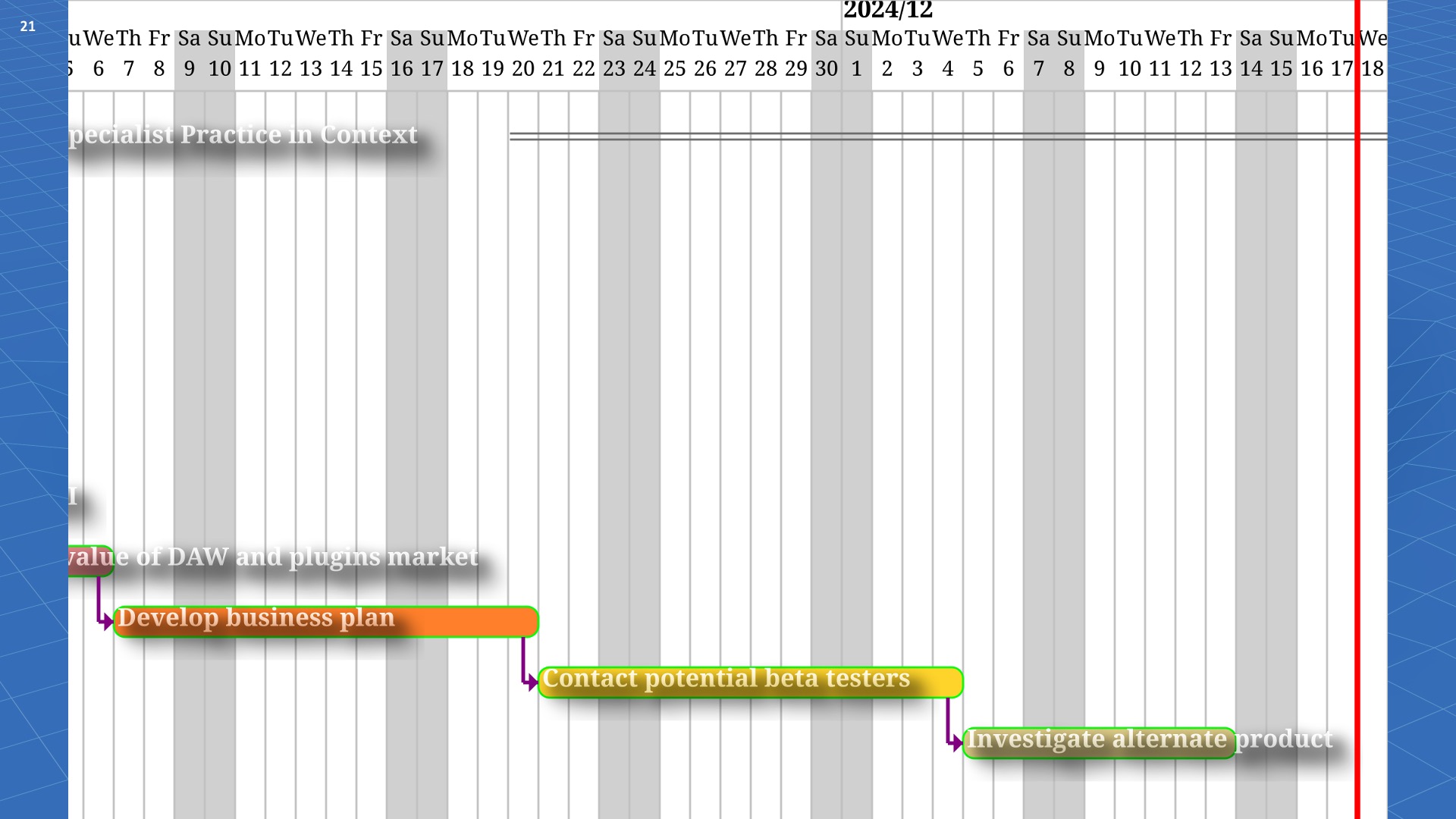
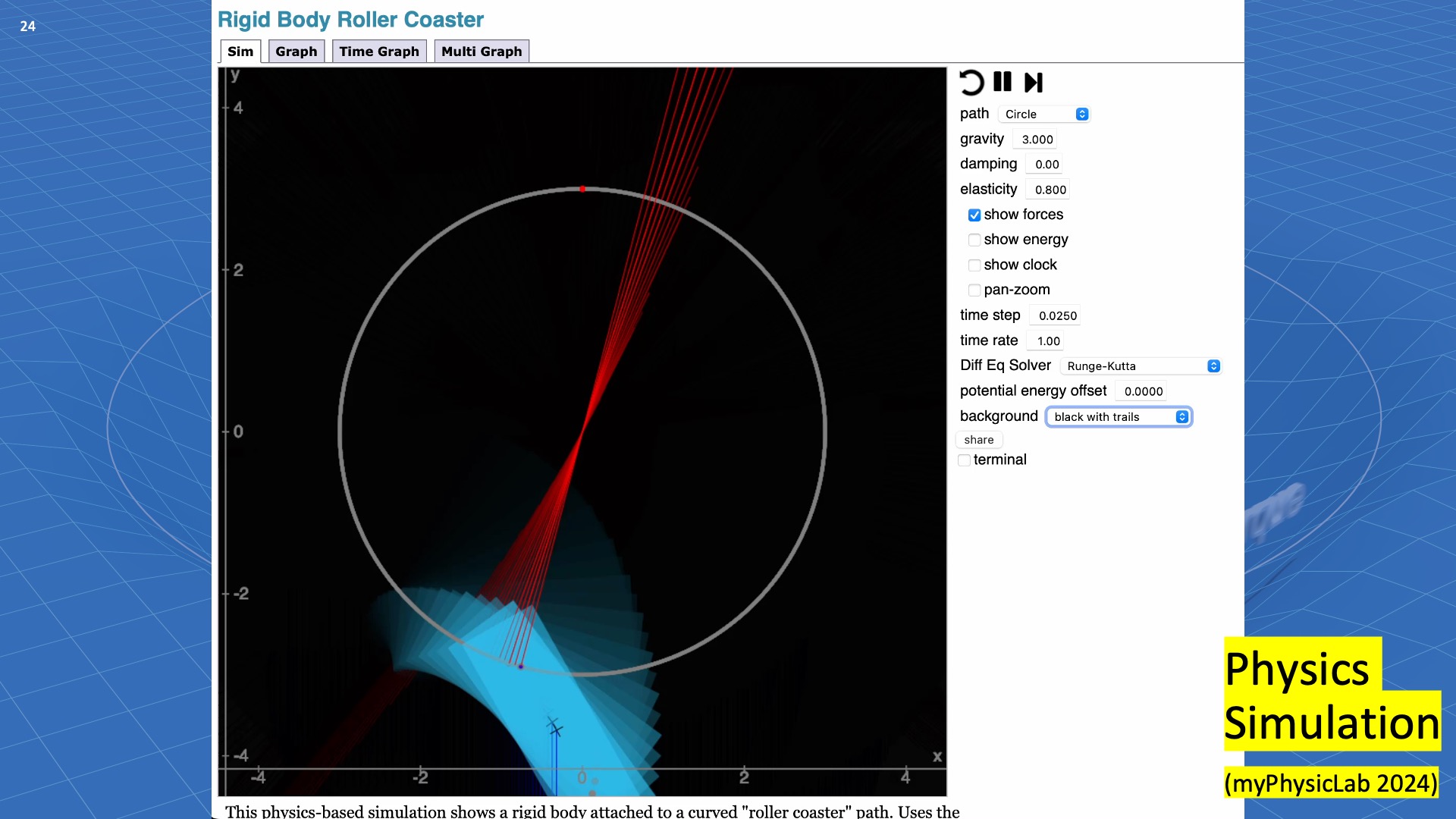
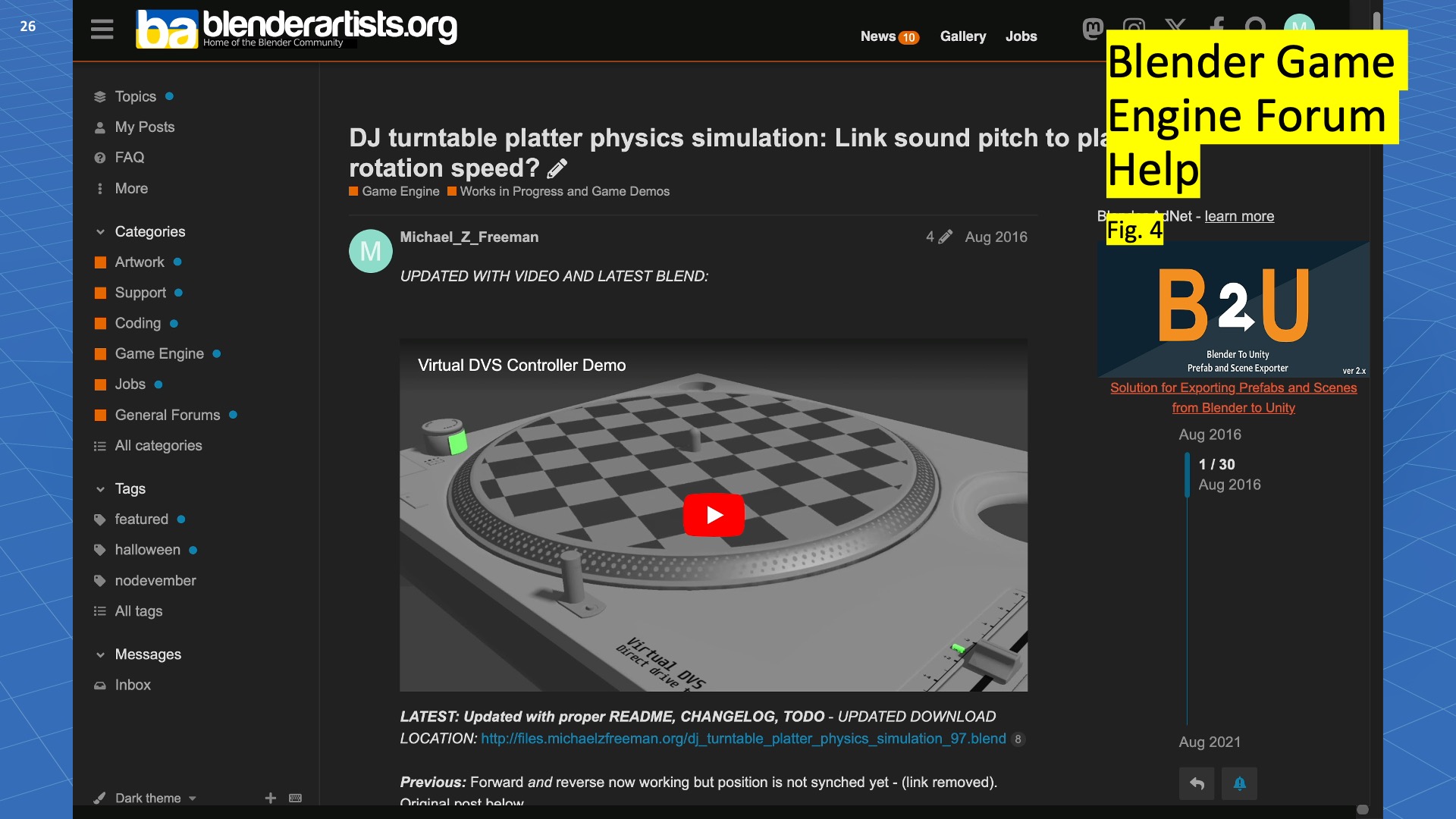
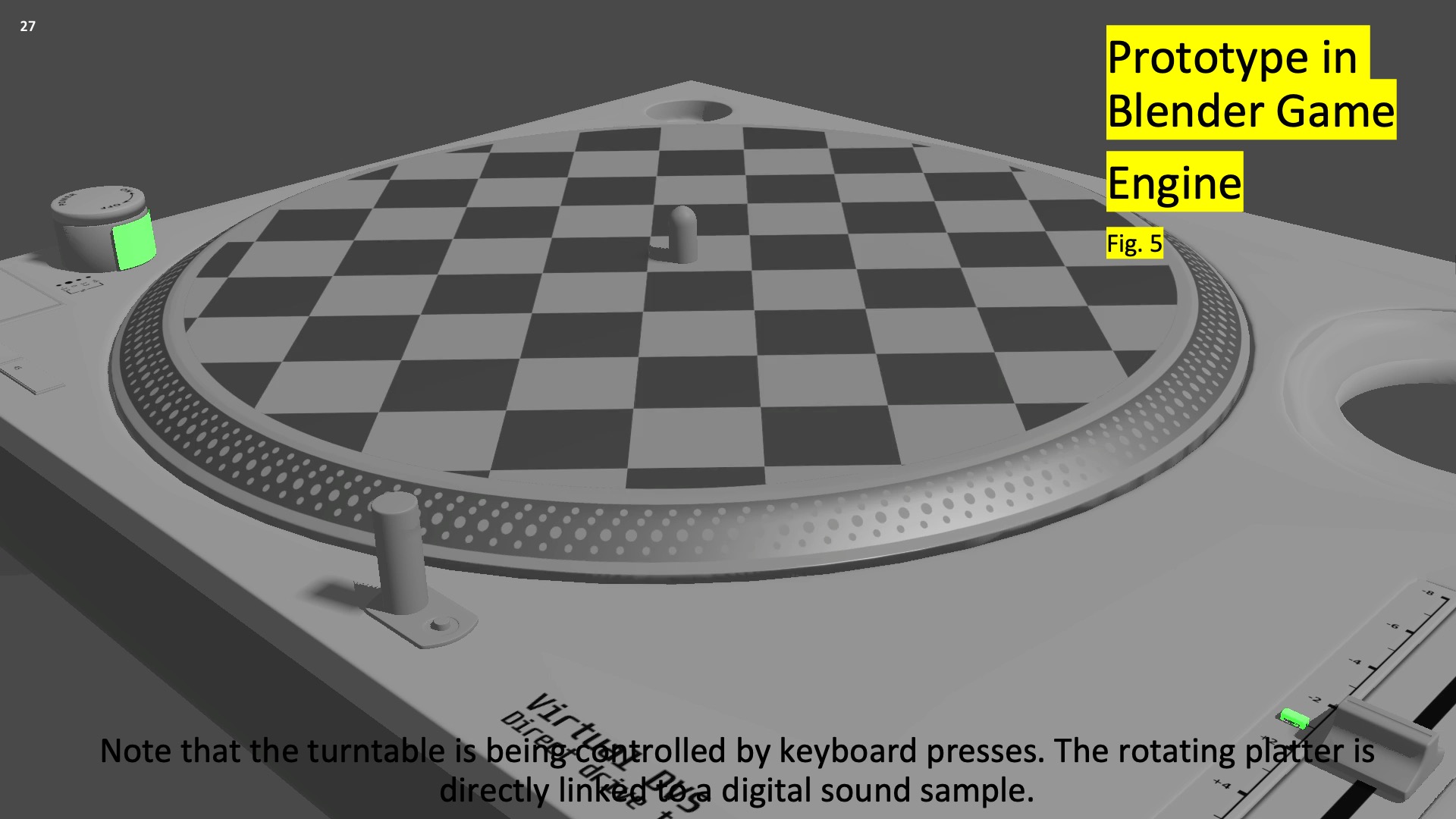
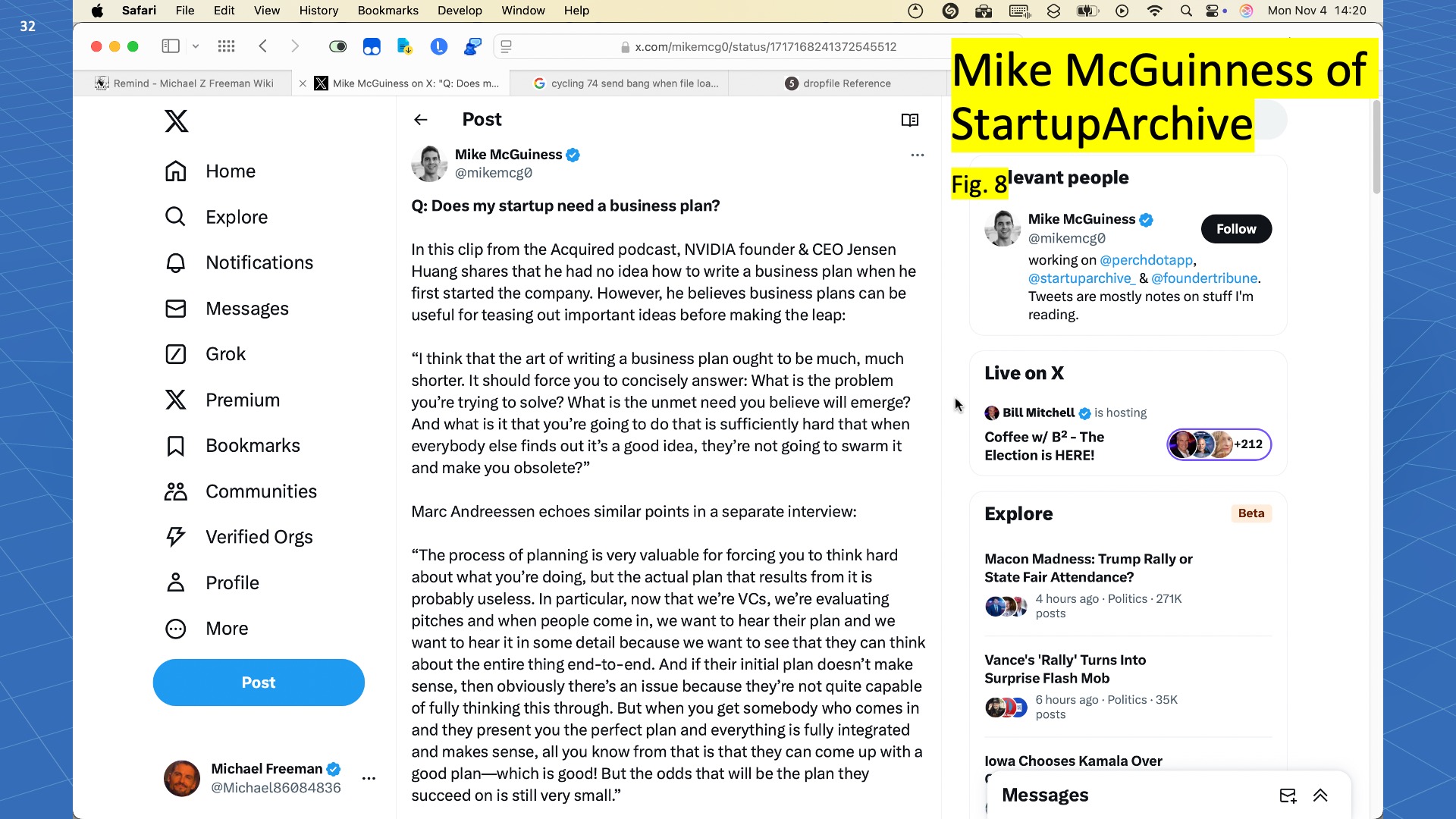
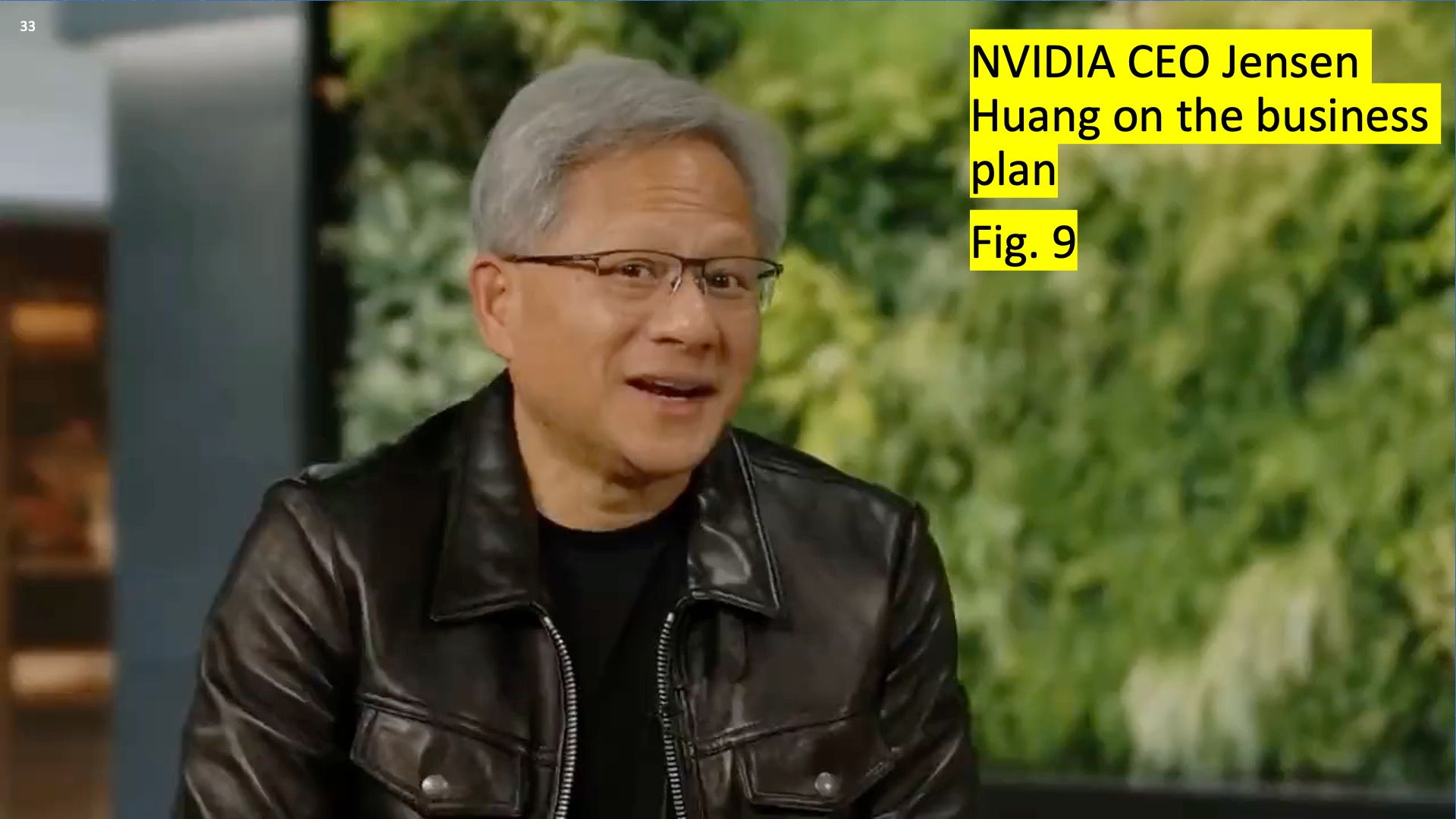
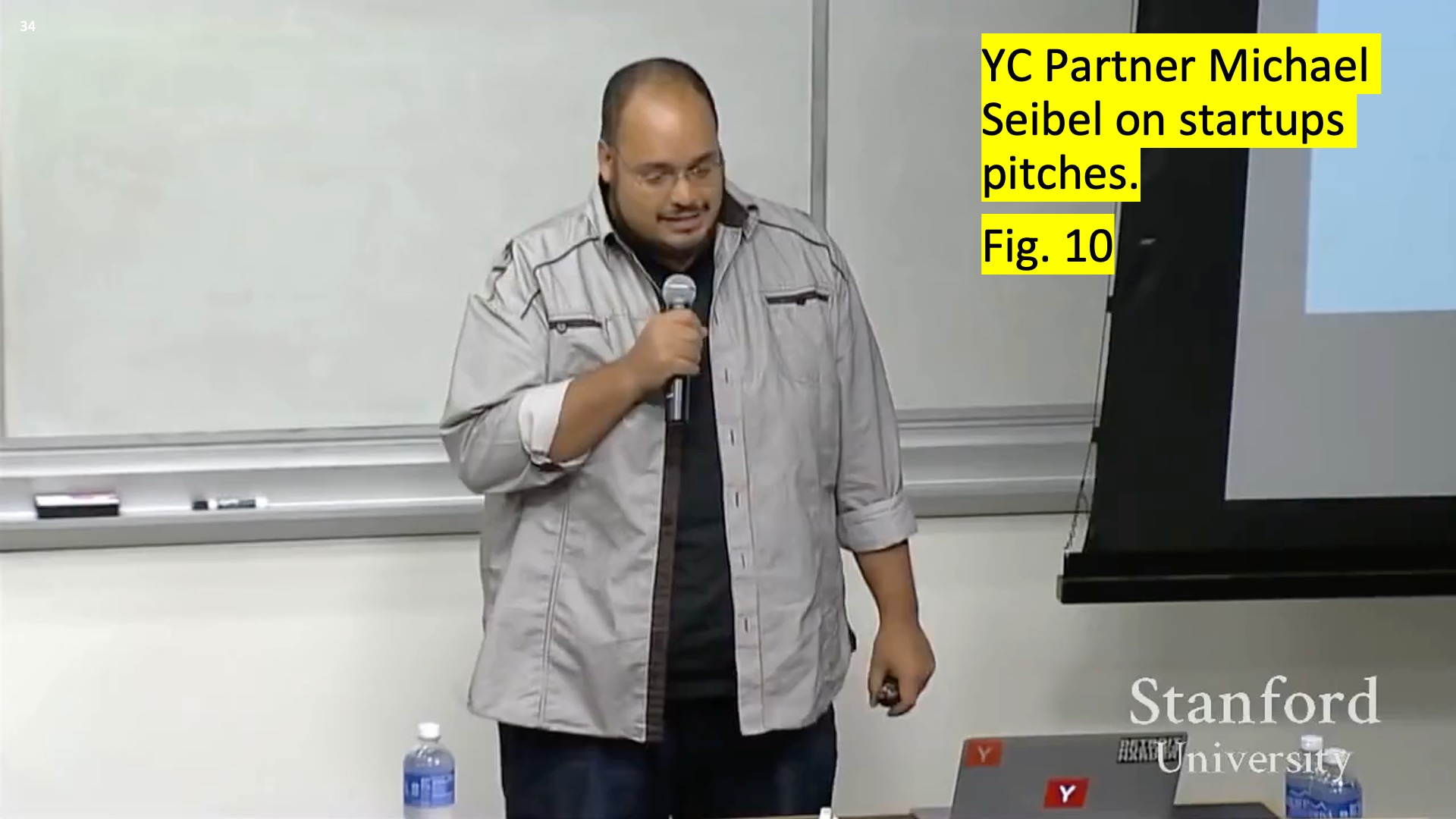
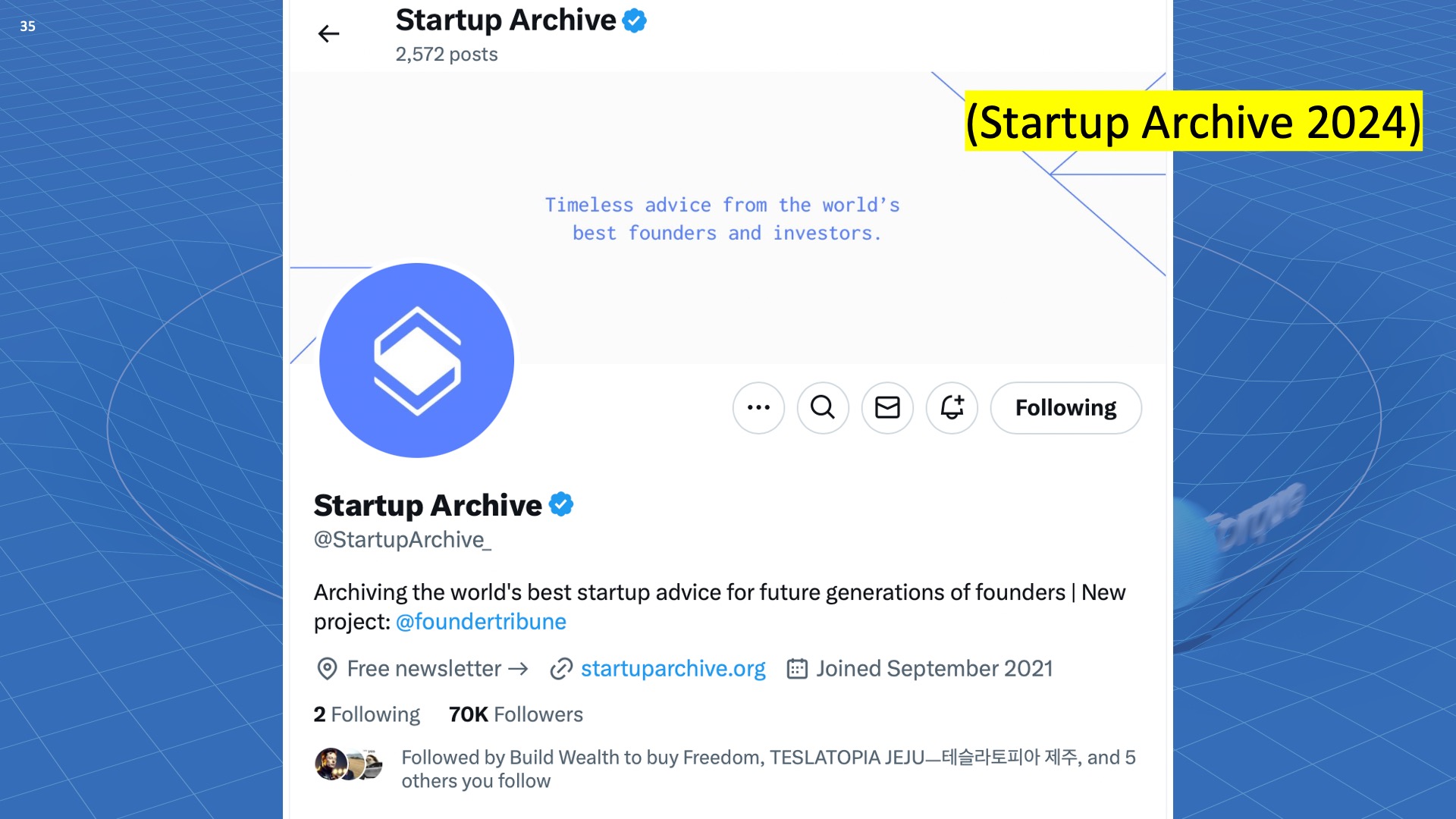
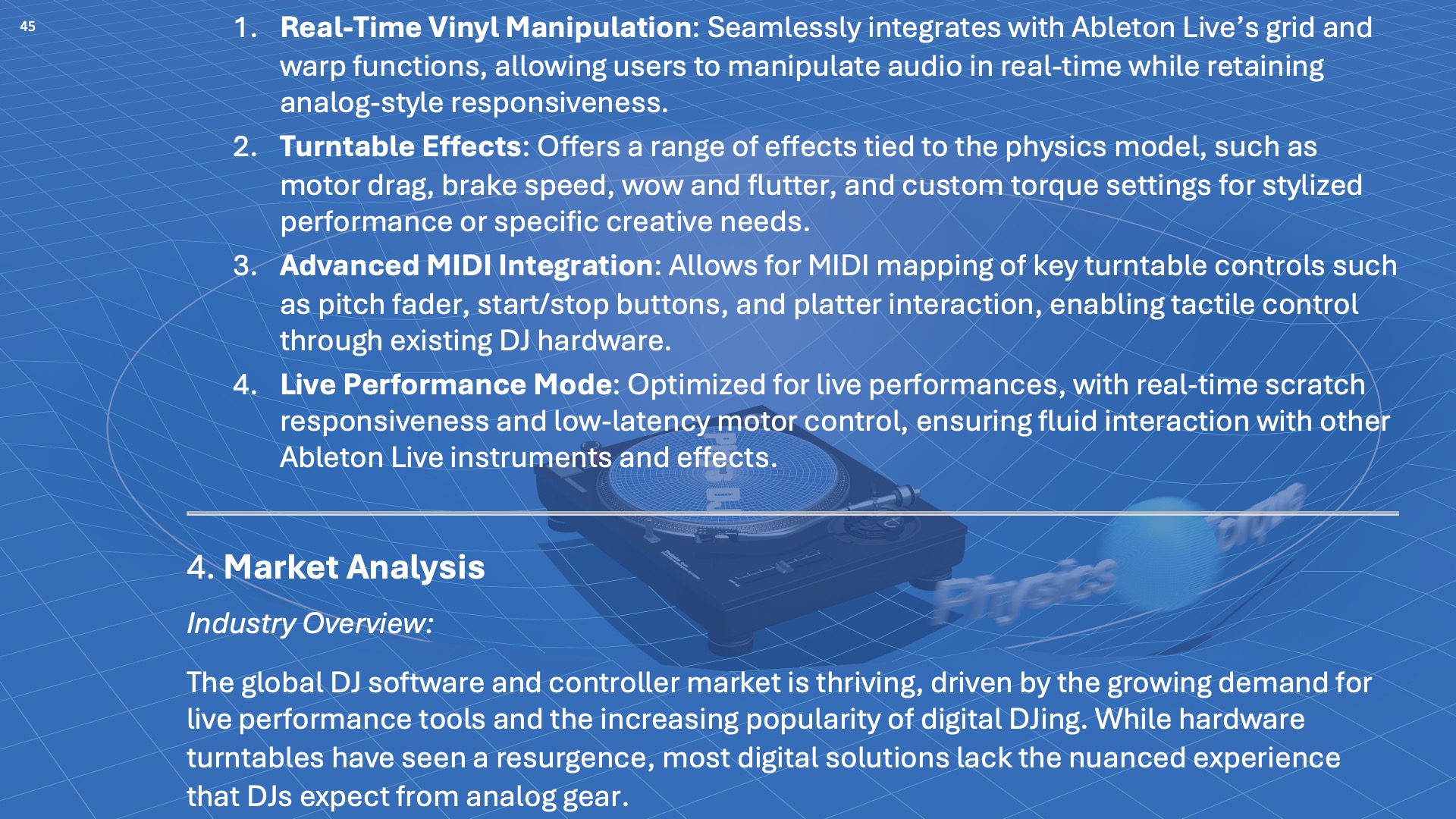
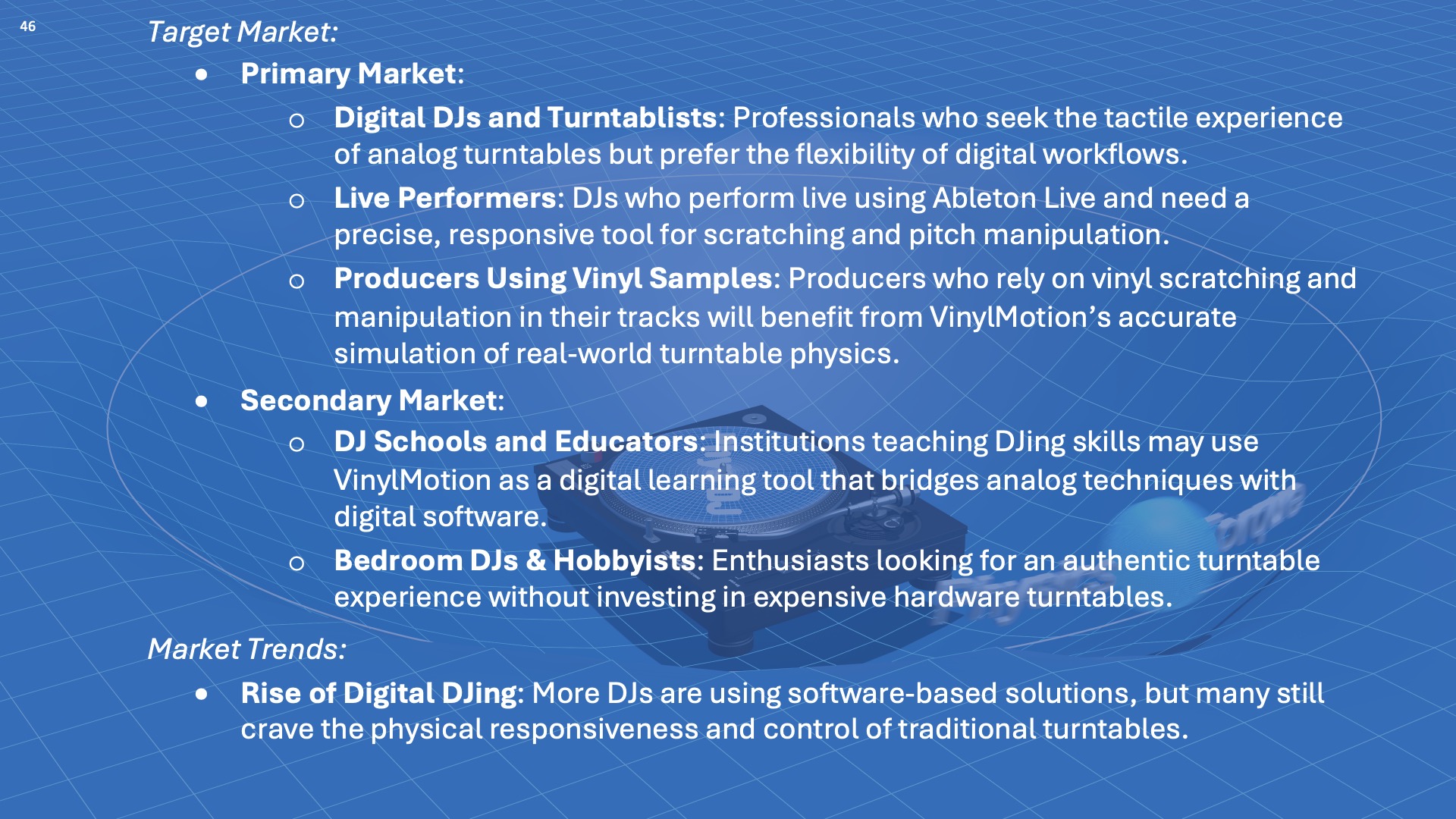
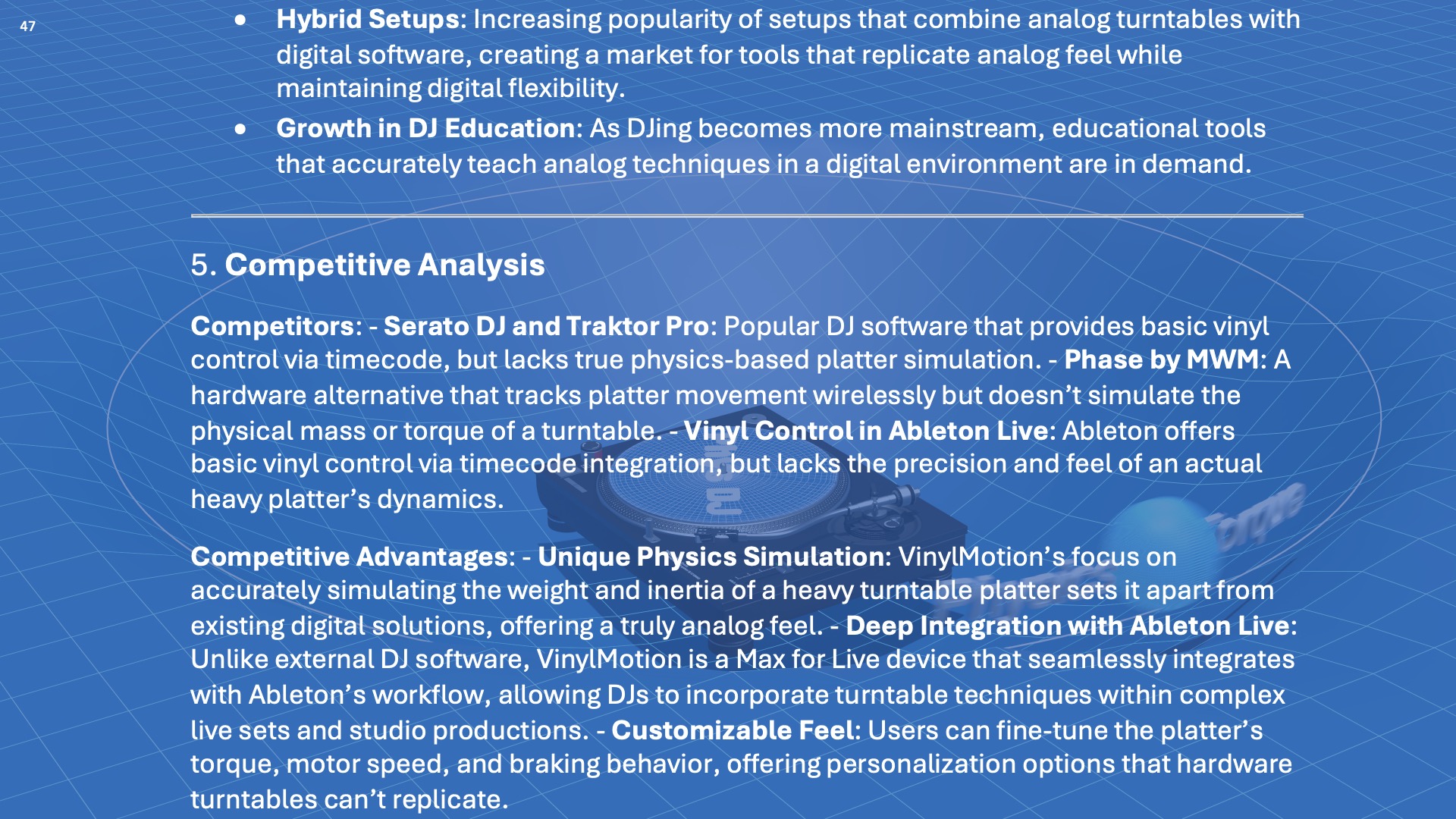
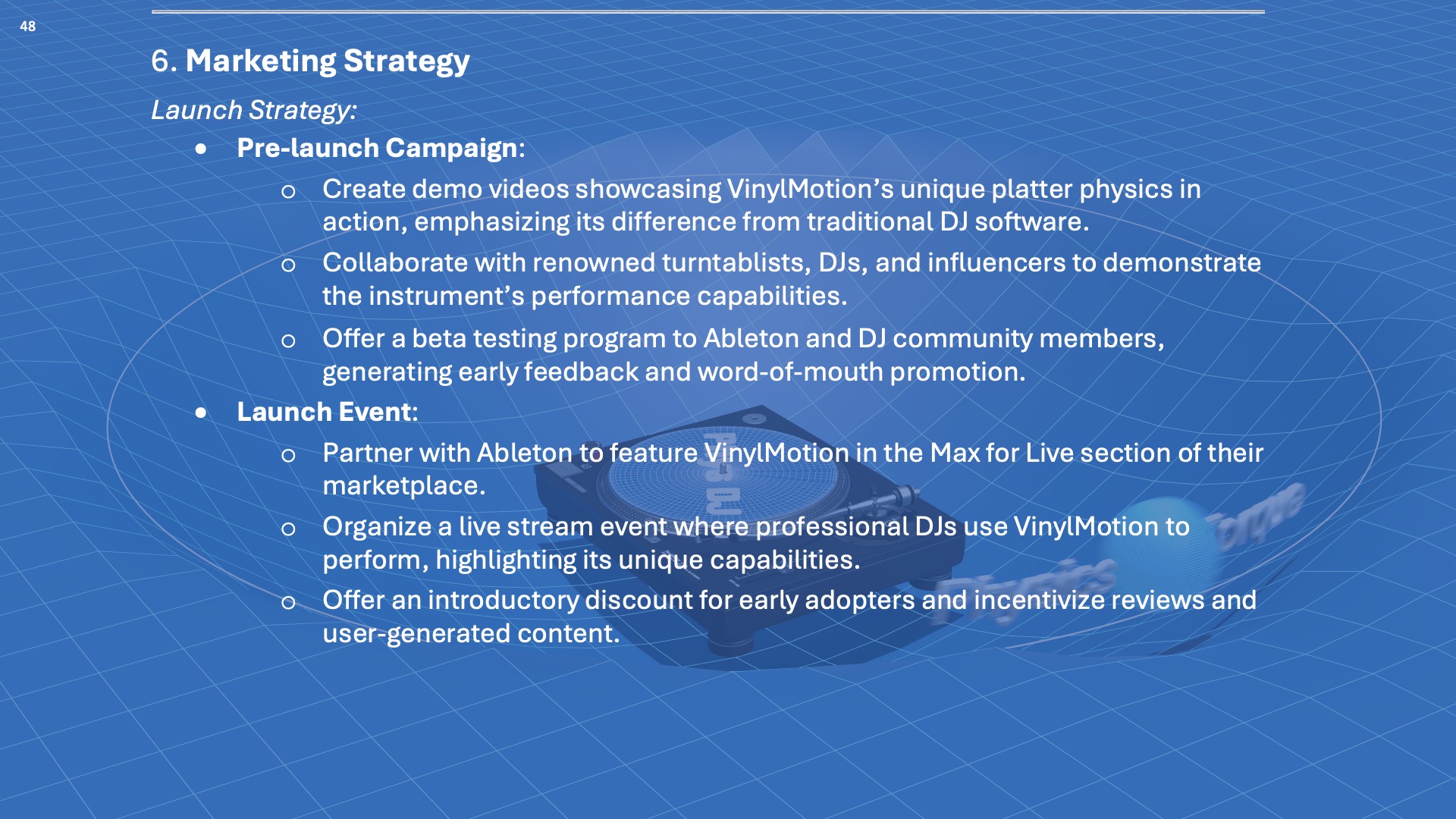
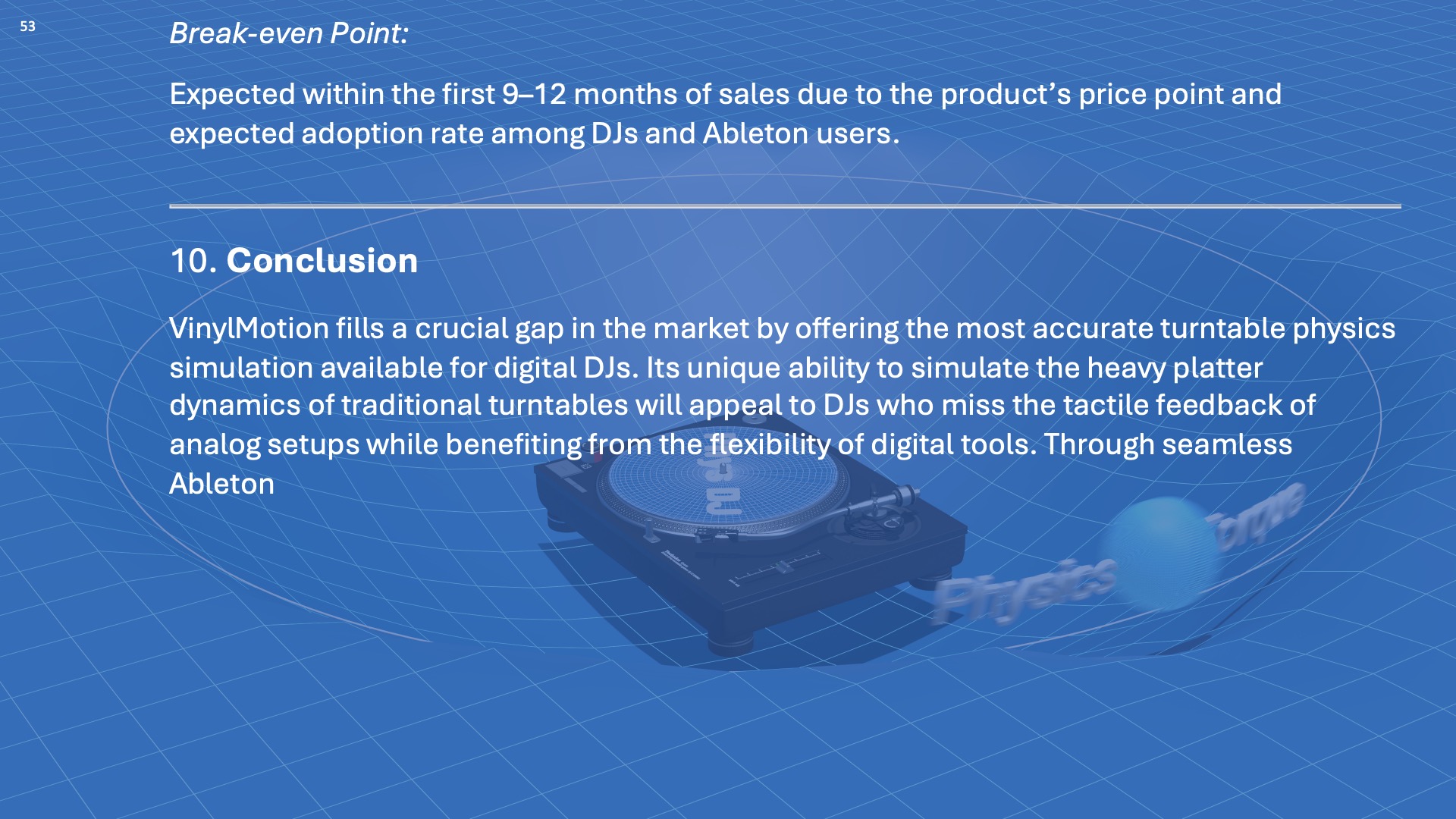
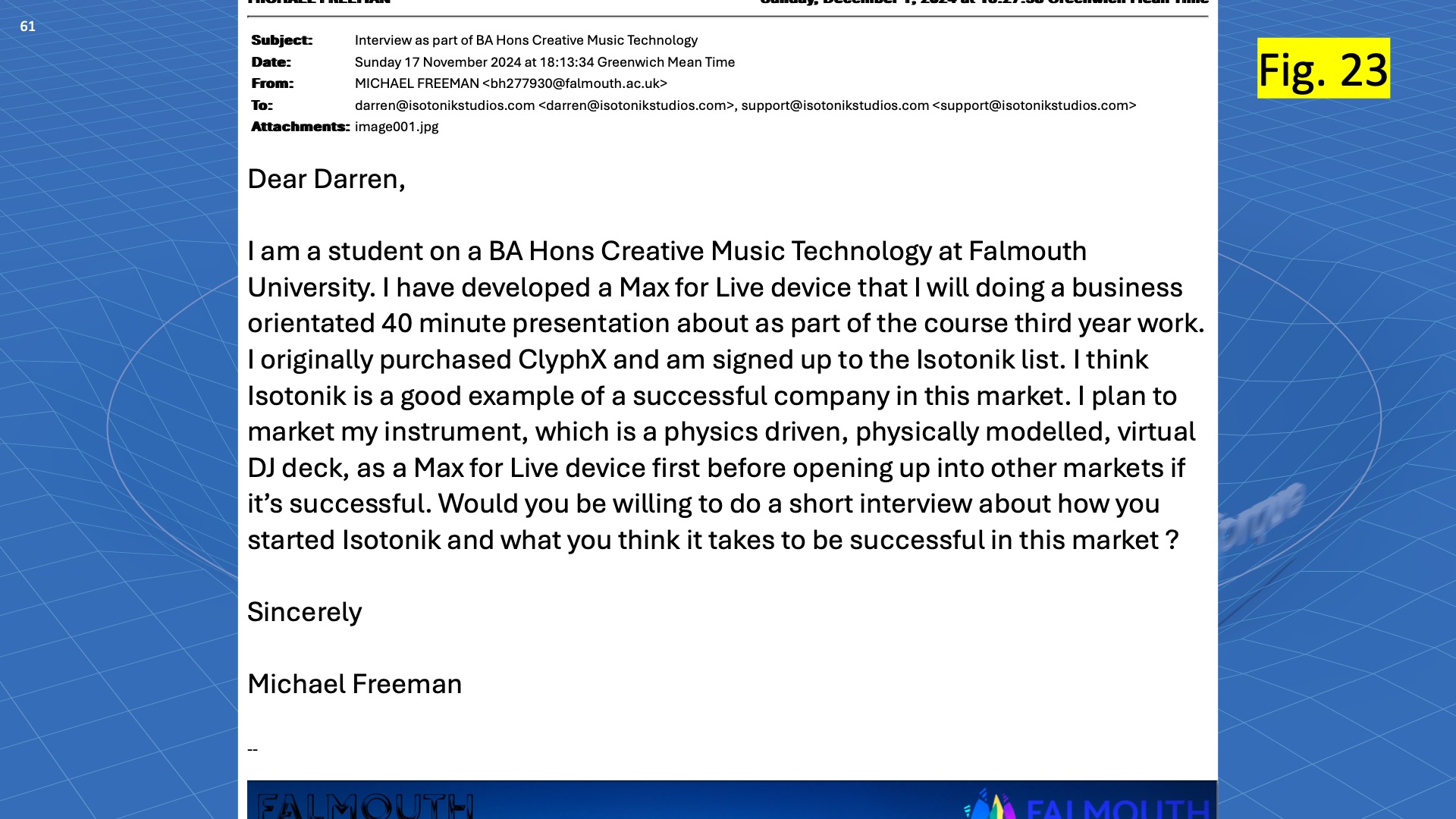
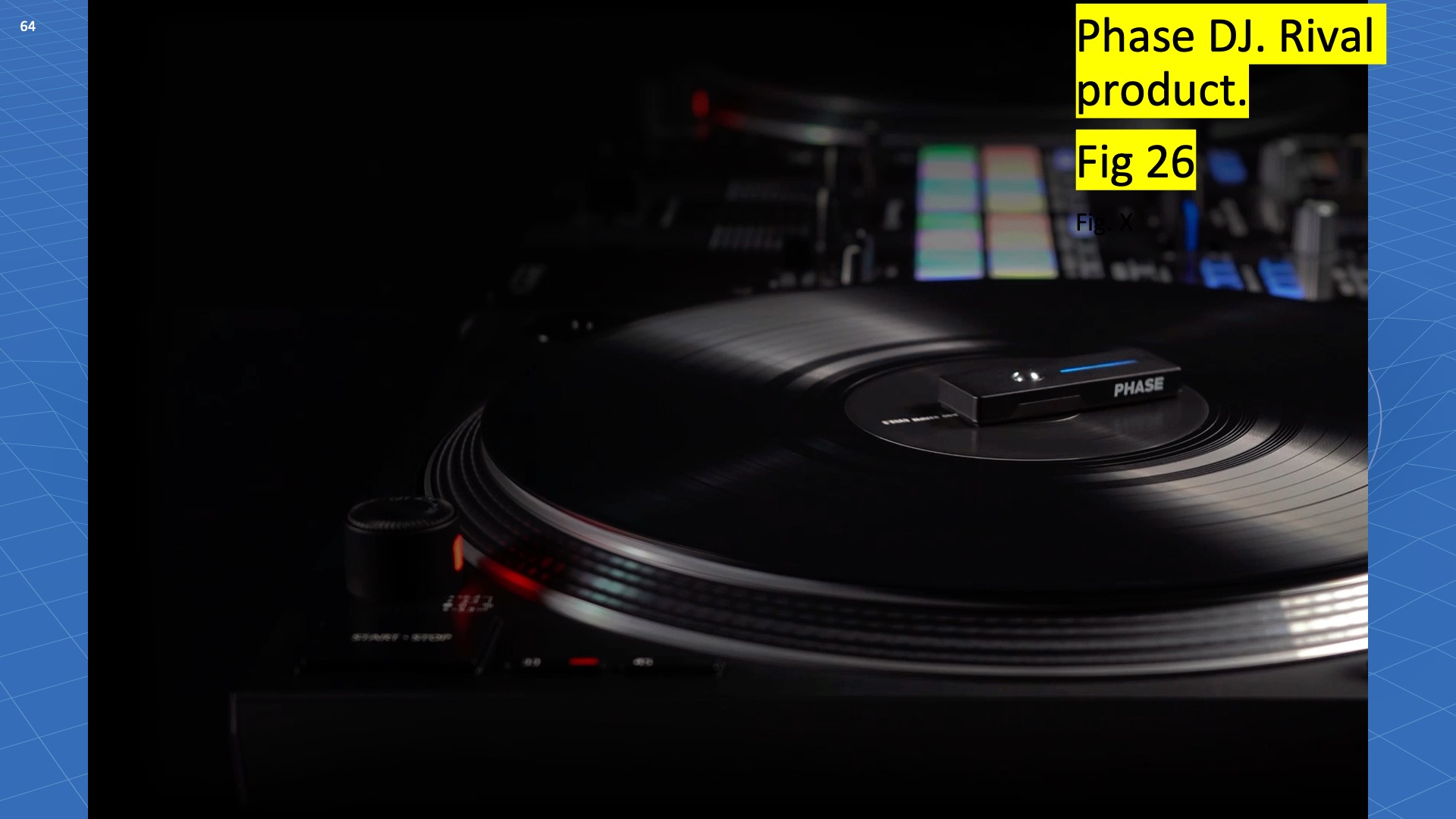
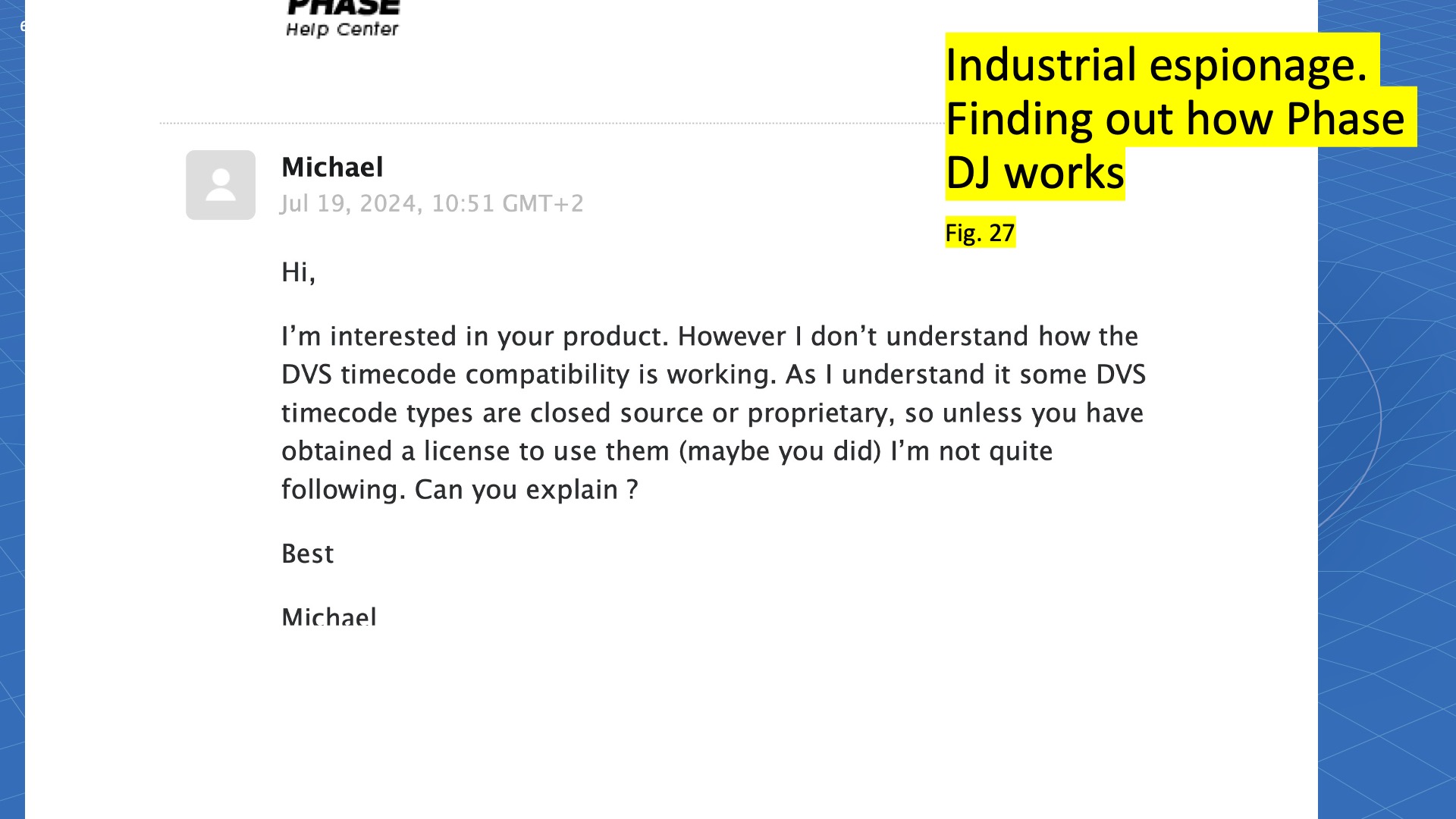
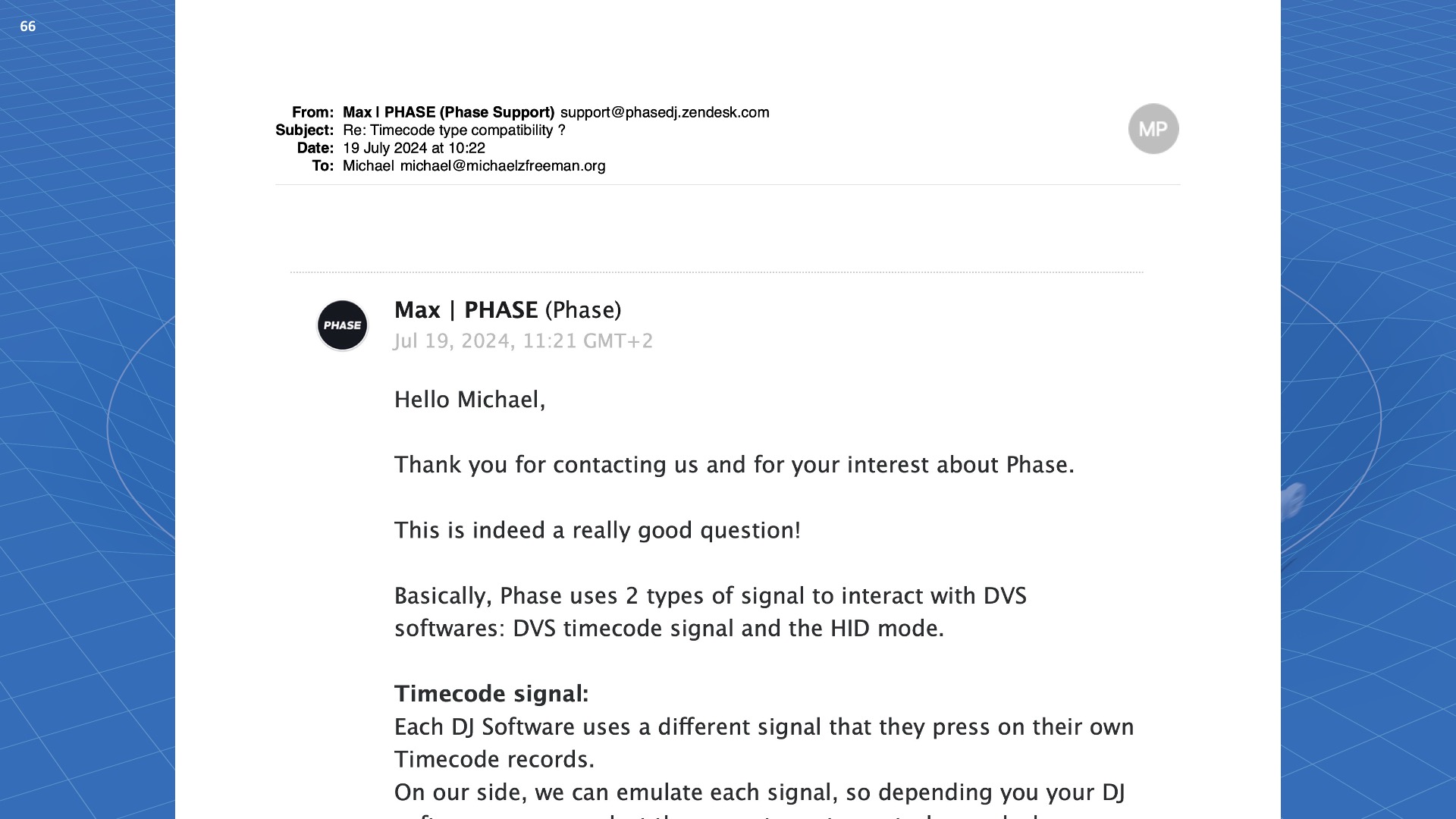
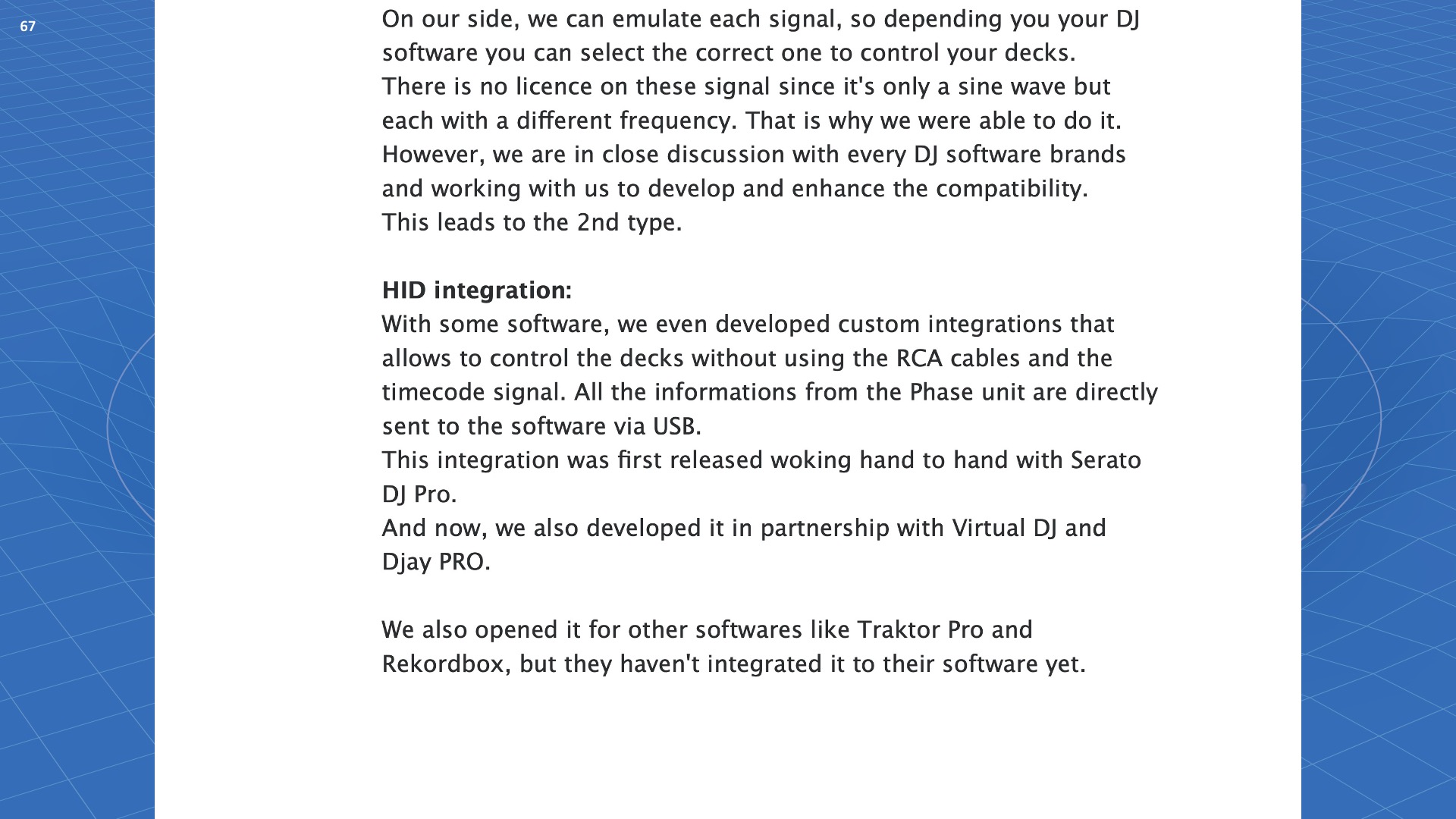
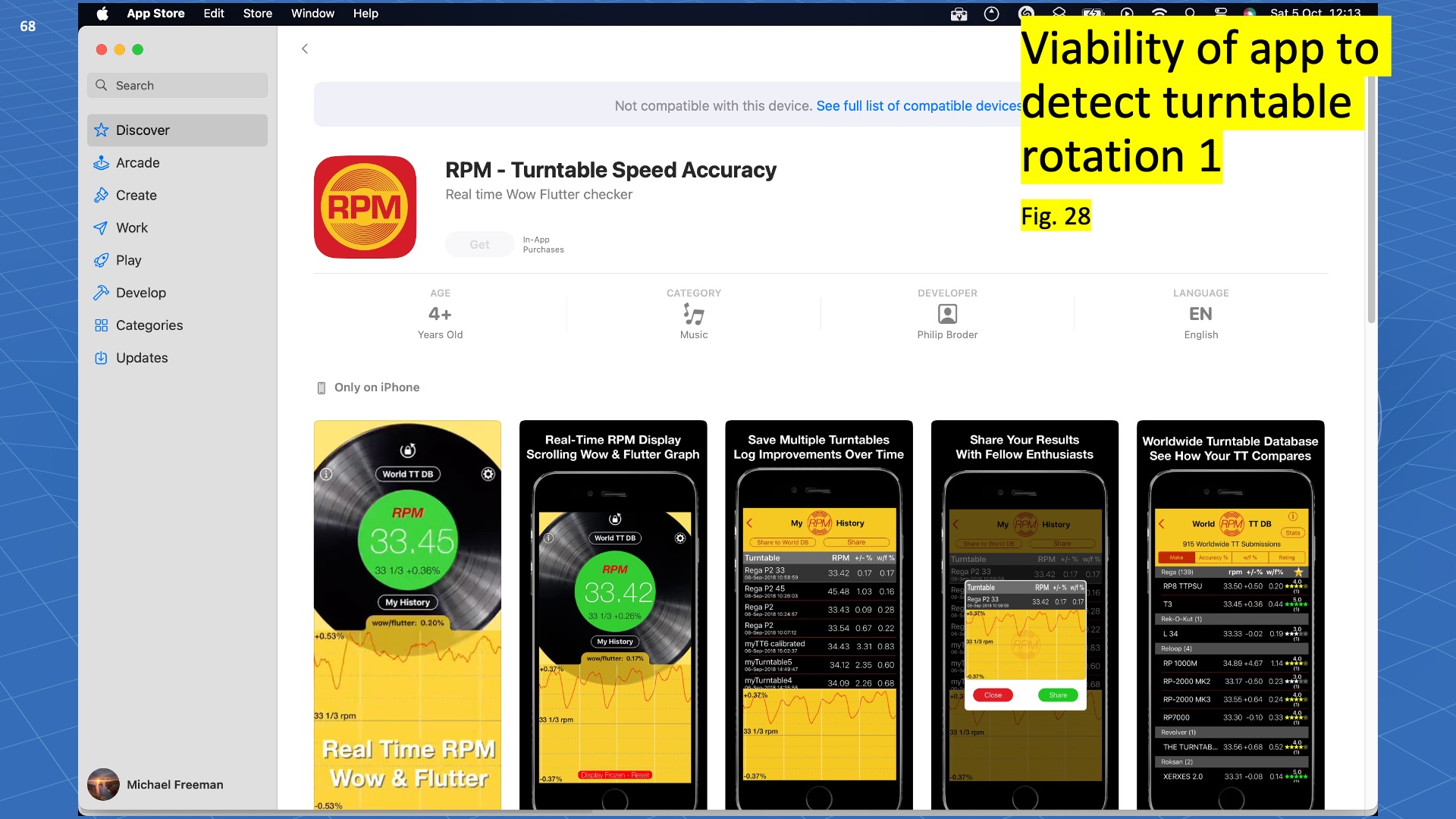
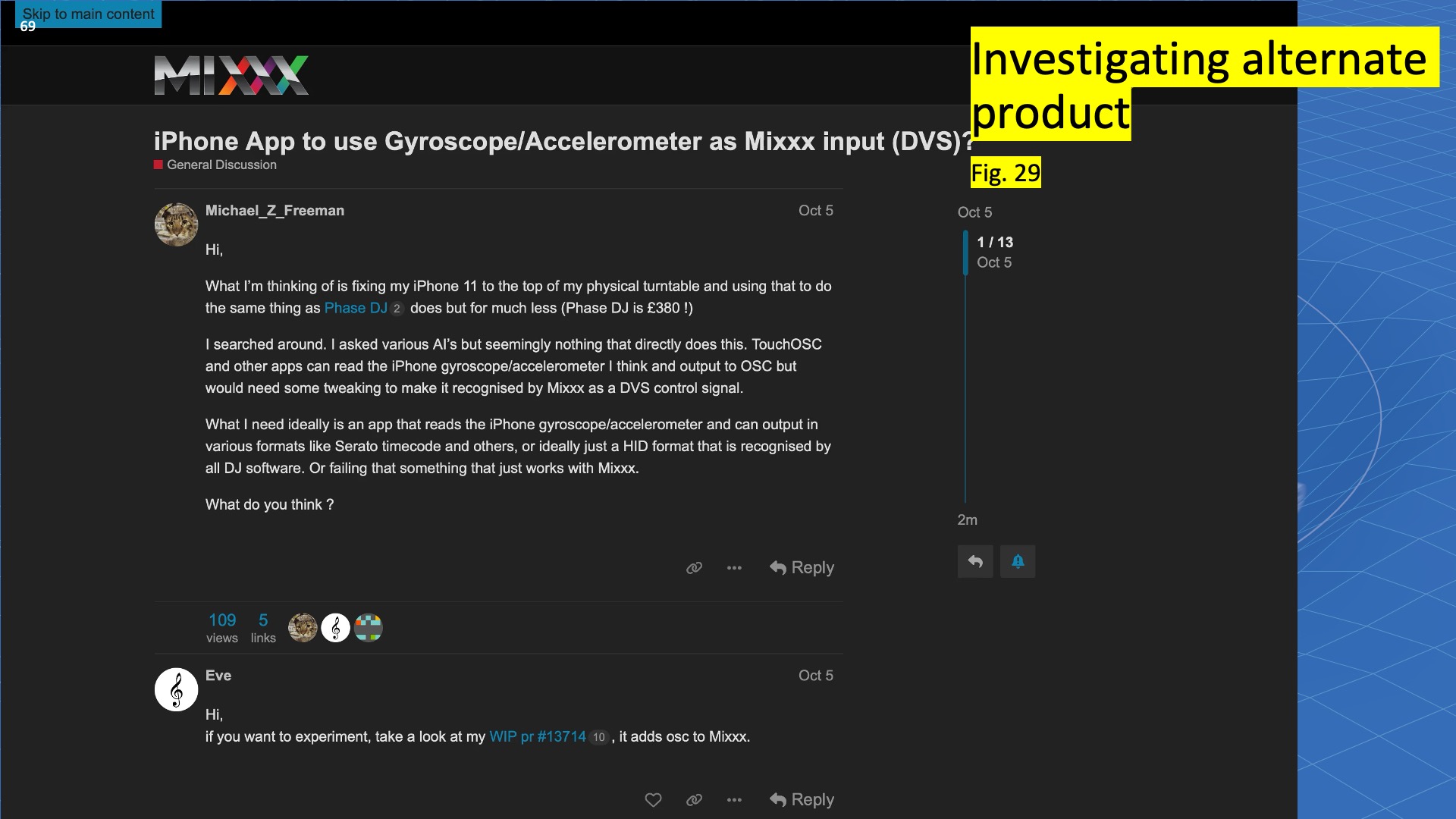
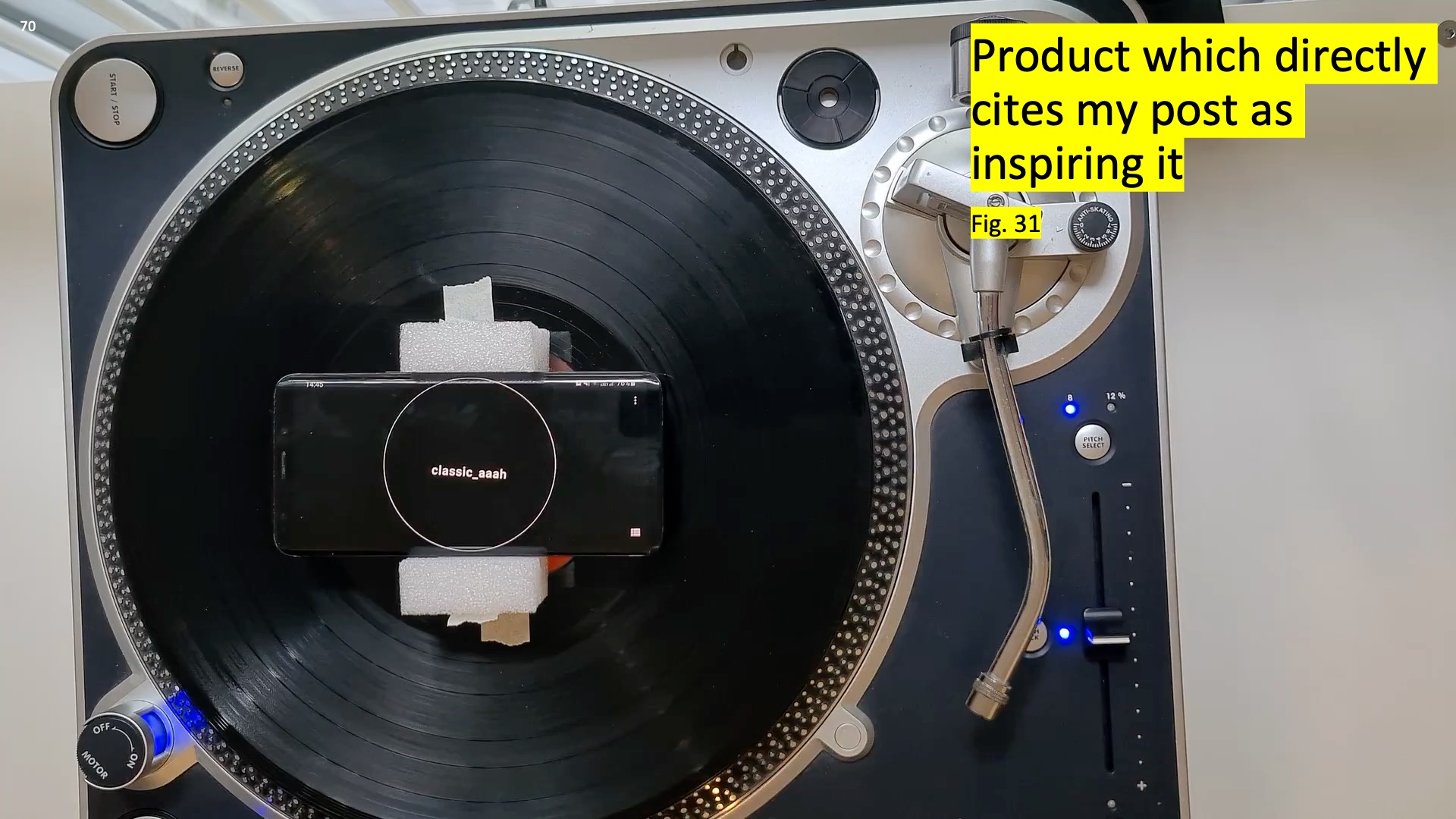
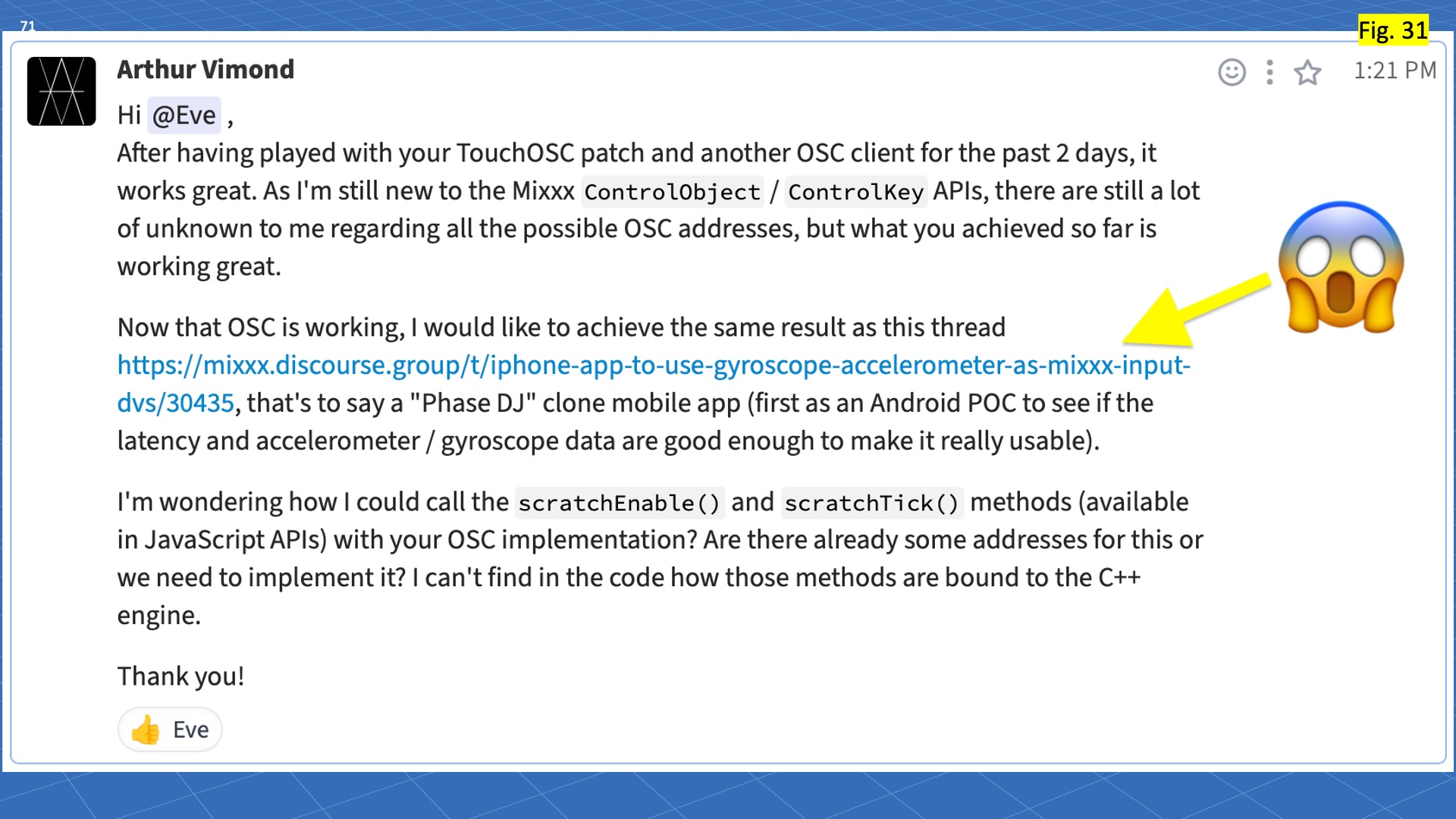
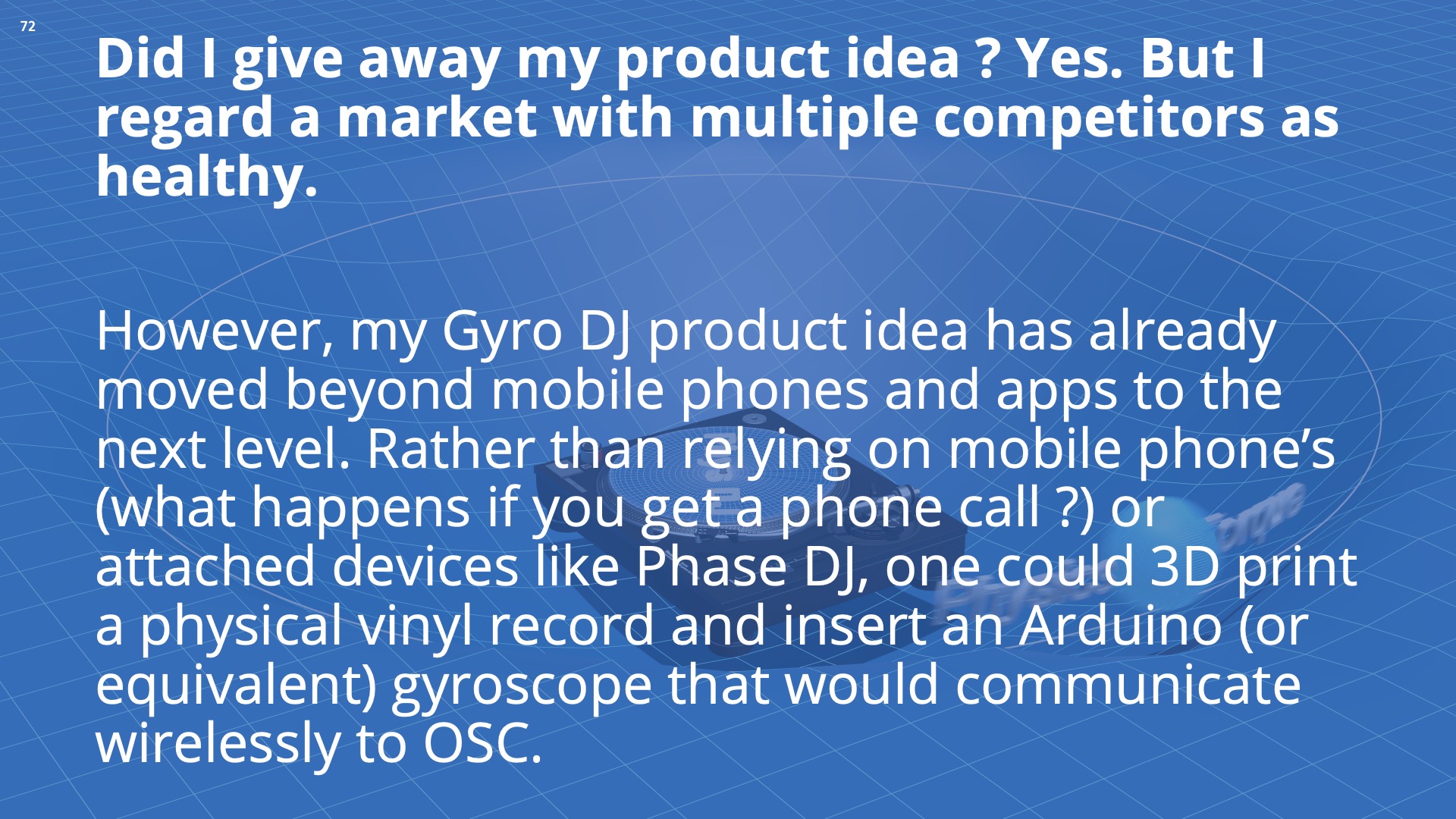
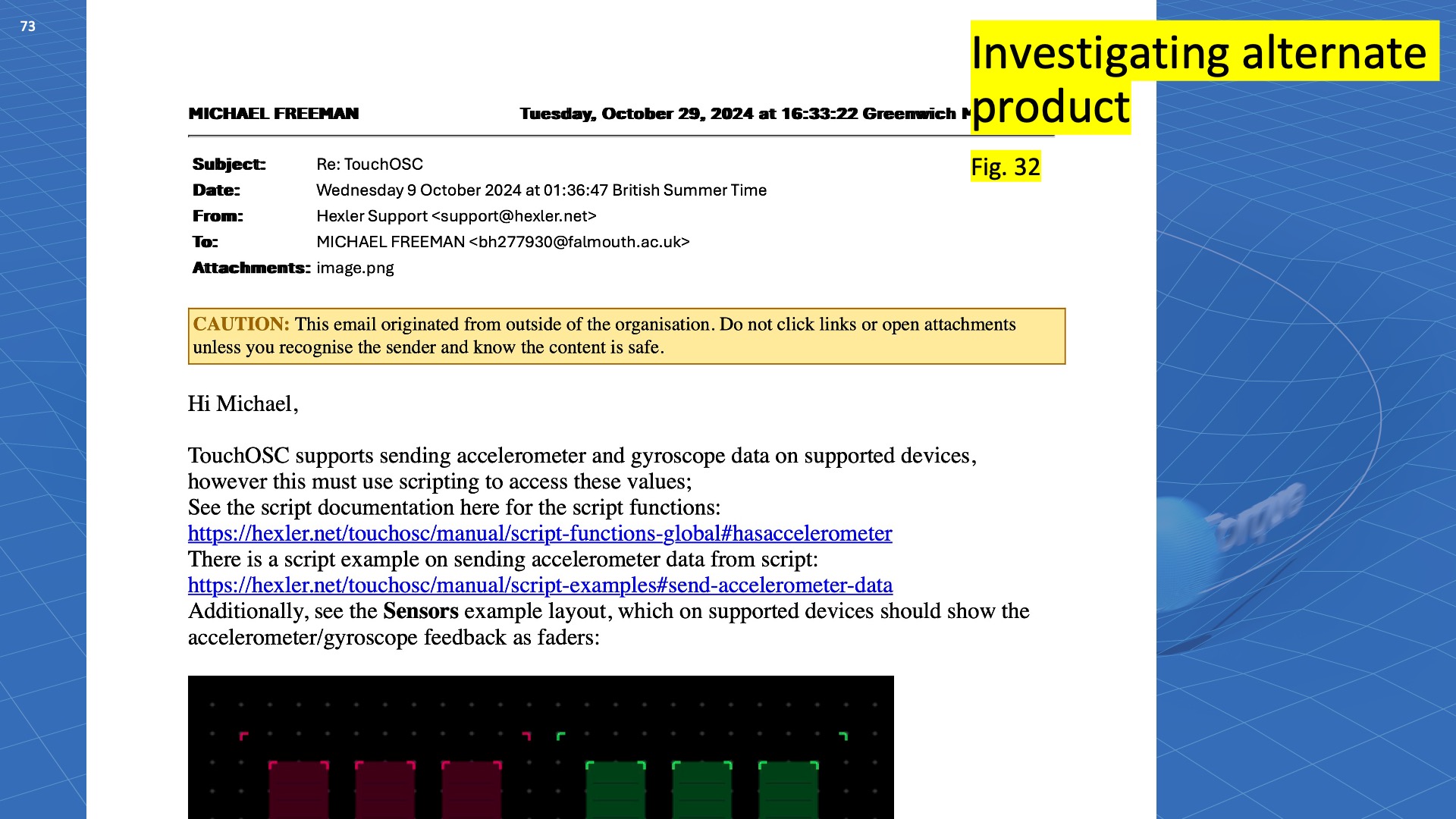
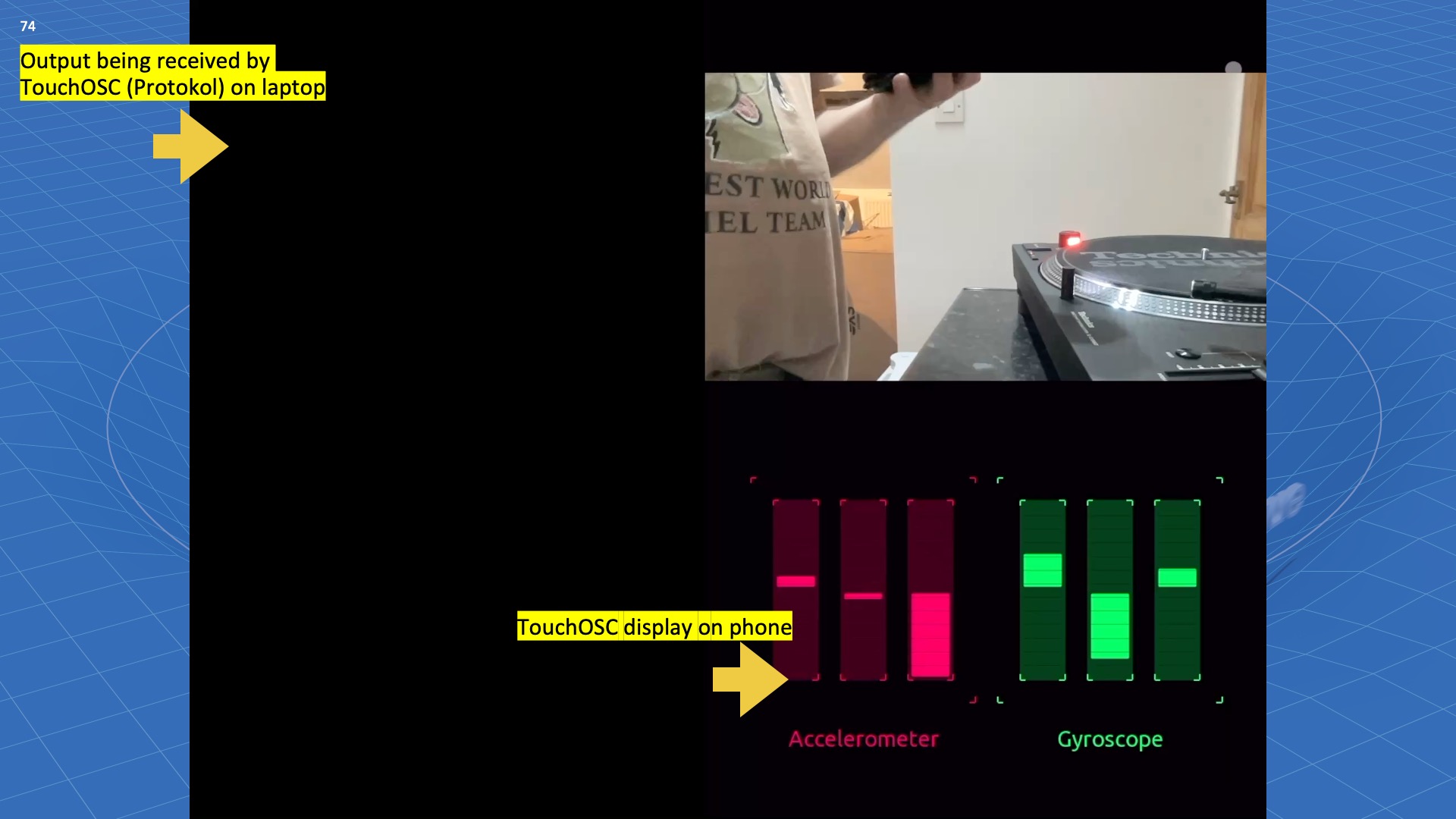
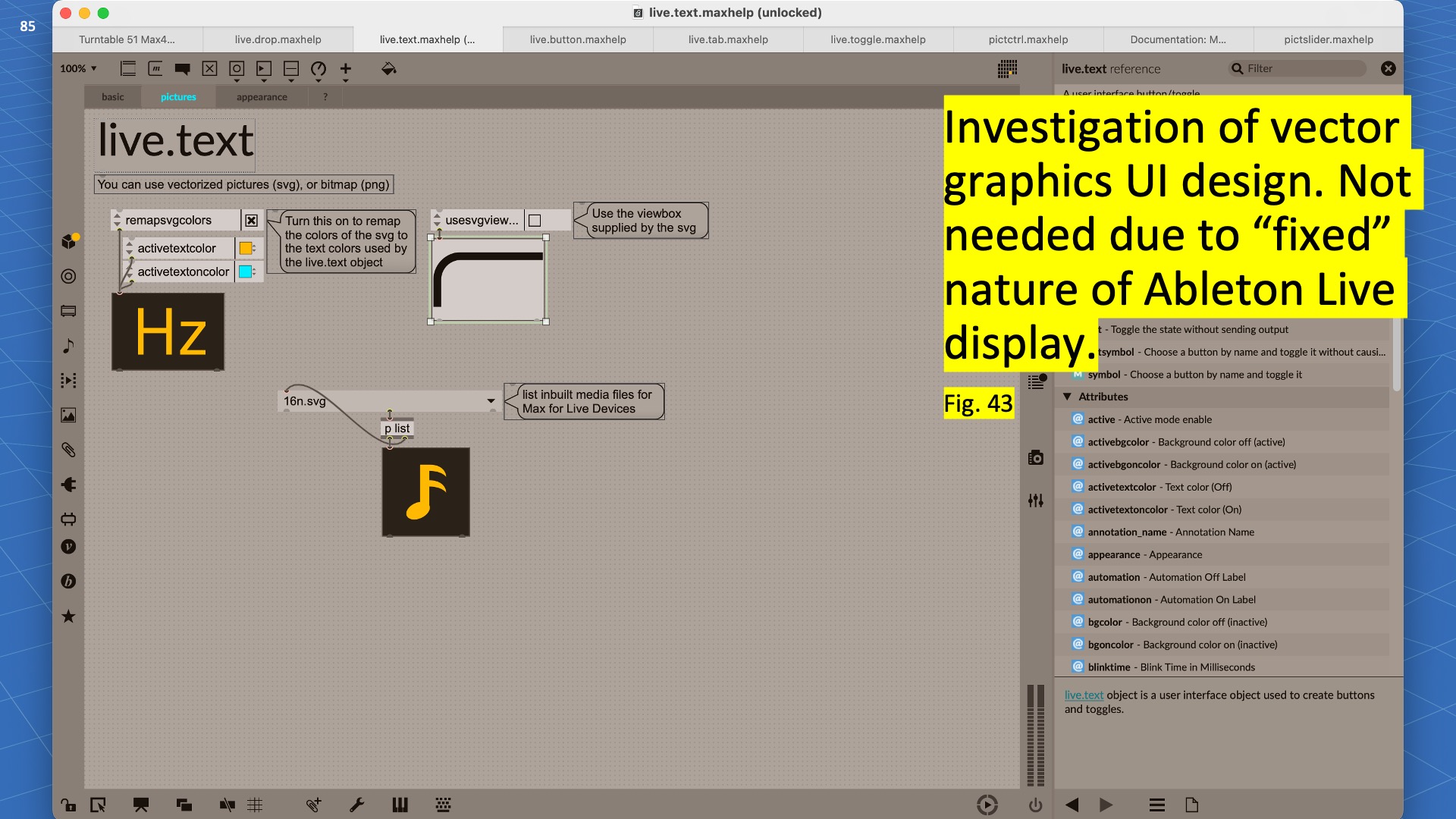
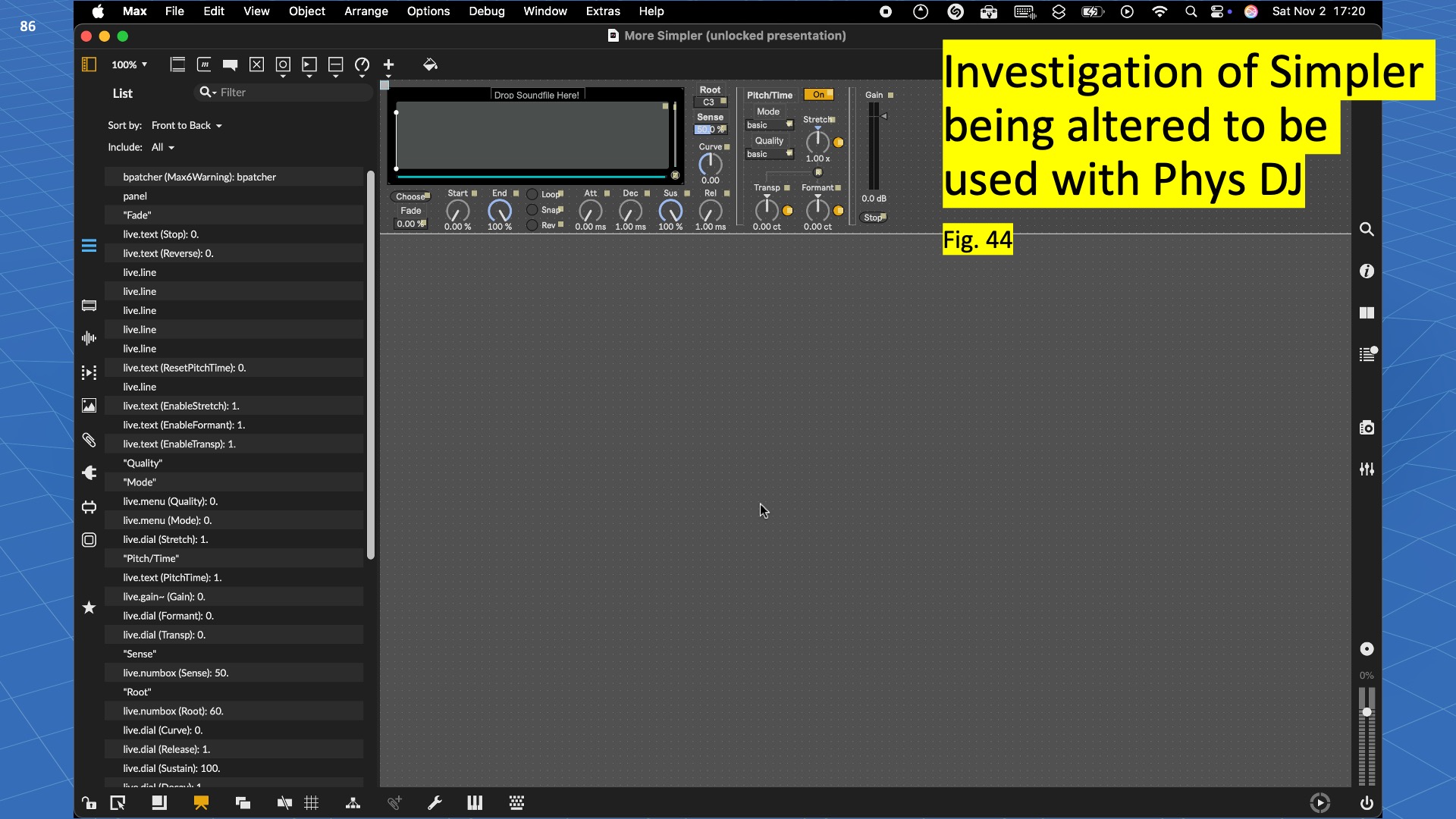
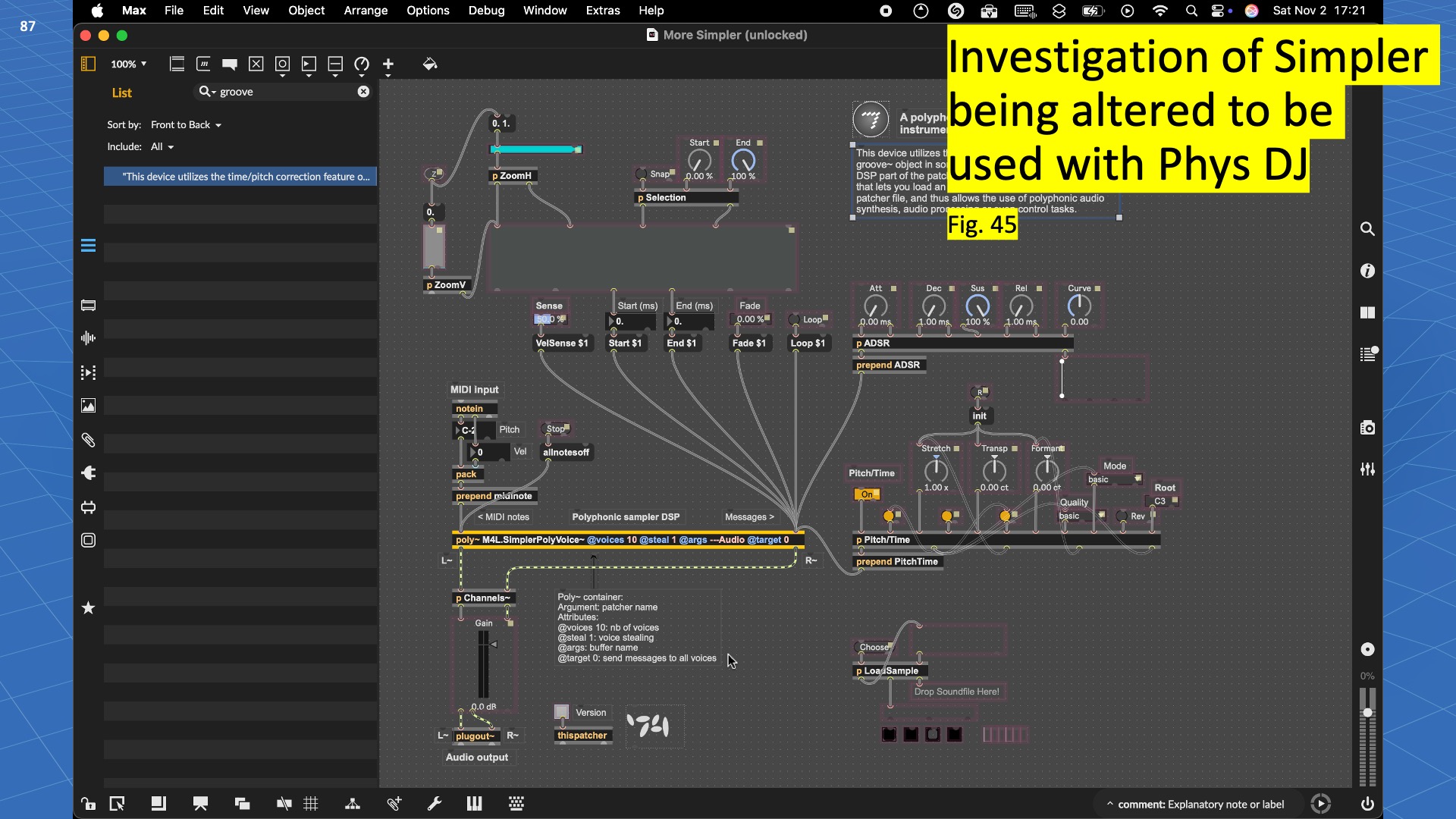
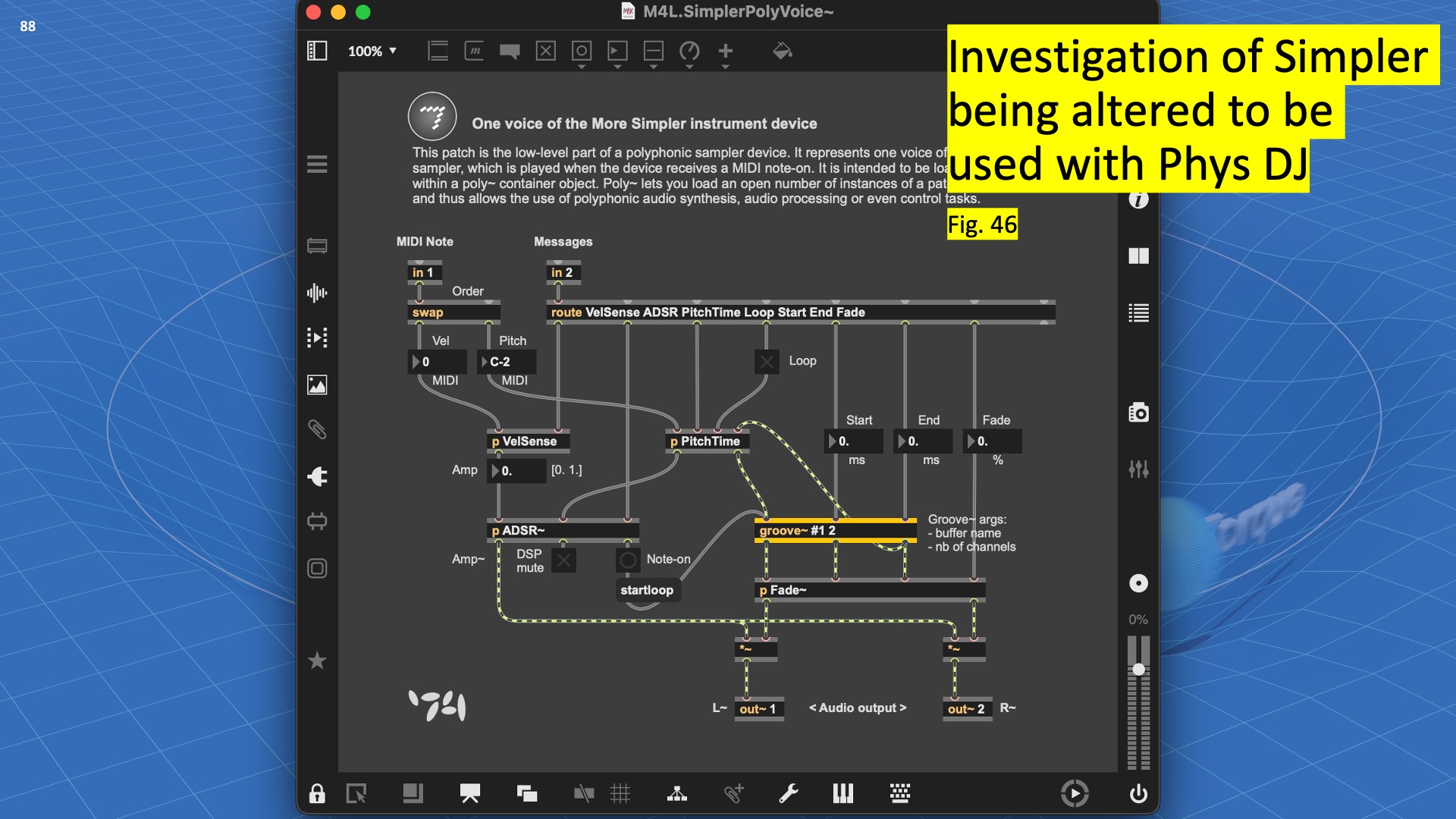
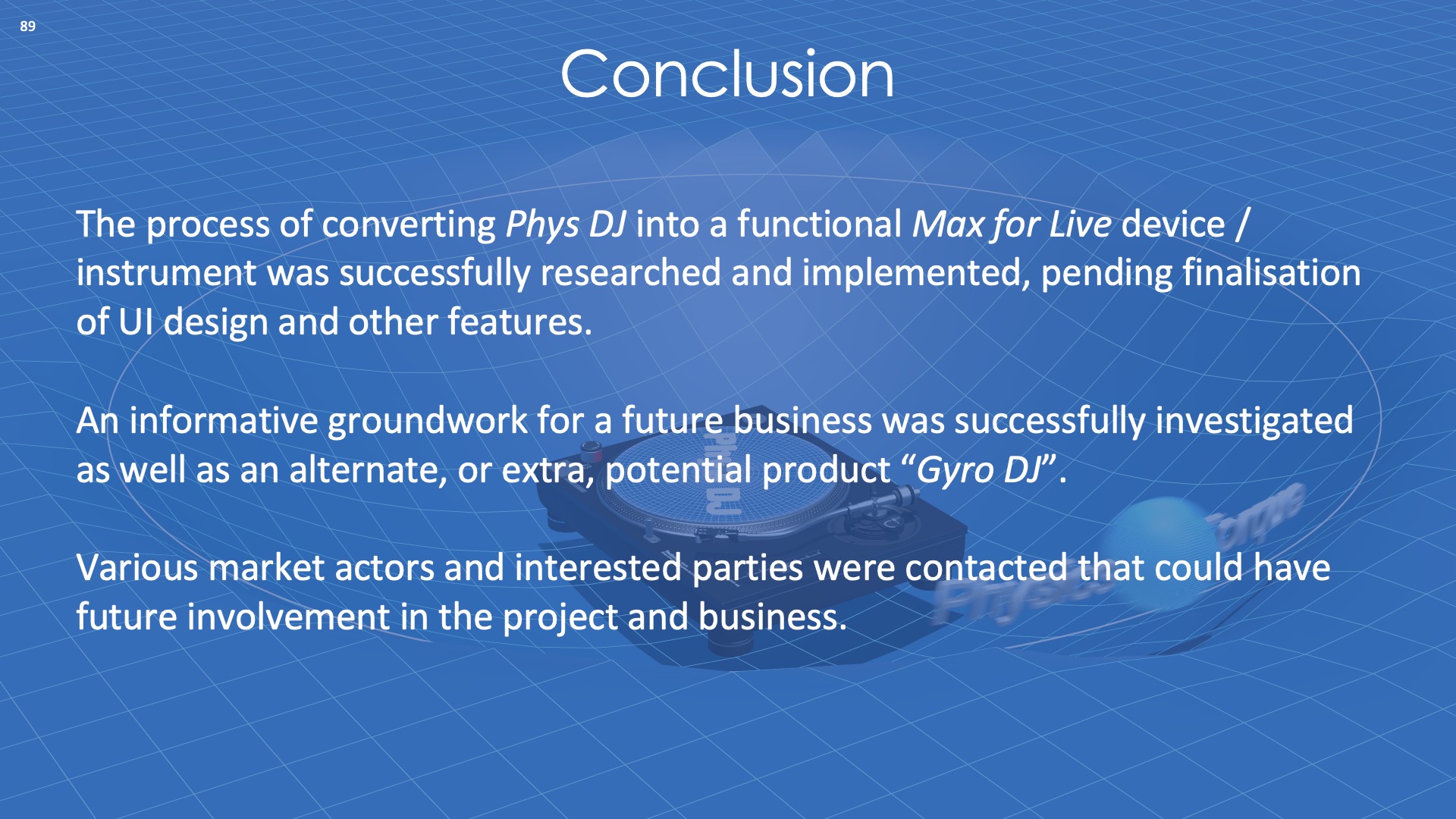
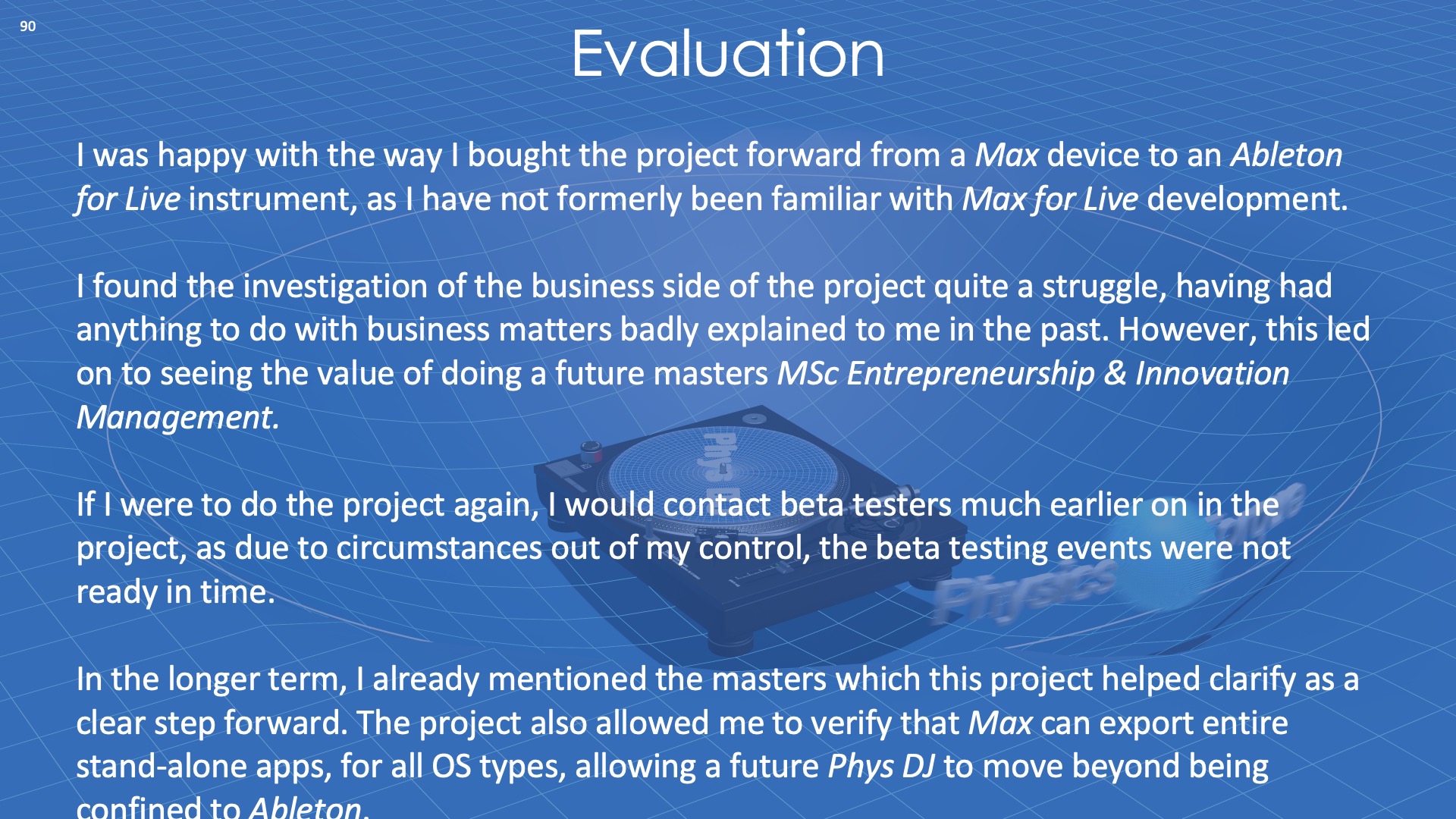
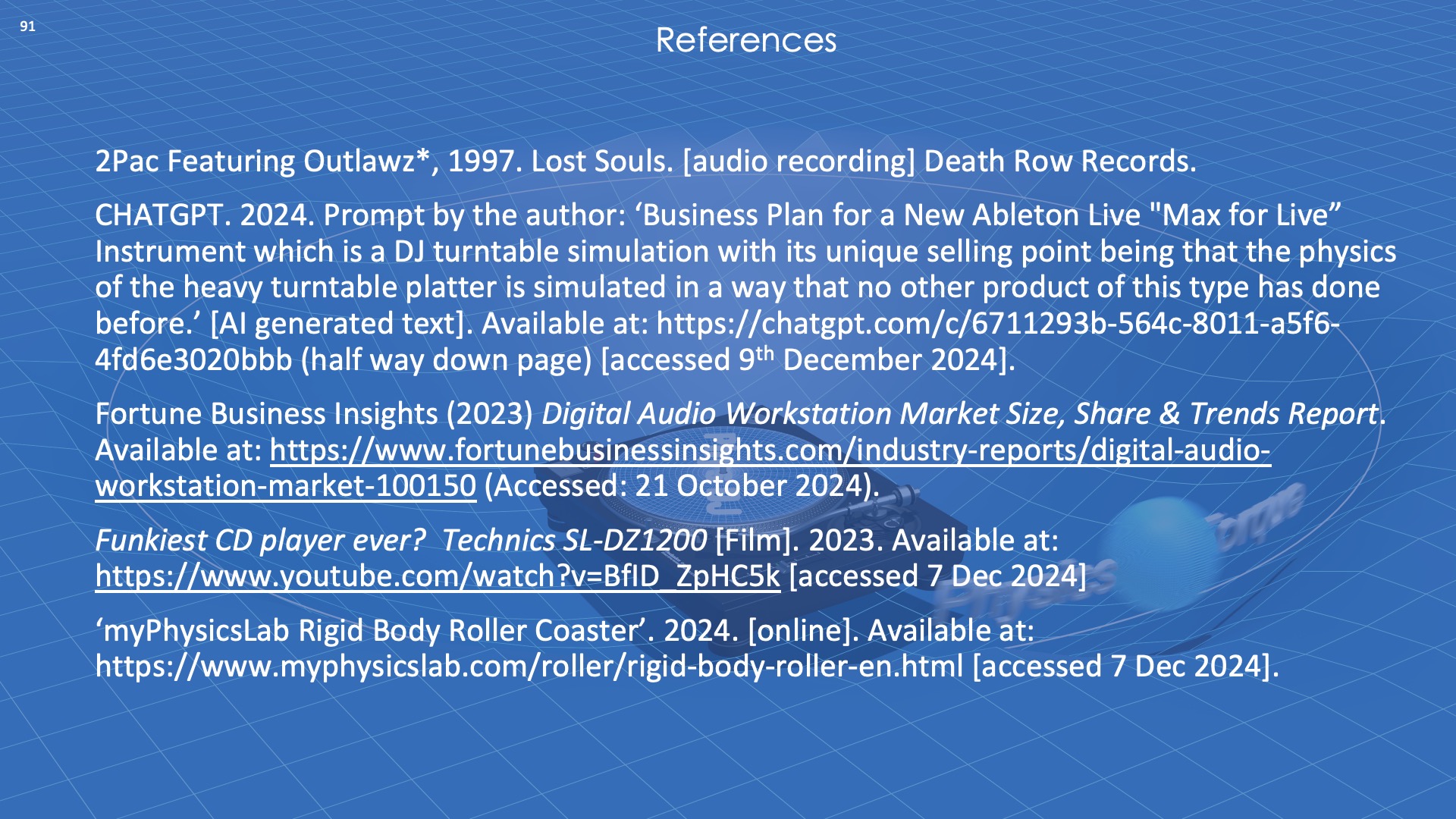
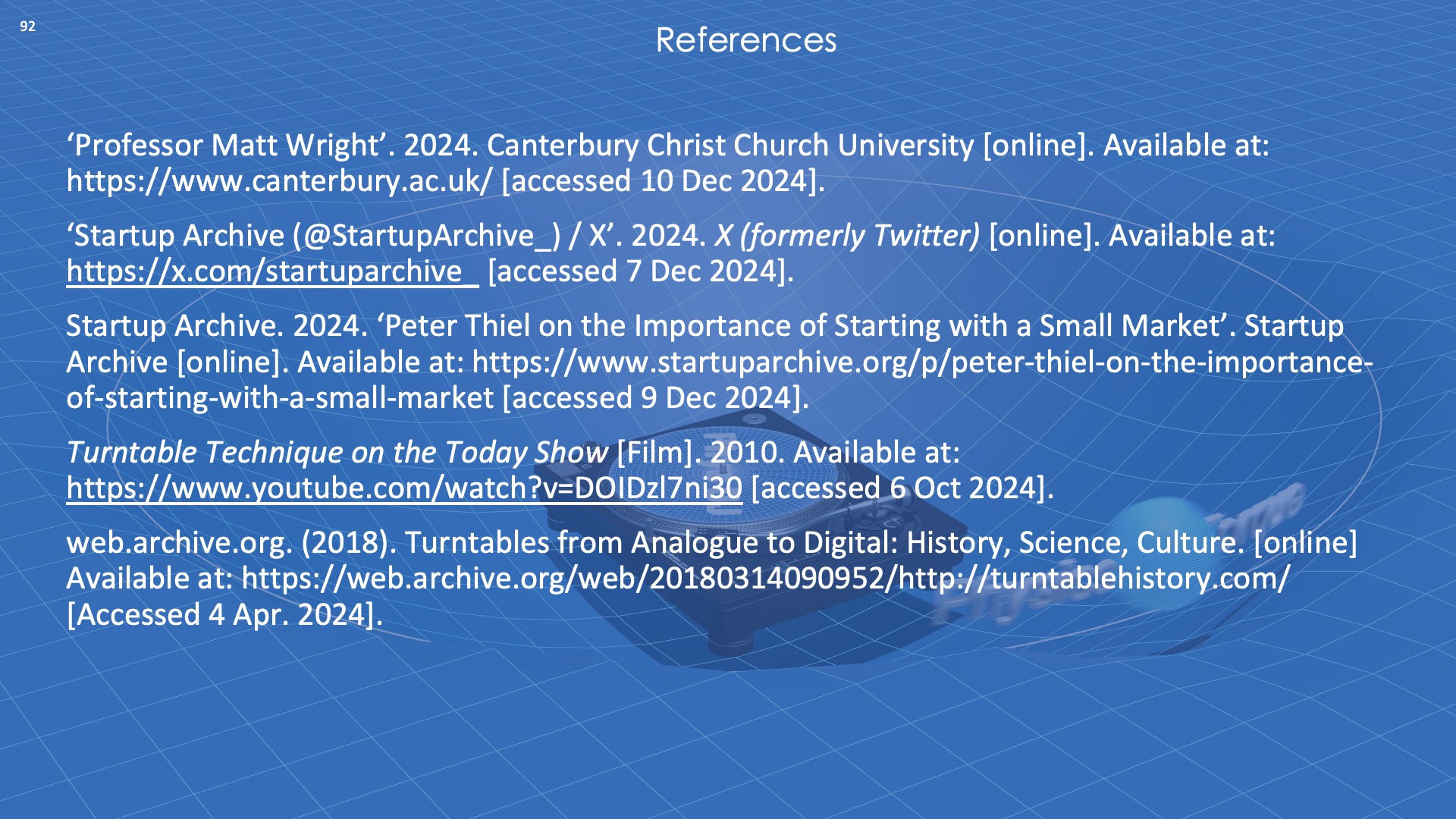
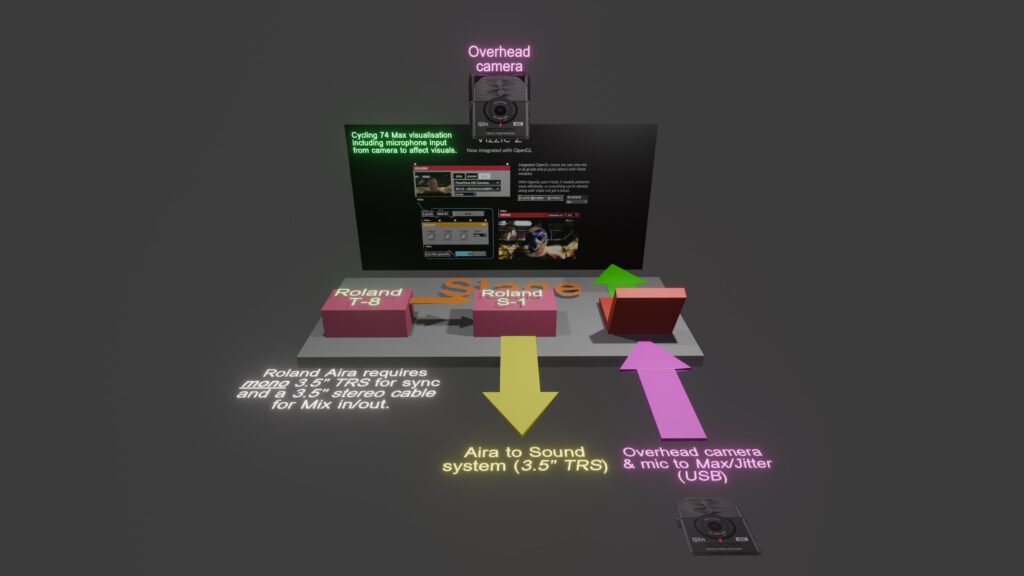
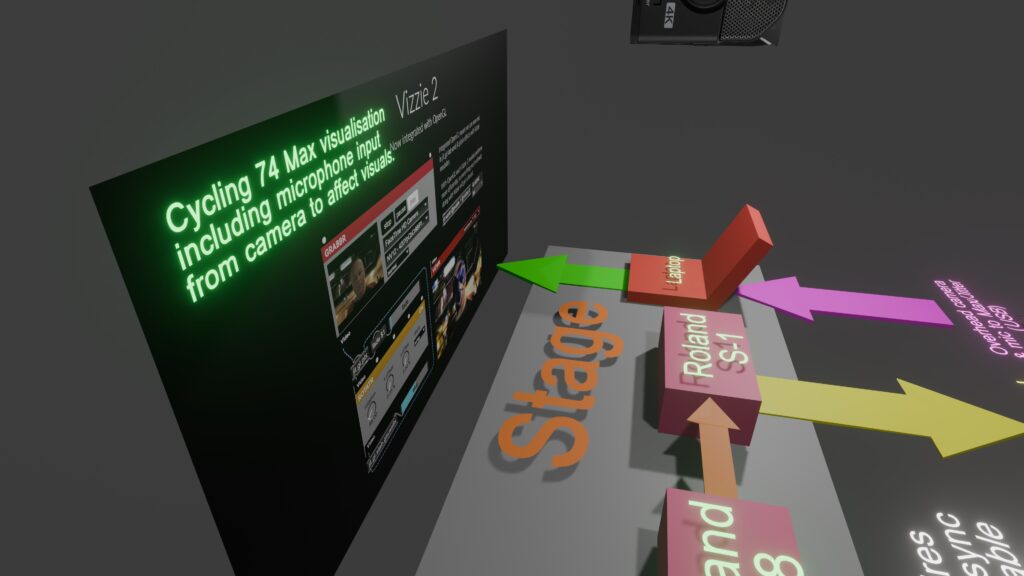
These slides are from a 45 minute presentation I did in December 2024. This was for the BA(Hons) Creative Music Technology Module MSI310 Specialist Practice in Context. The presentation was focussed on the context of my specialism which is the Phys DJ software product. The assessment is still being marked.
To see the full presentation with video slides download the following Powerpoint (Please note the file is about 1 gigabyte in size due to the embedded video’s) …
The following assessment was done as part of my second year module CRMT250 – Immersive Audio. A sound installation was setup using Arduino electronics.
‟Arduino (/ɑːrˈdwiːnoʊ/) is an Italian open-source hardware and software company, project, and user community that designs and manufactures single-board microcontrollers and microcontroller kits for building digital devices.”
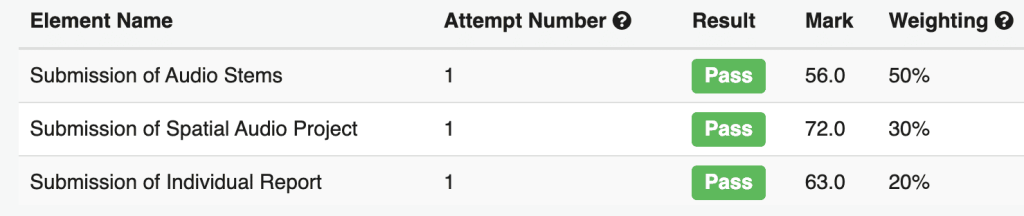
I got a 1st (72%) for this part of the three part assessment which clearly showed an aptitude for working with Arduino. I already have future product designs in the planning stages based on Arduino prototyping.
You can see the design specified in the following PDF and demonstration video.

 Zip Archive Viewer v1.1.3